


How to Place Ice in Your Cooler Bag for Best Results
May 07, 2026
Leave a message
A cooler bag can have thick insulation and still perform poorly if the ice is packed in the wrong place.
The common mistake is simple: people load food and drinks first, then pour ice wherever there is space. That creates cold spots, wet packaging, trapped warm air, and fast melting. The better method is to build the cooler bag in layers.
For most cooler bags, the best way to place ice is to put block ice, large ice packs, or frozen bottles at the bottom, pack pre-chilled food and drinks tightly in the middle, fill side gaps with cubed ice or slim gel packs, and add a final cold layer on top.
Ice should not go only at the bottom.
It should work around the load.
That is the difference between "having ice in the bag" and creating a stable cold zone.
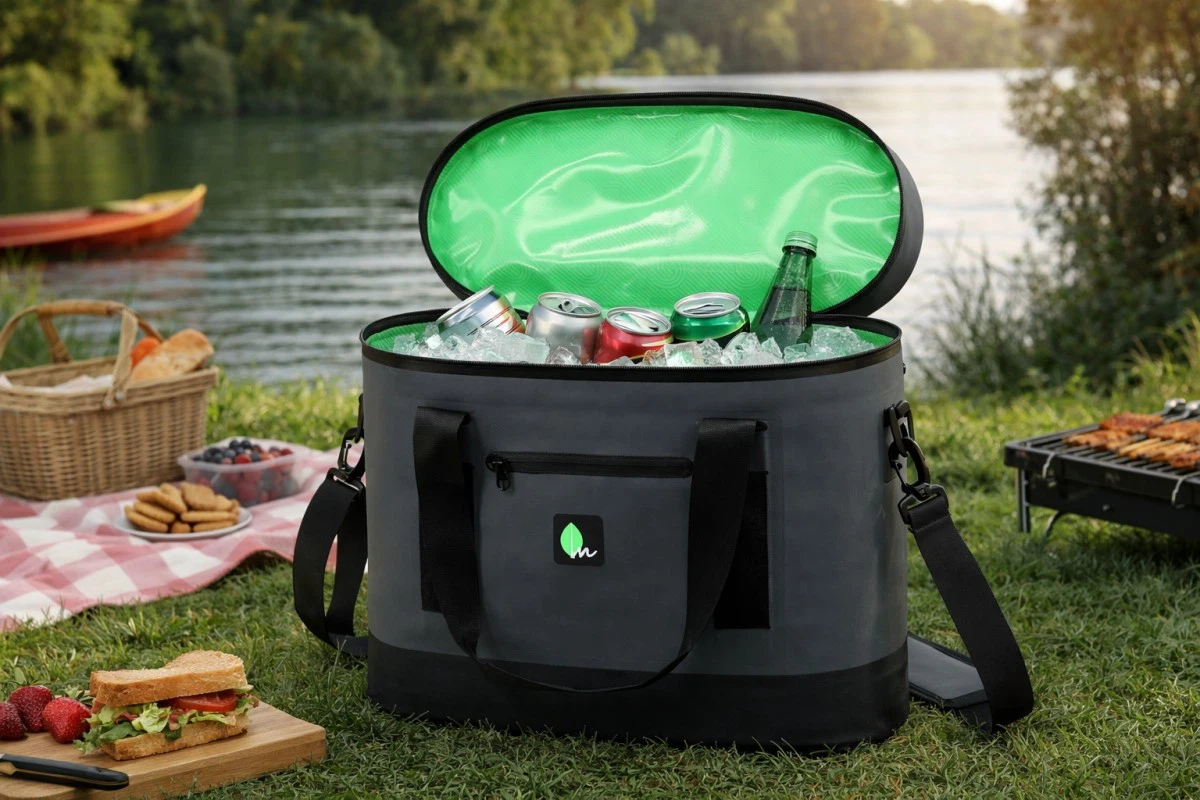
The Best Way to Place Ice in a Cooler Bag
For best results, pack your cooler bag in this order:
|
Cooler Bag Area |
What to Place There |
Why It Works |
|
Bottom |
Block ice, large ice packs, frozen water bottles |
Creates a stable cold base and slows heat transfer from below |
|
Middle |
Pre-chilled food and drinks |
Keeps contents inside the cold zone |
|
Sides and gaps |
Cubed ice, slim gel packs, small ice packs |
Reduces warm air pockets and improves cold contact |
|
Top |
Flat ice pack, gel pack, or cubed ice |
Cold air moves downward through the load |
|
Empty space |
Clean towel, frozen bottle, or extra cold pack |
Limits temperature fluctuation inside the bag |
A cooler bag is a soft-sided insulated bag designed to slow heat transfer and keep contents cold for a limited period. Unlike a hard cooler, a soft cooler bag is lighter, easier to carry, and more flexible, but its performance depends heavily on packing method, liner quality, seam construction, and how well it handles meltwater.
The best setup is not "ice first" or "food first." It is a layered system: cold base, chilled contents, filled gaps, and top cold coverage.
That method works for picnic cooler bags, beach cooler bags, fishing cooler bags, grocery cooler bags, and many insulated delivery bags.
Why Ice Placement Matters More Than Ice Quantity Alone
Adding more ice helps, but only up to a point.
If the ice sits only at the bottom and the upper part of the bag is full of warm air, the top layer of food and drinks will not stay as cold as expected. If loose ice is dumped on top without sealing food properly, sandwiches, labels, cartons, and paper packaging may become wet. If the bag is half empty, warm air fills the open space and the ice melts faster.
Ice placement affects three things:
- how evenly cold spreads through the bag;
- how much warm air remains inside;
- how much meltwater contacts the contents.
Cold air is denser than warm air, so a top cold layer helps cool the items below. Bottom ice is still useful because the base of the bag often sits on warm surfaces: sand, asphalt, a car trunk, a boat deck, or a warehouse floor.
In a real outdoor use case, the bottom and side walls often receive more heat than users expect. A black car trunk in summer can easily become much hotter than the outside air. A cooler bag placed directly on beach sand or a fishing dock also absorbs heat through the base. A bottom ice layer helps buffer that heat.
But the top layer matters too.
If you only place ice at the bottom, the upper zone warms faster every time the zipper opens. A top ice pack or layer of cubed ice helps control that problem.
Good ice placement is not about making one area extremely cold. It is about surrounding the contents with cold sources and reducing warm air pockets.
Before You Pack: Pre-Chill the Bag, Food, and Drinks
Pre-chilling means lowering the starting temperature of the cooler bag and its contents before adding the final ice load. This is one of the easiest ways to make ice last longer.
A warm cooler bag wastes ice.
If the bag has been stored in a hot garage, inside a delivery van, or in the trunk of a car, the insulation and liner may already be warm. When ice is added, part of that ice is spent cooling the bag itself instead of protecting the food and drinks.
The same applies to drinks. A case of room-temperature cans will melt ice far faster than cans that were refrigerated overnight.
For better results:
- keep the cooler bag in a shaded or cool place before use;
- pre-chill drinks, meat, dairy, fruit, and prepared food;
- freeze suitable items in advance when the trip allows it;
- use frozen water bottles or frozen food as extra cold mass.
Frozen food can help maintain a low temperature as it slowly thaws. This is useful for camping meals, frozen meat packs, or prepared ingredients for a cookout. But raw meat and seafood still need sealed packaging. They should never leak onto ready-to-eat food.
Ice should maintain a cold environment, not do all the work of cooling down warm contents from the start.
The Best Layering Method for Ice, Food, and Drinks
A good cooler bag layout has a clear order. Do not treat the inside of the bag as one open box. Treat it as temperature zones.
Step 1: Build a Cold Base with Block Ice or Frozen Bottles
Start with a cold base.
For the bottom layer, use block ice, large ice packs, or frozen water bottles. These melt more slowly than small loose cubes and help stabilize the bottom of the bag.
Frozen water bottles are especially useful in soft cooler bags. They reduce loose meltwater, are easy to handle, and become drinking water after thawing. For beach trips, camping, hiking, and worksite lunches, they are often cleaner than loose ice.
Block ice works well for longer cooling time, but it is less flexible. It does not fill small gaps around bottles, lunch boxes, or seafood packs. That is why block ice is best used as a base layer, not as the only cold source.
A strong bottom layer is useful when the cooler bag will sit on warm ground, in a truck bed, on a boat, or near a grill area.
Step 2: Pack Pre-Chilled Food and Drinks in the Middle
The middle layer is the main storage zone.
Pack pre-chilled food and drinks tightly, with heavier and more temperature-sensitive items closer to the bottom cold layer. Meat, seafood, dairy, and frozen food should sit where the temperature is most stable.
Drinks can go in the middle or toward the upper layer if they
That is poor packing
When possible, keep drinks in a separate cooler bag. If only one bag is available, keep frequently used drinks near the top or on one side.
Step 3: Fill Side Gaps with Cubed Ice or Slim Gel Packs
Empty space is the enemy of cooling efficiency.
After the main items are packed, fill gaps along the sides with cubed ice, small ice packs, or slim gel packs. These smaller cold sources fit between cans, around food containers, and along the inner walls of the bag.
Cubed ice works well for sealed drinks because it makes close contact and chills quickly. Gel packs work better for food that must stay dry.
For B2B use, such as seafood sampling, grocery delivery, meal kits, or medical transport, side gap control is more than a comfort detail. It affects temperature stability during handling. A half-filled insulated bag with large air pockets will warm faster during loading, unloading, and repeated opening.
If the product must stay dry, do not let loose ice touch it directly. Use sealed containers, zip-top bags, waterproof pouches, or gel packs.
Step 4: Add a Final Cold Layer on Top
The top layer should not be ignored.
A flat ice pack, gel pack, or layer of cubed ice on top helps cool the contents below. Since cold air moves downward, the top layer helps reduce temperature rise in the upper part of the bag.
This is especially useful when the cooler bag is opened often.
The upper zone is the first area exposed to warm air. Without a top cold layer, snacks, sandwiches, medicine packs, or drinks near the opening may warm faster than users expect.
If the top item is food that must stay dry, use a flat gel pack instead of loose ice.
Step 5: Fill Remaining Empty Space
A cooler bag should be packed close to full.
If there is empty space after adding food and ice, use a clean towel, extra gel pack, frozen bottle, foam divider, or waterproof pouch to reduce air volume. Do not use dirty paper, newspaper, or random packaging material around food.
Less empty air means less temperature swing.
For short trips, a clean towel can also absorb condensation and protect dry foods. For longer trips, extra frozen bottles or gel packs are better because they add cold mass, not just filler.
The best cooler bag layout is simple: cold base, chilled contents, side gap filling, top cold layer, and minimal empty air.
Which Type of Ice Works Best in a Cooler Bag?
Different cold sources solve different problems. The right choice depends on trip length, food type, moisture tolerance, and whether the cooler bag is designed to handle meltwater.
|
Cold Source |
Best For |
Main Advantage |
Watch Out For |
|
Block ice |
Camping, fishing, long trips |
Melts slowly |
Hard to fit around irregular items |
|
Cubed ice |
Drinks, short trips, gap filling |
Fast cooling and close contact |
Melts faster and creates water |
|
Gel packs |
Lunch, prepared food, medicine, baby milk |
Cleaner and reusable |
Cooling time depends on size and freezing condition |
|
Frozen water bottles |
Outdoor trips, soft cooler bags, worksite use |
Less meltwater and drinkable later |
Takes up space |
|
Frozen food |
Camping meals, meat packs |
Adds cold mass while thawing |
Must be sealed, especially raw food |
Block Ice
Block ice is best when cooling duration matters more than flexibility. It melts slower because it has less surface area exposed to warm air compared with small cubes.
Use it at the bottom of the cooler bag.
For camping, fishing, and long outdoor events, block ice gives a stable cold base. But it should usually be paired with smaller ice or gel packs to fill gaps.
Cubed Ice
Cubed ice cools quickly. It is useful for drinks, short trips, and filling tight spaces between cans or bottles.
The trade-off is meltwater.
Cubed ice creates more water inside the bag as it melts. That is not a problem for sealed cans, plastic bottles, or some seafood use cases. It is a problem for paper packaging, sandwiches, labels, cardboard cartons, medicine boxes, and bags that are not built to handle water.
Use cubed ice with judgment.
Gel Packs
Gel packs are reusable cold packs filled with gel or liquid formula. They are cleaner than loose ice and better suited for food that must stay dry.
They work well for:
- lunch cooler bags;
- prepared meals;
- medic
- breast milk containers;
- cut fruit;
- sandwiches;
- bakery items;
- retail food samples.
Their cooling time varies by size, freezing time, formula, insulation quality, and outside temperature. A small gel pack in a thin lunch bag will not perform like a large cold plate in a professional insulated delivery bag.
Frozen Water Bottles
Frozen water bottles are one of the most practical cold sources for soft cooler bags.
They melt slower than loose cubes, reduce free water inside the bag, and can be used as drinking water after thawing. For outdoor users who need to carry gear, that matters. One item serves two purposes.
For a soft cooler bag that may not be fully leakproof,frozen bottles are often safer than loose ice.
The downside is space. A frozen bottle takes up more room than cubes and does not conform to small gaps.Use bottles at the bottom or sides, then use gel packs or small ice to fill the remaining spaces.
The best cooling performance often comes from mixing cold sources rather than relying on one type.
How to Pack Food and Drinks Without Making Everything Wet
Keeping things cold is only half the job. Keeping them dry and safe is the other half.
A dry zone in a cooler bag means an area where food,packaging,or temperature-sensitive items are protected from direct contact with loose ice and meltwater. This matters for ready-to-eat food, medicine, paper packaging, and products that need clean handling.
Drinks
Sealed drinks are the easiest items to pack.
Cans, plastic bottles, and some sealed cartons can handle loose ice and cold water. They can sit near the bottom, along the sides, or close to the top for quick access.
For events where people grab drinks often, separate drink storage is better. A dedicated beverage cooler bag reduces opening frequency for the food cooler.
If only one bag is used, place drinks near the top or on one side
Do not bury them under raw meat, dairy, or prepared food.
Raw Meat, Seafood, and Dairy
Raw meat, seafood, and dairy need stable cold conditions and good separation.
Food safety guidance commonly uses 40°F / 4°C as the upper reference point for cold storage of perishable foods. A cooler bag may not hold that temperature under every outdoor condition, especially in direct sun or repeated opening, so users should pack carefully and use a thermometer for high-risk products.
Raw meat and seafood should be sealed in containers or double bags. Meltwater from raw food packaging should not contact fruit, sandwiches, drinks, or ready-to-eat items.
For fishing and seafood use, choose a cooler bag with a washable waterproof liner and sealed seams. Fish slime, saltwater, and meltwater are harder on the bag than ordinary picnic use.
Sandwiches, Fruit, and Ready-to-Eat Food
Sandwiches, cut fruit, bakery items, cooked meals, and paper-wrapped food should not sit in loose ice.
Use rigid containers, zip-top bags, waterproof pouches, or gel packs. Place these items above or beside the ice, not in meltwater.
A clean towel can help absorb condensation, but it should not be treated as a waterproof barrier. For longer trips, use containers.
Food that is already cooked and ready to eat needs cleaner handling than drinks. Do not let it share meltwater with raw meat, seafood, or dirty cans pulled from a campsite or boat deck.
Medicine, Baby Milk, or Temperature-Sensitive Items
Medicine, baby milk, and other temperature-sensitive items require more control than ordinary drinks.
Use gel packs, a separate pouch, and a thermometer when temperature matters. Loose ice is not ideal unless the product packaging allows it and the cooler bag is designed to handle water.
For these applications, stability is more valuable than aggressive cooling. Direct contact with ice may freeze or damage some products, while poor packing may let them warm too fast.
The safer approach is controlled cold contact: gel packs around the item, a dry container, and limited opening.
Use loose ice mainly for items that can tolerate water. Use gel packs, frozen bottles, and sealed containers for items that need dry, clean storage.
Should You Put Food and Drinks in the Same Cooler Bag?
If possible, separate them.
Drinks are usually opened and removed more often than food. Every opening lets warm air enter. If the same cooler bag holds raw meat, dairy, sandwiches, and drinks, people will keep opening the bag just to take a bottle or can. The food pays the price.
For family picnics, beach trips, camping, fishing, and team events, two bags often work better:
|
Bag |
Best Contents |
Packing Priority |
|
Drink cooler bag |
Cans, bottles, sealed beverages |
Easy access, loose ice acceptable |
|
Food cooler bag |
Meat, dairy, cooked food, snacks |
Stable temperature, dry storage, less opening |
When only one cooler bag is available, organize by access frequency. Put drinks near the top or one side. Put low-temperature food deeper in the bag, closer to the bottom cold layer.
For camping or overnight use, pack by meal order. Food for the first meal should be easier to reach. Food for later meals can stay deeper, where it is colder and less exposed.
This is not just convenience. It directly affects ice life.
A well-packed cooler bag should not require digging every time someone wants a drink.
Can You Put Loose Ice Directly in a Soft Cooler Bag?
Sometimes yes. Not always.
A "soft cooler bag"is an insulated flexible bag, usually made with an outer fabric, foam insulation, inner liner, zipper or roll-top closure, and stitched or welded construction. Some soft cooler bags are designed to hold loose ice and meltwater. Many ordinary insulated lunch bags are not.
Before putting loose ice directly inside, check the bag construction.
The key question is not only "Is the fabric waterproof?"
The real question is whether the full bag structure can handle meltwater.
Look at these areas:
|
Feature |
Why It Matters |
|
Inner liner |
Must resist water, low temperature, stains, and repeated cleaning |
|
Seams |
Stitched seams may leak through needle holes; welded or heat-sealed seams handle water better |
|
Zipper or opening |
Large openings and weak zipper areas can leak or lose cold air |
|
Bag shape |
A soft bag full of ice water may deform if the structure is weak |
|
Material bonding |
Poor bonding can delaminate after repeated cold/wet use |
A water-resistant outer fabric does not make the bag leakproof. A waterproof liner helps, but seams and zipper construction still matter.
This distinction is often missed in consumer advice.
For a basic insulated lunch bag, use gel packs or frozen bottles. For a waterproof soft cooler bag designed with sealed seams and a durable liner, loose ice may be acceptable. For seafood, fishing, and outdoor commercial use, the liner and seam construction should be selected from the beginning for meltwater exposure.
Waterproof fabric alone does not make a cooler bag leakproof.
Should You Drain Melted Ice Water from a Cooler Bag?
Melted ice water is still cold. Draining it too early can reduce cooling contact around sealed drinks.
But keeping water is not always the right choice.
If the bag contains sealed cans or plastic bottles, cold water can help maintain temperature. This is common in drink coolers at outdoor events. In that case, the water is not a major problem as long as the bag is designed to hold it.
Drain or separate meltwater when:
- food must stay dry;
- raw meat or seafood may contaminate the water;
- paper packaging is inside the bag;
- medicine or baby milk containers need clean handling;
- the soft cooler bag is not confirmed leak-resistant;
- water volume makes the bag unstable or difficult to carry.
For soft cooler bags, meltwater management is a design issue. A good waterproof liner helps. Sealed seams help more. A stable base and proper closure matter too.
The practical answer is simple: keep cold water only when the contents and bag construction can handle it. Otherwise, separate it or drain it.
Common Mistakes That Make Ice Melt Faster
Most cooler bag failures come from small packing decisions.
The most common mistake is loading warm items. A warm six-pack or room-temperature food container can consume ice quickly. Another mistake is leaving the bag half empty. Air warms faster than ice or chilled food, so large air pockets work against you.
Only placing ice at the bottom is another problem. It leaves the upper zone exposed, especially when the bag is opened often.
There are also product-related mistakes. Users sometimes put loose ice inside a soft bag that only has a thin stitched liner. Once the ice melts, water leaks through seams, zipper areas, or corners. That is not an ice problem. It is a construction mismatch.
Avoid these mistakes:
- packing room-temperature drinks;
- skipping pre-chilling;
- using only bottom ice;
- leaving no cold source on top;
- leaving large air gaps;
- mixing frequently accessed drinks with sensitive food;
- opening the bag repeatedly;
- placing the bag in direct sun or a hot trunk;
- using loose ice in a bag not built for meltwater.
Ice melts faster when the cooler bag starts warm, contains too much air, or is opened too often. Correct placement helps, but packing behavior matters just as much.
What Cooler Bag Design Features Help Ice Last Longer?
Ice placement can improve performance, but bag construction sets the limit.
A better cooler bag is not just a thicker bag. It is a system of insulation, liner, seams, closure, and shape.
Insulation Thickness and Foam Quality
Insulation slows heat transfer from the outside environment into the bag. In soft cooler bags, common insulation materials include PE foam, EPE foam, and closed-cell foam.
Thickness matters, but it is not the only factor. Foam density, compression recovery, and how well the insulation fits around seams and corners also affect performance.
A thick foam panel that collapses under load will not perform as expected. A well-built cooler bag should maintain its shape when packed with drinks, ice packs, or seafood.
For B2B buyers, this matters because a product that looks thick in photos may not hold structure during actual use.
Waterproof Inner Liner
The inner liner is the part that faces ice, condensation, food residue, and cleaning.
For cooler bags used with loose ice, the liner must resist water and low-temperature flexing. For food use, it should also be easy to wipe clean. For fishing and seafood, odor control and abrasion resistance become more important.
A reflective liner may help reduce radiant heat, but reflection alone does not solve leakage. The liner material and seam construction matter more when meltwater is present.
Heat-Sealed or Welded Seams
Seams are one of the most common leakage points in soft bags.
Ordinary stitching creates needle holes. Those holes may be acceptable for a lunch bag with gel packs, but not for a cooler bag expected to hold loose ice and water.
Heat-sealed, high-frequency welded, or otherwise sealed seams are better suited for meltwater control. They also reduce the chance of water entering the insulation layer, where it can cause odor, delamination, or hygiene problems.
For waterproof cooler bag manufacturing, seam treatment is not a detail. It is part of the product's real function.
Zipper, Opening Size, and Bag Shape
Every opening releases cold air.
Large openings are convenient, but they also expose more of the cold zone each time the bag is opened. Zipper quality, zipper flap design, roll-top closures, and lid structure all affect cooling performance.
Bag shape also matters. A cooler bag that is too tall and narrow may be hard to pack evenly. A bag that collapses when half full creates more air space. A stable base and structured side walls make it easier to layer ice correctly.
A cooler bag keeps ice longer when insulation, liner, seams, closure, and shape work together. Ice placement improves the result, but construction controls the ceiling.
Practical Ice Placement Examples for Common Outdoor Uses
Different use cases need different packing choices. A beach cooler bag and a seafood cooler bag should not be packed the same way.
Picnic or Beach Trip
For a short picnic or beach trip, use pre-chilled drinks, cubed ice for close contact, and a flat gel pack on top. Keep the cooler bag shaded and off hot sand when possible.
If the bag is mostly for drinks, loose ice is acceptable when the liner can handle meltwater. If sandwiches or fruit are inside, keep them in sealed containers or use gel packs instead.
The main risk in this scenario is frequent opening. Put drinks where they can be grabbed quickly.
Camping or Overnight Use
For camping, start with block ice or frozen bottles at the bottom. Pack food by meal order: later meals deeper, first meal closer to the top.
Use gel packs around perishable food and add a top cold layer before closing the bag. If possible, use separate bags for drinks and food. The drink bag will be opened far more often.
For overnight use, do not rely only on cubed ice. It melts too fast in warm conditions.
Fishing or Seafood Storage
Fishing and seafood storage require colder, wetter, and dirtier handling conditions than ordinary picnic use.
Use a cooler bag with a waterproof liner, sealed seams, and a surface that can be cleaned after contact with fish, saltwater, and meltwater. Pack seafood in sealed bags or containers if cross-contamination is a concern.
Block ice or frozen bottles can create a cold base. Cubed ice can improve contact around fish packs, but meltwater and odor must be managed.
For this use case, bag construction matters as much as ice placement.
Grocery Runs or Daily Lunch
For grocery runs and daily lunch use, gel packs or frozen bottles are usually better than loose ice.
They are cleaner, easier to manage, and less likely to wet packaging. Frozen groceries can also help maintain cold conditions during transport.
For short trips under normal conditions, avoid overcomplicating the setup. Pre-chilled items, one or two gel packs, and a tightly packed bag are often enough.
Long-Distance Transport
A soft cooler bag can extend cooling time, but it is not a powered refrigerator.
For long-distance transport, especially seafood, dairy, medicine, or fresh food samples, use a thermometer and check cold sources during the trip. Replace ice or gel packs when needed.
If the product requires strict cold-chain control, a passive cooler bag should be part of a larger packaging system, not the only safeguard.
Long trips require more ice, better insulation, less opening, and more realistic expectations.
Final Best Practices for Keeping Ice Longer in a Cooler Bag
The most reliable cooler bag setup follows a simple rule: start cold, pack tightly, and protect the cold zone.
Use these practices:
- pre-chill the cooler bag when possible;
- refrigerate or freeze food and drinks before packing;
- place block ice or frozen bottles at the bottom;
- pack chilled contents tightly in the middle;
- fill side gaps with cubed ice, gel packs, or small ice packs;
- add a top cold layer;
- keep drinks and food separate when possible;
- seal raw meat, seafood, and dairy carefully;
- reduce empty air space;
- keep the bag closed and shaded;
- avoid loose ice in bags not designed for meltwater.
This is the difference between a cooler bag that merely carries cold items and one that actively maintains a better cold environment.
FAQ
Should ice go on top or bottom in a cooler bag?
Both. Put block ice, frozen bottles, or large ice packs at the bottom to create a stable cold base. Add a flat ice pack, gel pack, or cubed ice on top because cold air moves downward. Fill side gaps with smaller cold sources.
How much ice should you put in a cooler bag?
For long trips, use more ice than food. A two-thirds ice and one-third contents ratio is a useful starting point when maximum cooling time is the goal. For short lunch trips or grocery runs, gel packs or frozen bottles may be enough.
Can you put loose ice directly in a cooler bag?
Only if the cooler bag is built for it. Check the inner liner, seams, zipper area, and product instructions. Many basic soft insulated bags are fine with gel packs but not suitable for loose ice and meltwater.
Are ice packs better than ice cubes for cooler bags?
Ice packs are better for dry, clean packing. Ice cubes are better for fast cooling and filling gaps around drinks. For food, medicine, and prepared meals, gel packs are usually safer. For sealed drinks, cubed ice works well.
How do you keep food dry in a cooler bag?
Use sealed containers, zip-top bags, waterproof pouches, gel packs, or frozen bottles. Keep sandwiches, cooked food, paper packaging, and medicine away from loose ice and meltwater. Use a clean towel only as extra moisture control, not as the main barrier.
Should you drain melted ice water from a cooler bag?
It depends. Melted ice water is still cold and can help sealed drinks stay chilled. Drain or separate it if food must stay dry, raw meat may contaminate the water, or the cooler bag is not leak-resistant.
Should food and drinks go in the same cooler bag?
If possible, separate them. Drinks are opened more often, which lets warm air into the bag. If you use one cooler bag, keep drinks near the top and place temperature-sensitive food deeper, closer to stable cold sources.
How long will ice last in a cooler bag?
There is no single answer. It depends on insulation, ice type, outside temperature, whether the contents were pre-chilled, how full the bag is, and how often it is opened. Correct layering can extend cooling time, but a soft cooler bag is not a refrigerator.
Better Ice Placement Starts with Better Cooler Bag Design
The best way to place ice in a cooler bag is not complicated: build a cold base, pack chilled contents tightly, fill side gaps, and add a top cold layer. Keep dry items protected, limit openings, and avoid loose ice unless the bag is designed to handle meltwater.
Ice placement improves performance. Bag construction determines how far that performance can go.
FENGLINWAN manufactures insulated cooler bag solutions for real outdoor use, including picnic, fishing, camping, beach, grocery, and custom commercial applications. If you are developing a cooler bag that needs better insulation, waterproof lining, sealed seams, or OEM/ODM construction support, contact us to discuss the right design for your market