


Laptop Bag vs Laptop Backpack: Which is Better
Jun 12, 2026
Leave a message
A laptop bag is better for formal office use, short trips, and light document-focused work. A laptop backpack is better for commuting, travel, heavier daily loads, and rainy weather.
That is the practical answer.
The real decision depends on how the bag is used. A lawyer walking from a car park to a meeting room does not need the same carry system as a designer taking the subway with a 16-inch laptop, charger, tablet, water bottle, and sample materials. A sales manager going to client meetings may prefer the clean profile of a laptop bag. A commuter who walks 30 minutes each day will usually get more value from a well-built laptop backpack.
For brands and buyers, the question is not only "Which one looks better?" The better question is: Which structure matches the user's daily carrying environment?

Laptop Bag vs Laptop Backpack: Core Differences
A laptop bag usually means a dedicated carrying case designed around a laptop and office essentials. It may be a briefcase, messenger bag, slim shoulder bag, tote-style laptop bag, or rolling laptop case. Its main strengths are professional appearance, quick access, and a compact shape.
A laptop backpack is a backpack with a dedicated laptop compartment. A good one is not just a normal backpack with a laptop sleeve added inside. It should include padding, organized compartments, a stable back panel, shoulder straps, and enough structure to protect the device during daily movement.
Here is the simplest comparison:
Factor | Laptop Bag | Laptop Backpack |
| Best For | Formal office, meetings, light carry | Commuting, travel, heavier daily carry |
| Carrying Style | Handheld or single-shoulder | Two-shoulder, hands-free |
| Comfort | Good for short trips | Better for longer carrying time |
| Capacity | Low to medium | Medium to high |
| Access | Faster laptop and document access | Usually requires taking off the bag |
| Professional Look | Strong traditional business image | Depends on design |
| Laptop Protection | Good if structured and padded | Usually better for mixed daily carry |
| Weather Resistance | Depends on material | Better if designed as a waterproof laptop backpack |
The key difference is load behavior. A laptop bag works well when the load is light and the distance is short. A laptop backpack becomes stronger as the load gets heavier, the walking distance gets longer, or the weather becomes less predictable.
When Is a Laptop Bag the Better Choice?
A laptop bag still has a clear place. It is not outdated. It simply serves a narrower set of needs.
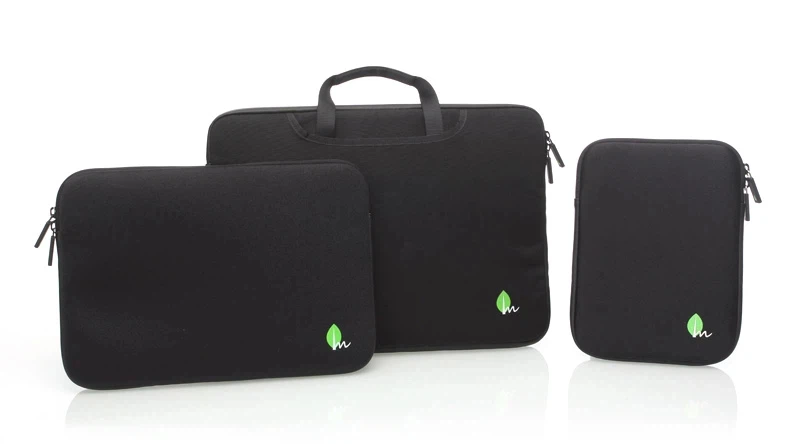
Formal Office and Business Meetings
A business laptop bag fits traditional office settings better than most backpacks. In legal, finance, consulting, real estate, and corporate sales environments, appearance still matters. A slim black or dark gray laptop briefcase looks natural next to a suit, a blazer, or formal business wear.
This does not mean every backpack looks casual. Many modern business backpacks are clean enough for office use. But when the setting is formal and the load is light, a laptop bag gives a sharper first impression.
For example, if a sales director only carries a 14-inch laptop, a few contracts, a pen, and a tablet to a client meeting, a structured laptop bag is more suitable than a 25L backpack. The user gets a cleaner profile and easier access to documents during the meeting.
Light Daily Carry
A laptop bag works best when the user carries only the essentials:
· Laptop
· Charger
· Documents
· Tablet
· Pen
· Business cards
· Small accessories
Once the user adds a water bottle, umbrella, lunch box, headphones, jacket, or travel items, the laptop bag starts to show its limits. It may still hold those items, but the shape becomes bulky and the single-shoulder load becomes uncomfortable.
This is why laptop bags suit short office movement better than all-day carry.
Quick Access to Laptop and Documents
The biggest practical advantage of a laptop bag is access. Most laptop bags open horizontally. Documents, folders, tablets, and laptops can be pulled out quickly without digging through stacked compartments.
This matters in airport security lines, meeting rooms, client visits, trade shows, and sales calls. If the user often takes documents in and out during the day, a laptop bag can be more efficient.
The limitation is obvious: the same structure that makes it slim and accessible also limits capacity. A laptop bag is at its best when it stays light.
When Is a Laptop Backpack the Better Choice?
A laptop backpack is the better choice for most modern daily carry situations. It handles weight, movement, storage, and weather better than a traditional laptop bag.

Daily Commuting
Commuters rarely carry only a laptop. A typical workday setup may include a 15.6-inch laptop, charger, mouse, power bank, notebook, water bottle, keys, wallet, phone, umbrella, and sometimes a light jacket or lunch box.
A laptop backpack handles this mix better because it has vertical storage, multiple compartments, and two-shoulder weight distribution. The user can walk through a subway station, climb stairs, hold a coffee, or check a phone without constantly adjusting a shoulder strap.
For urban commuting, this is not a small detail. A bag that feels acceptable for five minutes can become irritating after 30 minutes.
Long Walks, Public Transport, and Cycling
The more movement involved, the stronger the case for a laptop backpack.
For walking and public transport, a backpack keeps both hands free and keeps the load close to the body. For cycling, a laptop backpack is usually safer than a messenger-style laptop bag because it does not swing as much when the rider turns, brakes, or stands up on the pedals.
Some commuter laptop backpacks also add chest straps, reflective details, and more stable back panels. Not every user needs these features, but they make sense in rainy cities, bike-friendly markets, and outdoor commuting scenarios.
A laptop bag can work for a short walk from a car to an office. It is not the best structure for active movement.
Business Travel and Hybrid Work
Business travel has changed how people carry laptops. Many users now move between airports, hotels, client offices, coworking spaces, and cafés in the same day. They need one bag that can carry work gear and personal items.
A travel laptop backpack usually performs better here. Useful features include:
· Separate laptop compartment
· Quick-access front pocket
· Luggage strap
· Hidden back pocket
· Side water bottle pocket
· Organized cable storage
· Soft-lined tablet pocket
A laptop bag can still work for short business trips, especially if paired with rolling luggage. But if the user wants one carry item for multiple environments, a laptop backpack is more flexible.
Students and Multi-Purpose Daily Carry
Students, engineers, designers, remote workers, and tech employees often need capacity more than formality. They may carry books, tools, headphones, samples, chargers, tablets, and personal items.
For these users, laptop backpacks make more sense. A slim laptop bag may look cleaner, but it cannot handle varied daily loads as well.
The main risk is appearance. A poorly designed backpack can look too much like a school bag. For work use, the better option is a structured business laptop backpack with clean lines, neutral colors, and a dedicated laptop compartment.
Comfort and Laptop Protection: What Really Matters?
Comfort and protection are the two areas where a laptop backpack usually has the edge. But the details matter. A bad laptop backpack is not automatically safer than a good laptop bag.
Weight Distribution and Carrying Comfort
A laptop bag usually puts weight on one hand or one shoulder. This is acceptable for short carry time. But when the load gets heavier, the body compensates. The user raises one shoulder, shifts posture, or switches sides repeatedly.
A laptop backpack distributes the load across both shoulders and the back. This makes a real difference when carrying a 15-inch or 16-inch laptop with accessories.
For product development, this affects design choices. Shoulder straps should not be too narrow. A thin strap may look sleek in photos, but it can dig into the shoulder when the bag carries a laptop and daily items. For commuter models, wider padded shoulder straps and a stable back panel are usually better than a flat fashion-style strap.
Padded Laptop Compartment
A padded laptop compartment is the basic requirement for a protective laptop backpack or laptop bag. The padding should cover the back, front, and sides of the laptop area. A thin fabric divider is not enough.
Fit also matters.
If the laptop compartment is too large, the device moves inside the bag. If it is too tight, the user struggles to insert the laptop, and the zipper area may press against the device edge. This is especially relevant for 15.6-inch and 16-inch laptop designs, where different brands vary in length, width, and thickness.
For OEM or ODM projects, buyers should confirm the target laptop size during sampling. A "fits 15-inch laptop" claim is not enough. The actual compartment dimensions should be checked against the target device category.
Suspended Laptop Sleeve and Bottom Protection
A suspended laptop sleeve means the laptop compartment does not touch the very bottom of the bag. There is a small raised gap between the laptop and the base panel.
This is a useful structure.
When a user places a backpack on the ground, the bottom takes the first impact. If the laptop sleeve reaches the bottom with no buffer, the laptop absorbs more shock. A raised laptop sleeve reduces that risk.
Bottom protection also matters for rainy streets, bus floors, airport lounges, and outdoor work sites. A reinforced bottom panel helps the bag keep its shape and protects the laptop zone from pressure, moisture, and abrasion.
Anti-Scratch Lining and Separate Storage
A laptop is not only damaged by drops. It can also be scratched by chargers, keys, adapters, tools, and metal accessories inside the bag.
A soft anti-scratch lining helps protect aluminum laptop shells, tablets, and screens. Separate storage for hard accessories is just as important. A charger should not sit loose in the same compartment as the laptop.
This is where many low-cost laptop bags fail. They advertise a laptop compartment, but the internal layout does not control movement between items.
Weather Resistance: Why Waterproof Design Matters
Water resistance and waterproof performance are not the same.
A water-resistant laptop bag can handle light splashes or short exposure to rain. A waterproof laptop backpack should be designed to resist water through a more complete structure, not just a coated fabric label.
For laptop carry products, this matters because the content is valuable. A wet T-shirt in a travel bag is inconvenient. A wet laptop can stop a workday.
A real waterproof or rain-ready laptop backpack depends on several parts working together:
Component | Why It Matters |
| Outer Fabric | Coated polyester, nylon, Oxford fabric, TPU/PVC-coated fabric, or similar materials affect water resistance and durability |
| Zipper | Standard zippers are weak points; water-resistant zippers or covered zipper flaps improve protection |
| Seam Treatment | Needle holes and seams can allow water entry if not designed properly |
| Bottom Panel | The bottom often contacts wet ground first and needs abrasion and moisture resistance |
| Laptop Compartment Placement | A raised laptop compartment reduces direct exposure to bottom moisture and impact |
| Inner Lining | Helps protect electronics from scratches and minor moisture transfer |
For a laptop carry product, waterproof performance is not only a fabric choice. It is a structural design decision.
This is where a waterproof laptop backpack has a stronger position than many traditional laptop bags. It has more room to combine protective structure, coated fabric, organized storage, and stable carrying comfort.
How to Choose Between a Laptop Bag and a Laptop Backpack
The right choice becomes clear when the user looks at the real daily routine, not just product photos.
Choose a Laptop Bag If...
A laptop bag is the better choice if:
· You attend formal meetings often.
· You carry only a laptop and a few documents.
· You need quick access to files or a tablet.
· Your commute is short.
· You prefer a slim, professional profile.
This choice is especially suitable for office workers, sales teams, lawyers, consultants, and executives who move mostly between cars, offices, meeting rooms, and hotels.
Keep the load controlled. Once the bag starts carrying too many daily items, its advantage disappears.
Choose a Laptop Backpack If...
A laptop backpack is the better choice if:
· You walk, commute, or travel frequently.
· You carry multiple items every day.
· You need better weight distribution.
· You want hands-free movement.
· You prefer one bag for work, travel, and daily use.
This is the practical choice for commuters, students, engineers, designers, field staff, business travelers, and hybrid workers.
The backpack should still be designed properly. A general backpack with a loose laptop sleeve is not the same as a protective laptop backpack.
Choose a Waterproof Laptop Backpack If...
A waterproof laptop backpack is the better choice if:
· You often commute in rain.
· You carry expensive electronics.
· You use public transport, bikes, or walking routes.
· You need stronger outdoor or travel protection.
· You are developing a commuter, travel, or outdoor-inspired laptop product line.
For brands, this is often the most interesting category. It combines clear user pain points: device protection, comfort, storage, weather resistance, and daily practicality.
For Brands and Buyers: Which Product Has Better Market Potential?
For B2B buyers, laptop bags and laptop backpacks serve different product strategies.
A laptop bag fits well in corporate gifting, formal office collections, document-focused business lines, and slim professional products. It is easier to position as a clean business accessory. It can also work well for low-profile branding, leather-look materials, and executive-style product sets.
A laptop backpack has broader development space. It can target urban commuters, business travelers, students, tech workers, outdoor-inspired daily carry users, and waterproof bag markets. It also allows more structural differentiation: laptop compartment design, back panel construction, fabric coating, zipper selection, internal organization, side pockets, hidden pockets, and luggage straps.
Hybrid designs are worth attention. A business-style laptop backpack with a side handle, structured shape, waterproof fabric, and neutral color can satisfy users who want the comfort of a backpack without the look of a school bag.
For custom manufacturing, the early questions should be practical:
· What laptop size should the bag fit?
· Is the target user commuting, traveling, cycling, or attending meetings?
· Should the bag be water-resistant or waterproof?
· Does the design need a suspended laptop sleeve?
· What price point and material level does the market expect?
· Will the customer need logo placement, custom lining, color matching, or packaging?
The best product direction is rarely decided by appearance alone. It comes from matching structure to use case.
Common Mistakes When Choosing a Laptop Bag or Backpack
Many buyers make the wrong choice because they judge the bag too quickly.
Choosing by Appearance Only
A good-looking bag can still be weak in protection. Thin padding, poor zipper placement, soft bottom panels, and loose laptop sleeves are common problems in fashion-first designs.
This is especially risky for tote-style laptop bags. They may look professional, but if the structure is soft and the laptop compartment is not reinforced, the device can be squeezed by other items.
Ignoring Laptop Size and Fit
A 13-inch, 14-inch, 15.6-inch, or 16-inch laptop label does not tell the full story. Screen size is not the same as total device size. Thickness, edge shape, and protective cases can change the fit.
For product sourcing, always confirm internal compartment dimensions during sample review. Check how the laptop enters the compartment, how the zipper closes, and whether the device moves when the bag is carried.
Confusing Water-Resistant with Waterproof
This is one of the most common product mistakes.
Water-resistant fabric may protect against light rain. It does not mean the whole bag is waterproof. Water can enter through zippers, seams, stitching holes, pockets, or the bottom structure.
If the product claim is waterproof, the design needs to support that claim. Otherwise, customers will notice the gap the first time they get caught in real rain.
FAQ
Is a laptop backpack better than a laptop bag?
For commuting, travel, heavier loads, and longer carrying time, a laptop backpack is usually better. It distributes weight more evenly and offers more storage. For formal meetings and light office carry, a laptop bag can still be the better choice.
Are laptop bags more professional than backpacks?
Traditional laptop bags usually look more formal. However, modern business laptop backpacks with structured shapes, neutral colors, and clean details can work well in many office environments.
Which is better for commuting with a laptop?
A laptop backpack is better for most commuting. It is more comfortable for walking, public transport, and cycling, especially when carrying a laptop plus charger, water bottle, documents, and personal items.
Can a laptop bag be waterproof?
Yes, but it depends on the full construction. Fabric, zipper, seam design, bottom panel, and lining all affect water protection. A standard business laptop bag is not automatically waterproof.
What should I look for in a waterproof laptop backpack?
Look for coated or waterproof outer fabric, protected zippers, thoughtful seam design, a raised laptop compartment, reinforced bottom panel, soft lining, comfortable shoulder straps, and organized storage for accessories.
Final Verdict: Laptop Bag vs Laptop Backpack
For formal meetings, short office trips, and light document-focused work, a laptop bag is still a strong choice. It looks clean, gives fast access, and keeps the user profile slim.
For commuting, travel, heavier daily loads, rainy weather, and multi-purpose use, a laptop backpack is usually the better option. It is more comfortable, more flexible, and better suited to modern work routines.
For brands developing laptop carry products, waterproof laptop backpacks offer stronger differentiation in commuter, travel, and outdoor-inspired markets. FENGLINWAN supports brands with waterproof fabric selection, laptop compartment design, sample development, and OEM/ODM production for custom laptop backpacks and waterproof carry products. Contact us if you are planning a new waterproof laptop bag project or need help turning an idea into a workable sample.