


Can Waterproof Bags Be Submerged? Understanding the Limits of Waterproof bags
Jan 14, 2026
Leave a message
As an outdoor gear manufacturer specializing in waterproof bags, we're often asked this critical question: Can waterproof bags truly be submerged underwater? The answer isn't as simple as yes or no-it depends on several factors including materials, construction, and testing standards. In this article, we'll dive deep into the world of waterproof bag technology to help you understand what your gear can and cannot handle.

What Makes a Bag "Waterproof"?
Before discussing submersion, it's essential to understand what "waterproof" actually means in the context of bags and backpacks. A truly waterproof bag is constructed to prevent water penetration under specific conditions, unlike water-resistant bags which only offer protection against light rain or splashes.
Modern waterproof bags typically use one or more of these technologies:
- Coated fabrics (like PU-coated nylon)
- Laminated waterproof membranes (such as those used in dry suits)
- Seam-sealed construction
- Waterproof zippers and closures
- Roll-top designs with compression seals

Submersion vs. Water Resistance: Key Differences
When evaluating whether a waterproof bag can be submerged, we must distinguish between different levels of water exposure:
- Light rain or splash resistance: Basic protection against occasional droplets
- Heavy rain protection: Withstand sustained rainfall (like IPX4-6 ratings)
- Temporary submersion: Brief, accidental immersion in water
- Prolonged submersion: Extended periods underwater under pressure
Most commercially available "waterproof" backpacks are designed for the first three scenarios, not prolonged submersion. The extent to which a bag can be submerged depends largely on its IP (Ingress Protection) rating or specific waterproof testing it has undergone.
Waterproof Testing Methods for Bags
Third-party testing agencies conduct rigorous evaluations to determine a bag's waterproof capabilities. These tests simulate real-world conditions that outdoor gear might encounter:

- Static Water Pressure Test: Measures the fabric's resistance to water penetration, expressed in millimeters or centimeters of water column height. Higher numbers indicate better waterproof performance.
- Surface Water Resistance (Spray) Test: Simulates rainfall conditions to evaluate the surface's water-repellent properties, rated by water spray grades.
- Rain/Spray Test: Laboratory simulation of natural rainfall with multi-directional spraying on the complete backpack, followed by inspection for internal moisture or water stains.
- Immersion Test: The most relevant for submersion questions-this test partially or completely submerges the backpack in water for a set duration, or maintains specific water pressure for a period, to evaluate its waterproof limits in situations like wading through water or accidental drops into water.
- Durability Tests: Includes waterproof performance retention tests after washing/abrasion to verify the longevity of the waterproof function.
Understanding Submersion Capabilities
Based on these testing methods, we can categorize waterproof bags' submersion capabilities:
1. Non-submersible water-resistant bags:
- Protect against rain and splashes only
- May fail when fully submerged
- Typically lack sealed seams and waterproof zippers
2. Temporarily submersible bags:
- Can withstand brief, accidental submersion (30 seconds to a few minutes)
- Often rated IPX7 (protected against immersion in water up to 1 meter for 30 minutes)
- Feature waterproof zippers and sealed seams
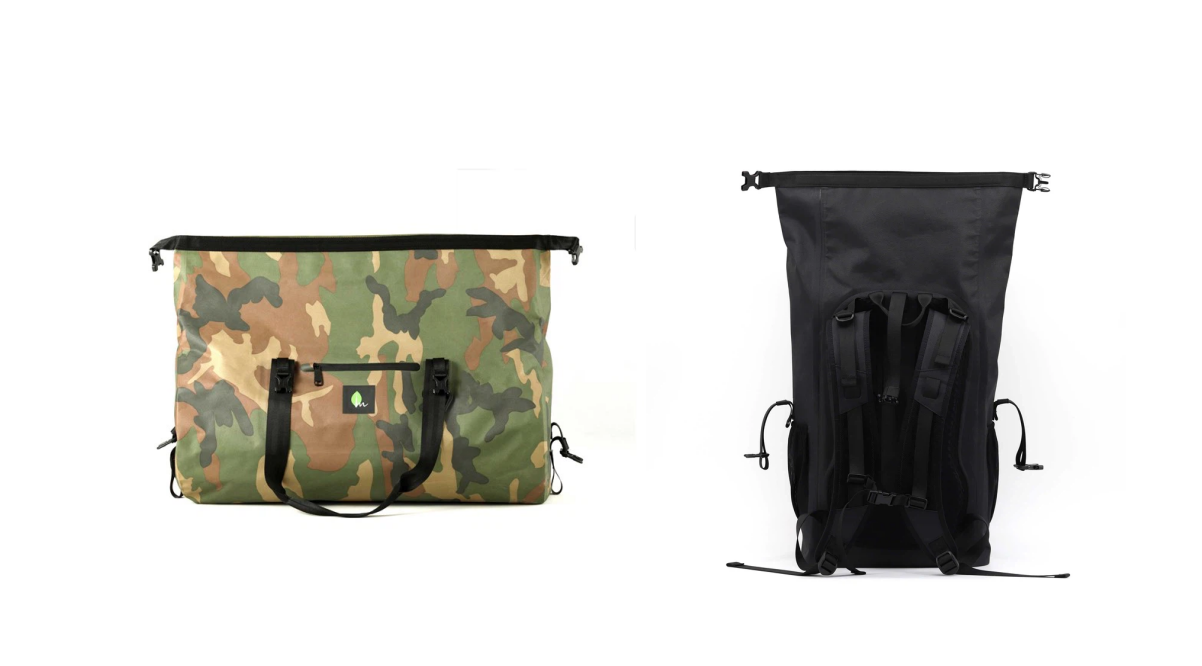
3. Fully submersible dry bags:
- Designed for water sports and marine use
- Can be submerged for extended periods at various depths
- Often rated IPX8 (protected against continuous immersion under conditions specified by manufacturer)
- Typically use roll-top closures or heavy-duty waterproof zippers
Factors Affecting Submersion Performance
Several key factors determine how well a waterproof bag can handle submersion:
- Seam Construction: Stitched seams without sealing will leak when submerged. Taped or welded seams are essential for submersion.
- Closure Systems: Regular zippers, even with covers, may fail when submerged. Waterproof zippers or roll-top closures perform better underwater.
- Material Durability: The waterproof coating or laminate must maintain integrity under water pressure.
- Depth and Duration: Water pressure increases with depth-a bag that's waterproof at 1 meter might leak at 3 meters.
- Water Type: Saltwater can be more challenging due to corrosion potential and smaller molecular size.
Practical Implications for Outdoor Enthusiasts
Understanding your bag's limits is crucial for trip planning:
For Hikers and Campers:
- Most waterproof hiking backpacks handle rain and stream crossings well
- Don't assume your pack can be submerged for long periods
- Use internal dry bags for critical items if expecting deep water exposure
For Water Sports Participants:
- Choose specifically designed dry bags for kayaking, canoeing, or rafting
- Look for clear IPX7 or IPX8 ratings
- Roll-top bags often provide the most reliable submersion protection
For Everyday Use:
- Urban waterproof bags mainly protect against rain
- Brief submersion (like dropping in a puddle) might be okay for high-quality bags
- Don't store electronics in "waterproof" pockets if expecting full submersion
Maintaining Your Bag's Waterproof Integrity
To preserve your bag's waterproof capabilities:
- Regularly clean and reapply DWR (Durable Water Repellent) treatments
- Avoid abrasive surfaces that can wear coatings
- Store properly-not compressed or in damp conditions
- Follow manufacturer's care instructions for washing
- Periodically check seam seals and zippers for wear
Conclusion: Can Waterproof Bags Be Submerged?
The answer depends on the specific bag and its construction. While many high-quality waterproof bags can handle brief, accidental submersion, only specially designed dry bags can withstand prolonged immersion. Always check the manufacturer's specifications and look for clear IP ratings if you anticipate needing submersion capability. Remember that "waterproof" is a spectrum-from splash resistance to full submersion tolerance-and choose your gear accordingly for your specific needs.
When selecting a waterproof backpack, consider your actual requirements. If you simply need protection from rain, a standard waterproof bag with proper construction will suffice. But if you're planning activities where your gear might be fully immersed, invest in a purpose-built submersible dry bag to keep your belongings truly dry.
Discover FENGLINWAN, Your Trusted Professional Waterproof Bag Supplier
Our products are built to last, offering a full range from splash-proof daily bags to professional diving-grade waterproof backpacks. Customized to meet your specific waterproofing needs, we provide tailored solutions across different protection levels. Contact us now to request free samples!