

How Leading Travel Gear Brands Build Weatherproof Bags
Aug 18, 2026
Leave a message
Weatherproof bags are no longer a niche outdoor product. Travel gear brands now use them across business backpacks, weekend duffels, road-trip bags, dry bags, totes, and hybrid outdoor travel collections. The best products are not built by choosing one waterproof fabric. They are built through material selection, sealed construction, closure design, compartment planning, product testing, and manufacturing control.
For brands developing new travel bags in 2026, this guide explains what actually makes a bag weatherproof.

Why Weatherproof Bags Matter for Travel Gear Brands in 2026
A weatherproof bag is a travel bag designed to protect contents from rain, moisture, splashes, dirt, and normal outdoor exposure. In the travel gear market, "weatherproof" usually means more than basic water resistance, but it does not always mean the bag can be submerged underwater.
This distinction matters.
Modern travelers carry laptops, cameras, power banks, clothing, food, documents, and personal gear in the same bag. They move between airports, taxis, hotels, campsites, beaches, boats, and city streets. A bag may sit in a wet car trunk, scrape against concrete, get thrown into a luggage hold, or be worn through heavy rain.
That is why leading brands design weatherproof bags as complete travel systems.
They optimize for:
- Rain and splash protection
- Abrasion resistance
- Comfortable carry
- Internal organization
- Laptop and electronics protection
- Weight control
- Easy access
- Long-term durability
- Cost and retail positioning
A heavy waterproof shell alone is not enough. If the bag is hard to carry, difficult to open, poorly organized, or weak at the seams, it will fail in real travel use.
The strongest travel gear brands start with the user scenario before they choose materials.

Weatherproof vs Water-Resistant vs Waterproof: What Brands Need to Know
Brands often use water-related terms too casually. That creates product confusion, weakens customer trust, and increases return risk. A deeper comparison of waterproof vs. water-resistant construction can help brands define more accurate product claims.
A clear product claim should match the actual structure and testing level.
Water-Resistant Bags
A water-resistant bag can resist light rain, small splashes, or short exposure to moisture. It may use polyester or nylon fabric with a PU coating, DWR treatment, or water-resistant finish.
This level is common in city backpacks, laptop bags, school bags, light travel totes, and budget travel backpacks.
Water-resistant does not mean sealed. If rain is heavy or prolonged, water can enter through zippers, stitching holes, seams, pocket openings, or the bottom panel.
Best for: daily commuting, light travel, short rain exposure.
Weatherproof Bags
A weatherproof bag is built for broader travel conditions. It should handle rain, wet surfaces, dust, mud, humidity, and repeated movement through different environments.
Weatherproof construction usually combines coated or laminated fabric with better seam planning, protected zippers, storm flaps, reinforced bottoms, and more durable hardware.
This is the right category for many travel gear brands. Most users do not need a bag that can stay underwater for hours. They need a bag that keeps gear safe during bad weather and rough travel.
Best for: business travel, weekend trips, road travel, outdoor commuting, light adventure travel.
Waterproof Bags and Dry Bags
A waterproof bag is designed to prevent water from entering under more demanding conditions. A dry bag is a specific type of waterproof bag often used for kayaking, boating, rafting, fishing, camping, and water sports.
These bags typically use TPU-coated fabric, PVC tarpaulin, welded seams, roll-top closures, waterproof zippers, or other sealed construction methods.
Some products may be tested to IPX-style standards. IPX6 refers to strong water jets. IPX7 and IPX8 relate to immersion conditions, but the exact test depth and duration should always be confirmed.
Best for: water sports, wet outdoor environments, boating, rafting, fishing, and high-risk water exposure.
A travel brand should not use "waterproof" as a marketing shortcut. The claim must follow the construction.
Start with the Use Case: How Leading Brands Define Protection Levels
The right weatherproof bag design starts with one question: where will the bag actually be used?
A laptop backpack for business travel does not need the same construction as a roll-top dry bag for kayaking. A road-trip duffel does not need the same access system as a commuter tote. A premium outdoor backpack may need both water protection and load comfort.
The use case decides the protection level.
|
Use Case |
Main User Problem |
Recommended Weatherproof Approach |
|
Urban commuting |
Sudden rain, laptop protection, quick access |
PU-coated fabric, water-resistant zipper, storm flap, padded laptop sleeve |
|
Business travel |
Electronics, documents, airport movement |
Weatherproof shell, luggage strap, structured compartments |
|
Weekend trips |
Clothes, shoes, toiletries, mixed gear |
Coated nylon/polyester, wet/dry sections, reinforced base |
|
Road trips |
Abrasion, large capacity, rough handling |
Durable duffel structure, coated fabric, stronger handles |
|
Hiking and camping |
Rain, mud, sweat, long carry time |
Waterproof backpack design, sealed seams, ergonomic straps |
|
Kayaking and boating |
Splashes, short immersion, floating risk |
TPU/PVC fabric, RF welded seams, roll-top closure |
|
Fishing and beach use |
Wet gear, sand, easy cleaning |
Waterproof lining, welded pockets, drainable wet sections where appropriate |
Urban and Business Travel
Urban weatherproof bags focus on daily protection, not extreme waterproofing. These products should keep laptops, tablets, notebooks, and chargers safe during rain exposure.
The structure should allow fast access. A commuter does not want to fight a stiff waterproof zipper every time they need a passport or laptop.
For this category, brands often use PU-coated nylon or polyester, water-resistant zippers, storm flaps, padded laptop sleeves, and luggage pass-through straps. A waterproof commuter backpack is a useful example of how daily travel protection can be combined with practical access and carrying comfort.
Weekend Trips and Road Travel
Weekend bags need capacity and flexibility. Travelers may pack clothes, shoes, wet towels, toiletries, electronics, and snacks in one bag.
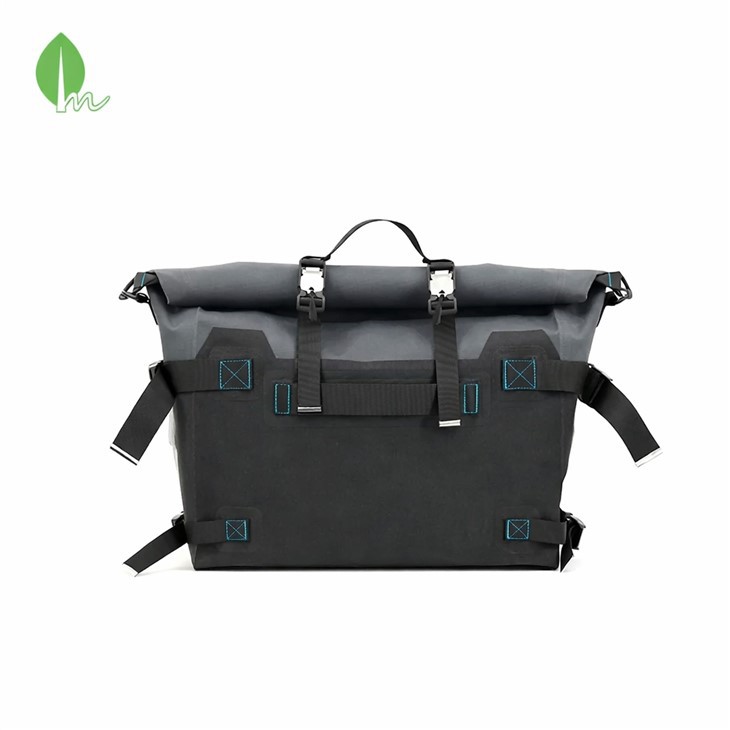
This is where weatherproof duffels perform well. A good waterproof duffel bag should have a durable shell, reinforced bottom, strong carry handles, optional backpack straps, and a simple main compartment.
Internal organization should support packing, but it should not create too many stitched seams that weaken weather protection. For brands developing this type of product, a large roll-top waterproof duffel bag shows how capacity, carry flexibility, and stronger water protection can be combined.
Outdoor Travel and Water Sports
Outdoor and water-sport bags need stronger sealing. For kayaking, fishing, boating, rafting, and wet camping, the bag may face heavy splashes or temporary immersion.
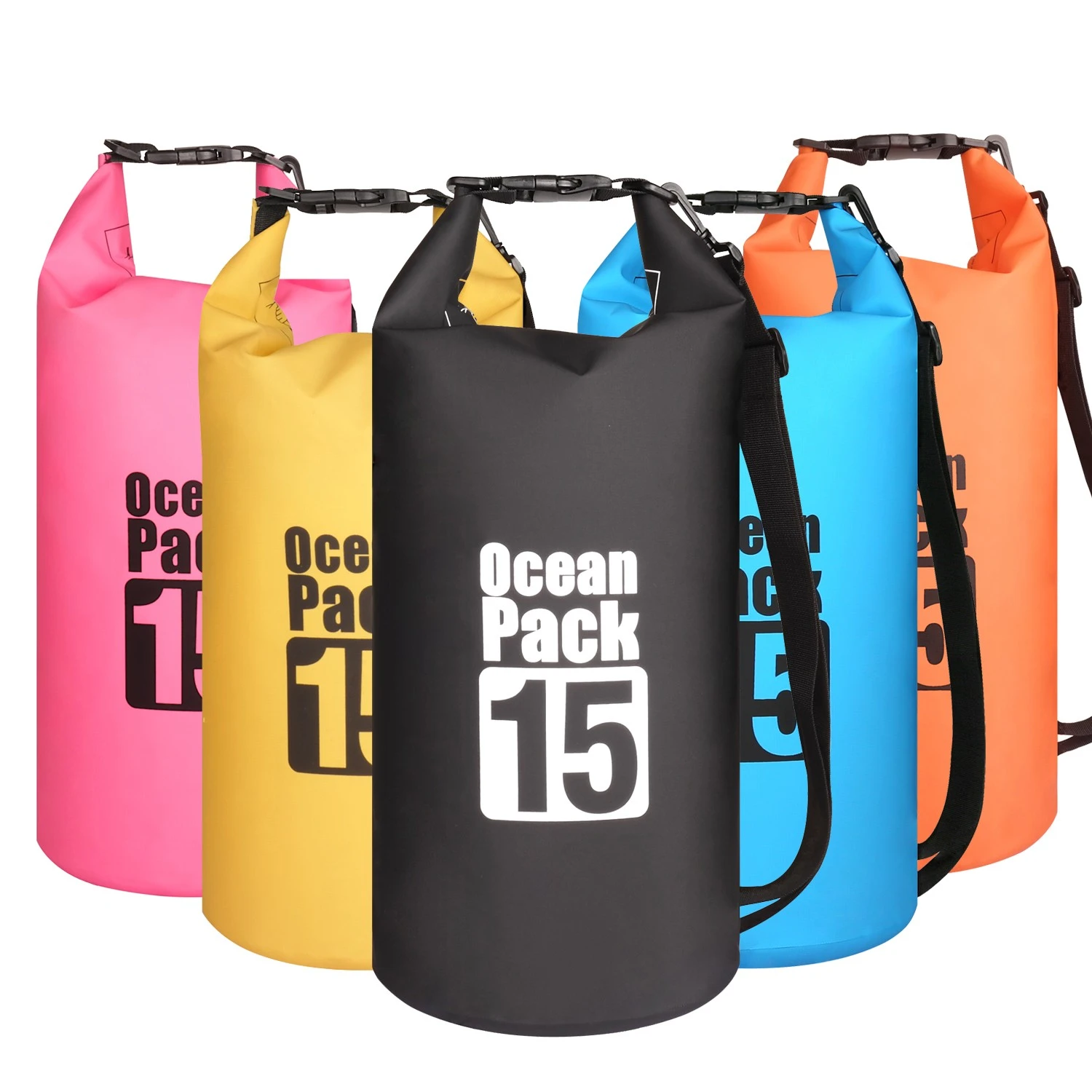
Roll-top closure is often the most reliable option for floating waterproof dry bags because it reduces zipper leakage risk. RF welded seams or heat-sealed seams are important because traditional sewing creates needle holes.
This category should be built around the waterproof claim from the beginning.
Materials Leading Brands Use for Weatherproof Bags
There is no single best material for weatherproof bags. The right choice depends on target price, weight, hand feel, durability, waterproof level, printing method, and production process.
A premium dry bag and a budget airline personal item should not use the same material strategy.
|
Material |
Strengths |
Limits |
Best Use |
|
TPU-coated fabric |
Flexible, strong waterproofing, good hand feel, suitable for welding |
Higher cost than basic coated fabrics |
Premium dry bags, waterproof backpacks, duffels |
|
PVC tarpaulin / PVC-coated fabric |
Strong waterproofing, durable, cost-effective |
Heavier, less premium hand feel |
Dry bags, waterproof duffels, heavy-duty outdoor bags |
|
PU-coated nylon |
Lightweight, tear-resistant, good for travel |
Waterproofing depends on coating and seams |
Travel backpacks, commuter bags, lightweight weatherproof bags |
|
PU-coated polyester |
Cost-friendly, stable, good for entry-level products |
Less premium than TPU or Cordura |
Budget travel bags, promotional bags, everyday backpacks |
|
Cordura or high-denier fabric |
Excellent abrasion resistance, rugged look |
Higher cost, heavier depending on spec |
Premium outdoor bags, adventure travel bags |
|
Recycled polyester / recycled nylon |
Supports sustainability goals, familiar supply chain |
Needs coating and testing for waterproof performance |
Eco-focused travel collections |
|
PVC-free waterproof materials |
Better for certain brand sustainability positions |
Cost and availability may vary |
Premium and sustainability-led product lines |
TPU-Coated or TPU-Laminated Fabric
TPU is widely used in mid- to high-end waterproof bags because it offers a good balance of flexibility, waterproof performance, and appearance. It works well with welding processes when the fabric structure is compatible.
Brands use TPU for waterproof backpacks, dry bags, soft coolers, travel duffels, and premium outdoor storage bags.
TPU is also useful when a product needs a softer hand feel than traditional heavy PVC fabric.
PVC Tarpaulin and PVC-Coated Fabric
PVC tarpaulin is common in rugged waterproof bags. It provides strong water resistance, good durability, and a practical cost structure.
It is often used for waterproof duffel bags, roll-top dry bags, motorcycle bags, fishing bags, and heavy-duty outdoor gear bags.
The trade-off is weight and hand feel. PVC can be tougher and more rigid than lighter coated fabrics. For some outdoor products, that is acceptable. For premium urban travel, it may feel too industrial.
PU-Coated Nylon and Polyester
PU-coated nylon and polyester are common choices for weatherproof travel backpacks, totes, and commuter bags. They are lighter than PVC and more suitable for soft, structured travel products.
These fabrics are ideal when the product needs rain protection rather than full immersion protection.
The key risk is overclaiming. A PU-coated shell does not make the whole bag waterproof if the seams, zippers, and openings are not sealed.
Cordura, Recycled Fabrics and PVC-Free Options
Cordura and other high-denier fabrics are used when abrasion resistance is a priority. They are suitable for premium outdoor travel bags, rugged backpacks, and hybrid duffels.
Recycled polyester, recycled nylon, recycled TPU, and PVC-free options are increasingly important in 2026 product planning. Many travel gear brands want lower-impact materials, but performance still comes first.
A recycled material still needs coating stability, seam strength, colorfastness, abrasion resistance, and waterproof testing.
Sustainability cannot replace product validation.
Seams and Closures: Where Weatherproof Bags Really Win or Fail
The weakest part of many weatherproof bags is not the fabric. It is the construction.
Water usually enters through stitching holes, zipper teeth, pocket openings, bottom corners, handle attachment points, shoulder strap anchors, or poorly sealed panels. A strong fabric with weak seams creates a weak product.
Brands need to design the shell, seams, and closure as one system. For a broader manufacturing overview, see how waterproof bags are made through material selection, HF welding, and construction planning.
Stitched Seams and Seam Taping
Traditional stitching is flexible, familiar, and suitable for many travel bags. It also creates needle holes.
For water-resistant or weatherproof travel bags, stitched seams may be acceptable when combined with coated fabrics, lining, storm flaps, seam binding, or seam taping.
Seam taping improves rain protection by covering stitch lines. It is useful for backpacks, soft travel bags, and outdoor products that need better weather protection without becoming a fully welded dry bag.
But seam taping depends on fabric compatibility, tape quality, heat control, and operator skill. The differences between welding, bonding, and seam design for TPU waterproof bags are especially important when a brand is choosing between stitched and sealed construction.
RF Welding and Heat Sealing
RF welding, also called high-frequency welding, uses energy to bond compatible materials without traditional needle stitching. Heat sealing works in a similar direction, depending on material and equipment.
These processes are important for waterproof dry bags, waterproof backpacks, waterproof duffels, waterproof pouches, and soft coolers.
The benefit is clear: fewer needle holes and stronger sealed seams.
However, welding is not suitable for every fabric. The material coating, thickness, surface texture, and product shape must match the process. A factory that understands both sewing and welding can help a brand choose the right construction instead of forcing one method onto every design.
Waterproof Zippers, Storm Flaps and Roll-Top Closures
Closures decide how users interact with the bag. They also decide how water enters.
|
Closure Type |
Strength |
Limitation |
Best Use |
|
Standard zipper with storm flap |
Easy access, cost-effective |
Limited waterproofing |
Urban and travel weatherproof bags |
|
Water-resistant zipper |
Better rain protection |
Not for immersion |
Laptop bags, commuter backpacks |
|
Waterproof zipper |
Stronger seal, premium feel |
Higher cost, tighter operation |
Premium waterproof backpacks, tech bags |
|
Roll-top closure |
Reliable for dry bags, simple sealing |
Slower access |
Kayaking, boating, dry bags |
|
Buckle flap system |
Good rain shielding, casual look |
Depends on flap coverage |
Totes, messenger bags, outdoor lifestyle bags |
For many travel bags, a storm flap is more practical than a full waterproof zipper. For dry bags, roll-top closure is often safer. For premium electronics protection, a waterproof zipper may be worth the cost.
Brands comparing closure systems should also understand the difference between water-resistant, waterproof, and airtight zipper types.
The right closure is not the most expensive one. It is the one that matches the user's access needs and water exposure level.
Structure and Compartment Design for Real Travel Use
Weatherproof construction protects the bag from outside conditions. Good structure protects the user from messy travel.
A travel bag must separate, organize, and protect different items. This is where many brands can create real product value.
Wet/Dry Separation
Wet/dry separation means the bag has separate areas for wet items and dry items. It is useful for beach bags, gym bags, swim bags, travel duffels, hiking bags, and family travel bags.
Common design options include:
- Coated wet compartments
- Waterproof zipper pockets
- Removable wet pouches
- Shoe compartments
- Lined laundry sections
- Separate toiletry areas
Drain holes should be used carefully. They make sense for some beach totes, gym bags, or wet gear bags. They do not make sense for a fully waterproof dry bag because they break the sealed structure.
Laptop, Tech and Quick-Access Compartments
Business travelers and digital nomads need weather protection around electronics. A waterproof laptop backpack should not only use a water-resistant outer shell. It should include a padded laptop sleeve, raised bottom protection, secure closure, and controlled access.
Quick-access pockets also matter. Users need passports, chargers, glasses, wallets, and phones without opening the entire main compartment in rain or crowded travel spaces. A purpose-built waterproof travel backpack can combine these travel-oriented features with weather protection.
Reinforced Bottoms and Stress Points
A weatherproof bag often fails at stress points before the fabric wears out.
Important reinforcement areas include:
- Bottom panel
- Corners
- Handle attachments
- Shoulder strap anchors
- Buckle points
- Zipper ends
- Daisy chains or external gear loops
- Wheel or chassis connection points for rolling bags
Reinforcement adds cost and weight, but it protects the product's lifespan. For travel gear brands, this is often where premium positioning becomes visible.
A bag that survives rough handling builds more trust than a bag that only looks waterproof in photos.
Testing and Quality Control Before Mass Production
Weatherproof bag testing should focus on the finished product, not only the material.
A fabric supplier may provide water pressure data for coated fabric. That is useful, but it does not prove the full bag will resist rain or leakage. The finished bag includes seams, zippers, lining, webbing, handles, bottom panels, and hardware.
Brands should define test requirements based on the product claim.
For a weatherproof commuter backpack, rain spray testing, zipper function checks, seam inspection, and laptop compartment protection may be enough. For a roll-top dry bag, the testing should be stricter.
Common weatherproof bag quality checks include:
- Fabric water resistance test
- Rain spray test
- Leakage test
- Seam strength test
- Zipper leakage and durability test
- Abrasion resistance test
- Load-bearing test
- Drop test
- Coating adhesion test
- Colorfastness test
- Low-temperature flexibility test
- Handle and strap pull test
- Final random inspection before shipment
For higher waterproof claims, brands may request stronger spray tests, immersion checks, extended soaking, or IPX-style testing. The principles behind air and water leakage testing for waterproof bags are especially useful when validating sealed products.
The main rule is simple: the test must match the marketing claim.
Quality control should also happen before mass production. A good process includes material confirmation, prototype sample, revised sample, pre-production sample, inline inspection, and final inspection.
Mass production consistency is what separates a good sample from a reliable product line.
How to Choose a Weatherproof Bag Manufacturer for Your Brand
A weatherproof bag manufacturer should be more than a sewing supplier. The factory should understand materials, coating behavior, seam construction, waterproof closure systems, testing, and OEM/ODM product development.
For travel gear brands, supplier choice directly affects product performance.
Manufacturing Capability
A qualified manufacturer should understand the difference between TPU, PVC tarpaulin, PU-coated nylon, polyester, Cordura, recycled fabrics, and PVC-free materials.
The factory should also know which materials work with sewing, seam taping, RF welding, heat sealing, or mixed construction.
This is especially important for custom waterproof bags. A design may look simple on paper but become difficult during production if the fabric, seam angle, zipper type, or logo process is not compatible.
Product Development Support
A strong manufacturing partner should help brands turn an idea into a workable product.
That support may include:
- Material recommendation
- Structure review
- Prototype development
- Waterproof construction suggestions
- Custom size planning
- Custom logo application
- Color matching
- Hardware selection
- Packaging support
- OEM and ODM development
For private label waterproof bags, this support is often more valuable than a slightly lower unit price.
Quality, Capacity and Communication
Brands should evaluate certification, production capacity, sample quality, communication speed, export experience, inspection process, and after-sales support.
Useful questions include:
- Can the factory make both sewn and welded waterproof bags?
- Can it test waterproof performance before shipment?
- Does it understand IPX-style requirements?
- Can it support small-batch development before scaling?
- Can it handle custom colors, logos, labels, and packaging?
- Does it have stable material suppliers?
- Does it provide clear feedback during sampling?
A more detailed waterproof bag manufacturer buyer checklist can help brands compare suppliers beyond unit price.
The best weatherproof bag supplier helps the brand avoid mistakes before production begins.
That is where real cost savings happen.
FAQ: Weatherproof Bags for Travel Gear Brands
Are weatherproof bags fully waterproof?
Not always. Weatherproof bags are built to handle rain, splashes, moisture, dirt, and rough travel conditions. Fully waterproof bags need stronger sealed construction, such as welded seams, waterproof zippers, roll-top closures, or tested dry bag structures.
What material is best for weatherproof travel bags?
There is no single best material. TPU is strong for premium waterproof bags. PVC tarpaulin is durable and cost-effective for dry bags and duffels. PU-coated nylon or polyester works well for lightweight weatherproof travel bags. Cordura is suitable for rugged, abrasion-resistant products.
Are welded seams better than stitched seams?
For high-level waterproof bags, welded seams are usually better because they reduce needle-hole leakage. For everyday travel bags, stitched seams with seam taping, storm flaps, and coated fabrics may be more practical and cost-effective.
Do all travel bags need an IPX rating?
No. Many travel bags only need rain and splash protection. IPX ratings are more important for dry bags, kayaking bags, boating bags, fishing bags, and products that may face immersion or strong water pressure.
Can brands customize weatherproof bags with logos and colors?
Yes. Common customization options include material, color, capacity, zipper pullers, buckles, labels, rubber patches, printing, embroidery, lining, packaging, and full OEM/ODM structure development.
Conclusion
Leading travel gear brands build weatherproof bags by matching real travel scenarios with the right materials, sealed construction, closure system, compartment layout, testing process, and manufacturing partner.
A reliable weatherproof bag is not just a coated shell. It is a product system designed to protect gear, improve travel use, and support the brand's market position.
Dongguan Fenglinwan Leisure Products Co., Ltd. helps outdoor and travel gear brands develop custom weatherproof bags, waterproof backpacks, dry bags, duffels, cooler bags, and OEM/ODM bag collections. If you are planning a new weatherproof bag project, contact us to discuss materials, structure, samples, and production options.