


What Are Travel Compression Bags and How Do They Work?
Nov 17, 2026
Leave a message
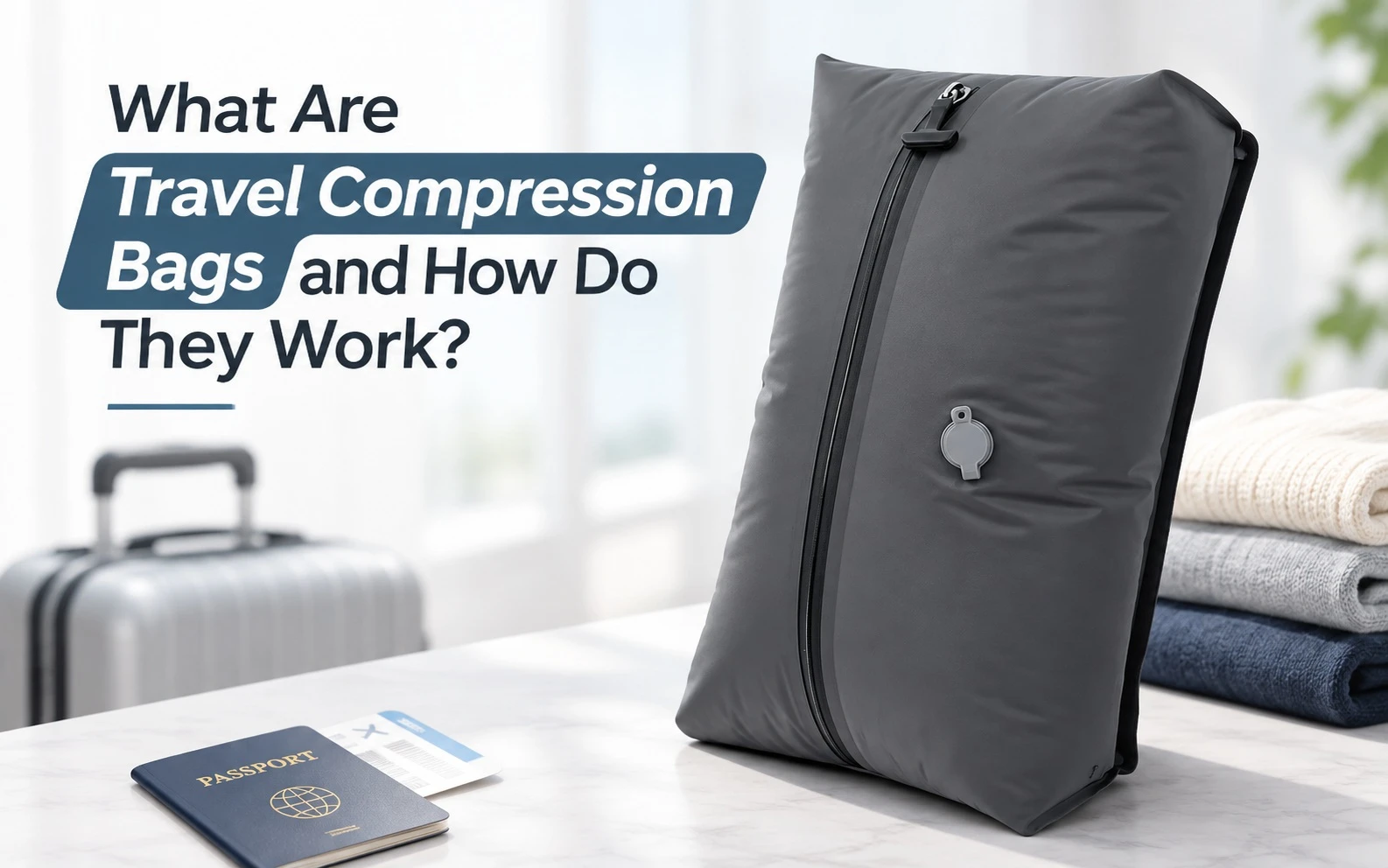
Travel compression bags are reusable storage bags designed to reduce the volume of soft clothing and gear by removing trapped air from between fabric fibers. For anyone packing a suitcase, backpack, or duffel, that means more usable space, better organization, and fewer compromises on what to bring.
Travel compression bags come in several designs, including vacuum compression bags, roll-up bags, compression packing cubes, and outdoor dry compression sacks. Each uses a different method to make packing more efficient.
How Do Travel Compression Bags Work?
The principle is simple. Soft items - down jackets, fleece, knit sweaters, sleeping bags - are mostly air. A fluffy down jacket can be up to 70% air by volume. Vacuum-style compression bags remove that air, not by squeezing the fabric itself, but by creating a pressure differential that lets atmospheric pressure do the work.
At sea level, atmospheric pressure measures approximately 101.3 kPa. When air is expelled from a sealed bag, the internal pressure drops well below that figure. The higher external pressure then pushes inward uniformly, collapsing the air pockets between and within fabric fibers. The bag shrinks. The clothing flattens. No heat, no chemicals - just physics.
The critical component is the one-way valve (or, in strap-based designs, the mechanical closure). Air exits through the valve under pressure but cannot flow back in once compression stops. In vacuum-style bags, a manual pump, electric pump, or even a household vacuum cleaner accelerates the process. In roll-up designs, the user rolls the bag from the sealed end toward the valve, physically forcing air out. In dry compression sacks used outdoors, an air-permeable base fabric lets air escape when the bag is compressed with straps, while a waterproof membrane blocks water from entering.
The seal is what makes or breaks the system. A well-made bag uses double-zip closures, heat-sealed seams, or roll-top closures secured with buckles. If the seal fails, air re-enters, and the bag expands back to its original volume within hours. Material quality - typically PA+PE composites for vacuum bags, TPU laminates or coated nylon for outdoor sacks - determines both seal integrity and durability over repeated use. Different closure designs also affect protection, as explained in this guide to waterproof zipper types.
Seal quality also determines how long compression holds. Some vacuum bags maintain their compressed state for months under proper conditions, while cheaper alternatives may begin leaking within days. The difference usually comes down to three factors: the precision of the zipper track alignment, the thickness and consistency of the heat-sealed edges, and whether the valve mechanism includes a physical stopper (a small transparent plug inside the valve opening) that prevents accidental air re-entry. Removing or losing this stopper is a common reason why otherwise intact bags fail to hold vacuum.
Compression bags reduce volume, not weight. A suitcase that closes more easily can still exceed an airline's baggage allowance. The benefit is better use of the space already inside the luggage, not a guarantee of a lighter bag.
What Are the Different Types of Travel Compression Bags?
Not all travel compression bags work the same way, and the differences matter because the method used at home must also be practical for the return trip. A roll-up bag can be repacked on a hotel bed without any equipment. A vacuum-dependent design needs access to a compatible pump or suction source.
Roll-Up Compression Bags
Roll-up compression bags are the most travel-friendly option. They feature a resealable opening and a one-way air-release system. You seal the bag, then roll it from the closed end toward the valve. Trapped air is forced out through the valve and cannot return. No pump, no power source, no noise.
These bags typically use PA+PE or EVA+PE composite films. They are lightweight, inexpensive, and reusable. Compression rates usually reach 30%–60% volume reduction, depending on the fabric type. They work best on bulky, lofty items - down jackets, fleece, knit sweaters - and less effectively on dense fabrics like denim or structured wool.
One advantage specific to roll-up bags is their independence from infrastructure. In a hotel room, on a train, or at an airport gate, a traveler can seal and compress without searching for a power outlet or a vacuum cleaner hose. The trade-off is that manual rolling rarely achieves the same vacuum depth as a pump-assisted system. For someone packing primarily T-shirts, underwear, and light layers, that difference is negligible. For someone trying to compress a week of winter outerwear into a carry-on, it may matter.
Vacuum Compression Bags
Vacuum compression bags use a valve connected to a manual hand pump, an electric pump, or a household vacuum cleaner. The pump withdraws air from the sealed bag, and the one-way valve closes automatically when pumping stops. This achieves deeper compression than roll-up designs - often reducing volume to one-third or less of the original for highly lofty items like down comforters and sleeping bags.
Materials are typically multi-layer PA+PE composites, sometimes five-layer co-extruded films for added tear resistance. Thickness is measured in "si" (1 si = 0.01 mm), with common travel-grade bags ranging from 6 to 9 si. Electric pump models offer fast compression - often completing a bag in seconds - while manual pumps take roughly 5–8 minutes depending on bag size.
The trade-off is dependency. If you are repacking in a hotel room without your pump, a vacuum bag cannot be recompressed effectively. Some travelers address this by pairing vacuum bags with a small USB-rechargeable electric pump - typically weighing under 200 g - that can compress a full bag in seconds. Others simply accept that vacuum bags work best for the outbound leg and switch to rolling for the return.
Compression Packing Cubes
Compression packing cubes take a different approach. Instead of creating a vacuum seal, they use a secondary zipper that tightens the packed compartment. You fill the cube, zip the main closure, then pull the compression zipper to draw the walls inward and squeeze out bulk.
These cubes combine organization with modest compression. They do not achieve the dramatic volume reduction of vacuum bags - typically around 20%–50% depending on contents - but they keep clothing grouped by outfit or traveler, maintain structure inside a suitcase, and require no pump or valve. They are well suited to business travel and short trips where organization matters as much as space.
Packing cubes also solve a problem that vacuum bags create: access. A vacuum-sealed bag is an all-or-nothing container - to retrieve one shirt, you break the seal and lose the compression. A packing cube opens with a standard zipper, letting you pull out a single item without disturbing the rest. For travelers who repack frequently or need mid-trip access to specific clothing, this matters more than maximum compression.
Outdoor Dry Compression Sacks
For outdoor and adventure use, compression bags serve a dual purpose: volume reduction and waterproof protection. Some outdoor dry compression sacks use a waterproof but air-permeable base fabric - typically 70D nylon with a non-PFAS DWR finish - that allows air to be pushed out through the material itself while blocking water from entering. This eliminates the need for a purge valve entirely.
In this type of design, four compression straps with ladderlock and side-release buckles allow even compression of soft items like sleeping bags and insulated clothing. The roll-top closure, secured with a field-repair buckle, provides a reliable waterproof seal. A representative design uses main body fabric rated to a 10,000 mm hydrostatic head, meaning it can withstand significant water pressure before moisture penetrates.
These waterproof compression sacks are designed for bikepacking, sea kayaking, backpacking, and any scenario where gear must stay dry and compact inside a pack. Capacities typically range from 5L to 35L, with weights as low as 98 g for the smallest size. For outdoor users prioritizing water protection, a 25L outdoor waterproof dry bag is another relevant storage option, although a conventional dry bag does not necessarily provide compression.
The table below compares the four types across the factors that matter most when choosing:
Table 1. Comparison of Travel Compression Bag Types
|
Type |
Compression Method |
Typical Volume Reduction |
Power Needed |
Best Use Case |
|
Roll-up bag |
Manual rolling + one-way valve |
30%–60% |
None |
Carry-on travel, hotel repacking |
|
Vacuum bag |
Pump or vacuum cleaner |
50%–75% |
Manual or electric pump |
Long trips, bulky bedding, seasonal storage |
|
Compression cube |
Secondary zipper tightening |
20%–50% |
None |
Business travel, outfit organization |
|
Dry compression sack |
Strap compression + air-permeable fabric |
30%–60% |
None |
Bikepacking, kayaking, backpacking |
What Materials Are Used in Travel Compression Bags?
Material choice directly affects seal reliability, durability, and waterproof performance. For outdoor applications, understanding the differences between waterproof bag materials can also help determine which fabrics and coatings are suitable for specific protection requirements. The most common compression bag materials and their characteristics are summarized below.
Table 2. Common Materials Used in Travel Compression Bags
|
Material |
Typical Application |
Key Properties |
|
PA+PE composite |
Vacuum bags, roll-up bags |
High tear resistance (PA layer), airtight seal (PE layer), transparent for visibility |
|
PET+PE composite |
Budget vacuum bags |
Lower cost, adequate moisture barrier, less durable than PA+PE |
|
TPU laminate |
Outdoor dry sacks, premium cubes |
Waterproof, flexible, abrasion-resistant, PFC-free options available |
|
Coated nylon (70D–500D) |
Dry compression sacks |
Lightweight, waterproof with DWR finish, air-permeable variants available |
|
Ripstop polyester (210T) |
Compression sacks, budget cubes |
Lightweight, water-resistant coating, moderate durability |
Capacity specifications across the category range from small 5L bags suitable for underwear and socks to 40L or larger bags designed for comforters and sleeping bags. Most brands offer multi-size sets - typically a combination of small, medium, and large - to cover different packing needs within a single trip.
Weight varies significantly by type and material. A roll-up vacuum bag might weigh only a few grams. A 36L outdoor dry compression sack made from 15D silicone-coated polyamide can weigh as little as 76 g. A compression packing cube set with multiple sizes typically adds 100–200 g total to a pack.
Durability expectations should match the intended use cycle. A travel vacuum bag used for a two-week trip and then stored may last through dozens of uses if the film remains intact and the zipper track stays clean. Dirt, hair, and fabric fibers caught in the seal are the most common cause of premature failure - wiping the zipper track with a damp cloth before each closure extends usable life considerably. Outdoor dry sacks, built from heavier woven fabrics with welded seams, are typically rated for years of field use and often carry manufacturer warranties.
For waterproof outdoor equipment, the quality of waterproof bag seam construction is especially important because material selection alone cannot guarantee a fully sealed bag.
What Are the Benefits and Limitations of Travel Compression Bags?
Travel compression bags are effective tools, but their performance depends heavily on what you put inside them.
Where they excel:
- Bulky, lofty items: down jackets, fleece, knit sweaters, sleeping bags, pillows
- Volume reduction for carry-on compliance: fitting a week's worth of winter clothing into a single bag
- Moisture and dust protection: sealed bags isolate contents from humidity, dirt, and odors during transit
- Organization: color-coded or size-sorted bags keep clean and dirty clothing separated
Where they underperform:
- Dense fabrics: denim, structured wool blazers, and canvas compress poorly because their fibers have little trapped air to remove
- Wrinkle-prone materials: silk, fine cotton shirts, and formal wear may crease under sustained compression
- Delicate insulation: prolonged maximum compression of down jackets or sleeping bags can reduce loft and thermal efficiency over time - manufacturers generally recommend storing down items uncompressed between trips
- Weight reduction: compression bags reduce volume only. A bag that fits more clothing still weighs more, and airlines enforce weight limits regardless of how compactly items are packed
Sharp objects - zipper pulls, buttons, buckles - can puncture thin vacuum bag films. Wrapping or folding these items inward before compression extends bag life significantly. For outdoor dry compression sacks using heavier fabrics (420D TPU-laminated ripstop nylon or 500D abrasion-resistant nylon), puncture risk is far lower.
How to Choose the Right Travel Compression Bag
Selecting the right travel compression bag comes down to three questions: what are you compressing, how will you repack on the return trip, and does the bag need to be waterproof?
For carry-on travel with mixed clothing, roll-up bags offer the best balance of compression, convenience, and weight. They require no equipment and can be resealed anywhere.
For long trips or seasonal storage involving comforters, bulky bedding, or large quantities of winter clothing, vacuum bags with an electric pump deliver the deepest compression. The pump is an extra item to carry, but the volume savings are substantial.
For business travel where outfit organization and quick access matter more than maximum compression, packing cubes with a compression zipper are the practical choice. They keep shirts and trousers grouped, structured, and relatively wrinkle-free.
For outdoor adventures - bikepacking, kayaking, multi-day backpacking - dry compression sacks are essential. They protect gear from water while reducing volume, and their strap-based compression system works reliably in the field without valves that can clog or fail. When the primary goal is keeping packed clothing dry rather than reducing its volume, dedicated waterproof clothes bags may also be worth considering.
Regardless of type, look for double-sealed closures, tape-sealed or welded seams, and materials rated for repeated use. A compression bag that loses its seal after two trips provides no value, regardless of its price.
For outdoor applications specifically, pay attention to the hydrostatic head rating. A fabric rated to 10,000 mm can withstand a column of water 10 meters high before moisture penetrates - more than adequate for rain, spray, and brief submersion. Lower ratings (around 5,000 mm) handle rain and splashes but may not protect contents during sustained water exposure, such as a kayak roll or an extended river crossing.
However, a fabric's hydrostatic head rating alone does not determine whether the finished bag is suitable for submersion. Seam construction, closure design, and the overall waterproof structure also affect protection.
FAQ
Do Travel Compression Bags Really Save Space?
Yes. Travel compression bags can significantly reduce the space occupied by bulky clothing and soft gear. Depending on the type and contents, typical volume reductions range from around 20%–50% for compression packing cubes to 50%–75% for vacuum compression bags. Actual results depend on the materials, compression method, and items being packed.
Do Travel Compression Bags Make Luggage Lighter?
No. Compression bags reduce the volume of clothing, not its weight. They allow travelers to fit more items into limited luggage space, but the total weight of the packed items remains essentially unchanged. Travelers should still check airline baggage weight restrictions.
Can You Use Travel Compression Bags Without a Vacuum?
Yes. Roll-up compression bags use manual pressure to remove trapped air through a one-way valve, while compression packing cubes use a secondary zipper to reduce bulk. Outdoor dry compression sacks typically rely on adjustable straps and air-release structures. These options are convenient for travelers who do not want to carry a pump.
Are Travel Compression Bags Waterproof?
Not all travel compression bags are waterproof. Vacuum bags may provide moisture protection when properly sealed, but compression packing cubes often use breathable fabrics that do not prevent water entry. Waterproof compression bags designed for outdoor use typically combine suitable waterproof materials, sealed seams, and specialized closures. The finished bag's waterproof performance depends on its complete construction. Understanding how waterproof bags work can help explain why waterproof fabric alone does not guarantee protection for the entire bag.
Can Compression Bags Damage Down Jackets or Sleeping Bags?
Prolonged or excessive compression may reduce the loft and thermal efficiency of down-filled products over time. Compression bags are useful for transporting bulky insulation, but down jackets and sleeping bags should generally be stored uncompressed between trips to help maintain their original loft.
Conclusion
Travel compression bags reduce the volume of soft clothing and gear by removing trapped air or mechanically compressing packed items. Vacuum-style bags rely on pressure differences, while roll-up, zipper, and strap-based designs use manual or mechanical compression. The four main types serve different travel needs: roll-up bags for pump-free convenience, vacuum bags for maximum compression, packing cubes for organization, and waterproof dry compression sacks for outdoor adventures. The right choice depends on what you pack, how you repack, and whether moisture protection is required.
FENGLINWAN is an experienced OEM/ODM manufacturer specializing in waterproof outdoor bags and functional travel bags, with expertise in TPU/PVC materials, high-frequency welding, airtight and watertight structures, and custom product development. If your brand is exploring custom travel compression bags, waterproof dry sacks, or travel organizers, contact FENGLINWAN to discuss your design requirements, material options, and OEM/ODM development needs.