


How to Choose the Right Size for Duffel Bags
Jun 16, 2026
Leave a message
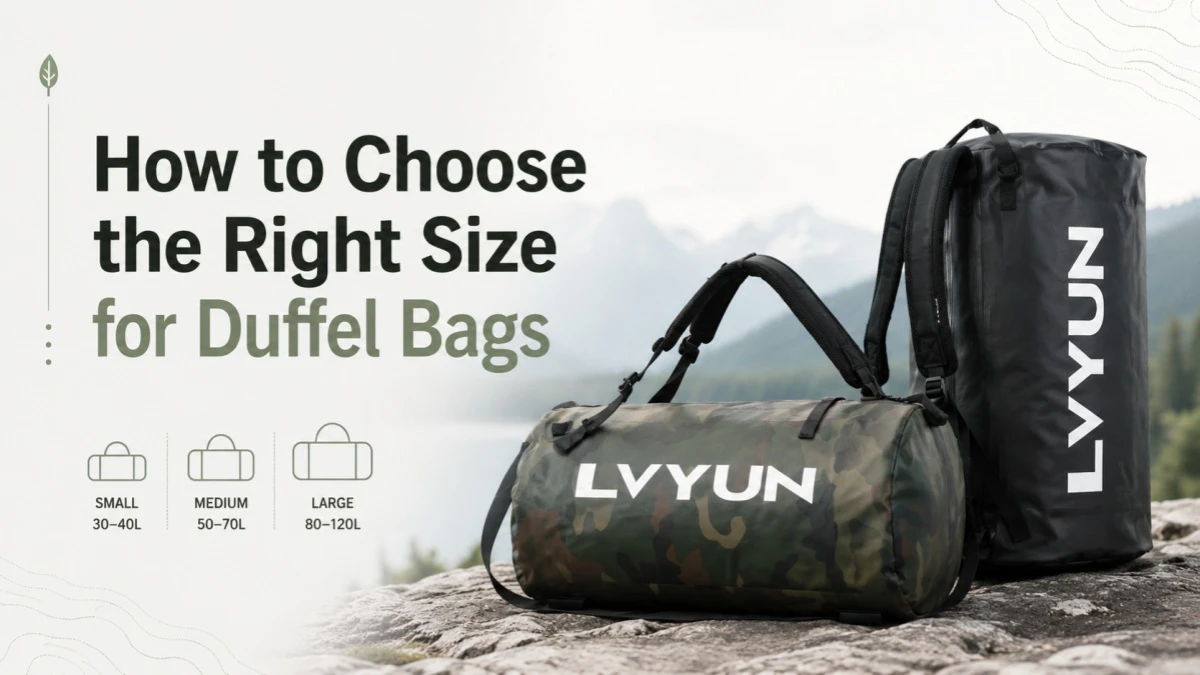
Pick your duffel bag size based on trip length, gear type, and transport method. Liters serve as the main reference point, but actual fit depends on how you pack and where you travel.Here's the practical breakdown:
| Capacity | Best For | Trip Length | Typical Items | Carry-On Potential |
|---|---|---|---|---|
| 20L–30L | Gym, daily use, overnight stay | 1 day | Shoes, towel, gym clothes, water bottle | Usually easy |
| 30L–40L | Weekend trips, light travel | 1–3 days | 2–3 outfits, toiletry kit, light shoes | Often carry-on friendly |
| 40L–60L | 3–5 day travel, outdoor trips | 3–5 days | Clothes, jacket, shoes, accessories | Depends on dimensions |
| 60L–90L | Camping, boating, road trips | 5+ days | Boots, outerwear, wet gear, equipment | Usually checked |
| 90L+ | Expedition, team gear | Long trips | Helmets, ropes, bulky equipment | Not ideal for carry-on |
20L–30L works for gym sessions and one-day use. 30L–40L handles most weekend getaways. 40L–60L covers the majority of personal travel and light outdoor trips. 60L–90L fits camping, water sports, and gear-heavy adventures. 90L+ stays reserved for heavy professional or team equipment.
The right choice comes from matching capacity to real needs rather than grabbing the largest option available.
How Duffel Bag Size Is Measured
Duffel bag size involves more than the liter rating printed on the spec sheet. You must consider volume, external measurements, weight, and design features together.
Capacity in liters tells you theoretical holding volume. Dimensions (length × width × height) determine whether the bag fits in overhead bins, car trunks, or storage lockers. Empty bag weight affects comfort once loaded. Shape and opening style decide how efficiently you actually use the space.
Liters vs. Dimensions: Which One Matters More?
Airlines check external dimensions, not the liter number. A tall, narrow 45L bag may pass carry-on rules while a wide, flat 35L bag fails. Always measure the packed bag before travel. Many manufacturers list expanded dimensions, so confirm measurements with samples during development.
Why Bag Shape Affects Usable Space
A cylindrical roll-top duffel and a rectangular wide-mouth duffel of the same 50L rating deliver very different real-world performance. Roll-top designs need extra space for folding the closure, often reducing usable volume by 5-10L. Internal dividers and stiffening panels also eat into total capacity. Waterproof duffel bags with thick TPU or PVC coatings add noticeable weight compared to standard nylon versions.

Choose Duffel Bag Size by Trip Length
Trip duration remains the clearest starting point for most buyers.
1-Day Use or Overnight Stay: 20L–30L
These small duffel bags handle gym workouts, swimming sessions, or quick overnights. You can fit a pair of shoes, change of clothes, towel, and basic toiletries without excess bulk. Avoid oversized bags for daily use - they become clumsy and encourage overpacking.
Weekend Trips: 30L–40L
This range serves 1-3 day escapes best. Most people pack 2-3 outfits, a toiletry kit, one extra pair of shoes, and a light jacket. The size stays manageable for public transport and fits easily in most car trunks.
3–5 Day Travel: 40L–60L
Forty to sixty liters strikes the best balance for mid-length trips. You gain room for bulkier items like sweaters, extra shoes, or light outdoor gear while keeping the loaded weight reasonable for one person to carry. This range works well for city breaks and short outdoor adventures.
5+ Days or Gear-Heavy Travel: 60L–90L
Longer trips and equipment-focused journeys need this space. Think boots, rain shells, sleeping bags, or tools. Weight adds up fast once filled, so strong shoulder straps and reinforced bottoms become essential.
Expedition or Team Gear: 90L+
These extra-large duffels move serious loads - expedition equipment, sports gear for teams, or bulky industrial tools. One massive bag often proves harder to handle than two medium ones. Split loads when weight or organization matters.
Choose Duffel Bag Size by Use Case
Different activities create different packing demands.
Gym and Daily Use
Stick with 20L–30L. These bags need space for sweaty clothes, shoes, and a water bottle. Waterproof construction and wet/dry separation deliver more value here than extra liters.
Travel and Weekend Getaways
Thirty to sixty liters covers most travelers. Thirty to forty liters keeps things light for short trips. Forty to sixty liters gives breathing room when you need more clothing or accessories. Packing cubes help maximize any size.
Camping, Boating, and Outdoor Activities
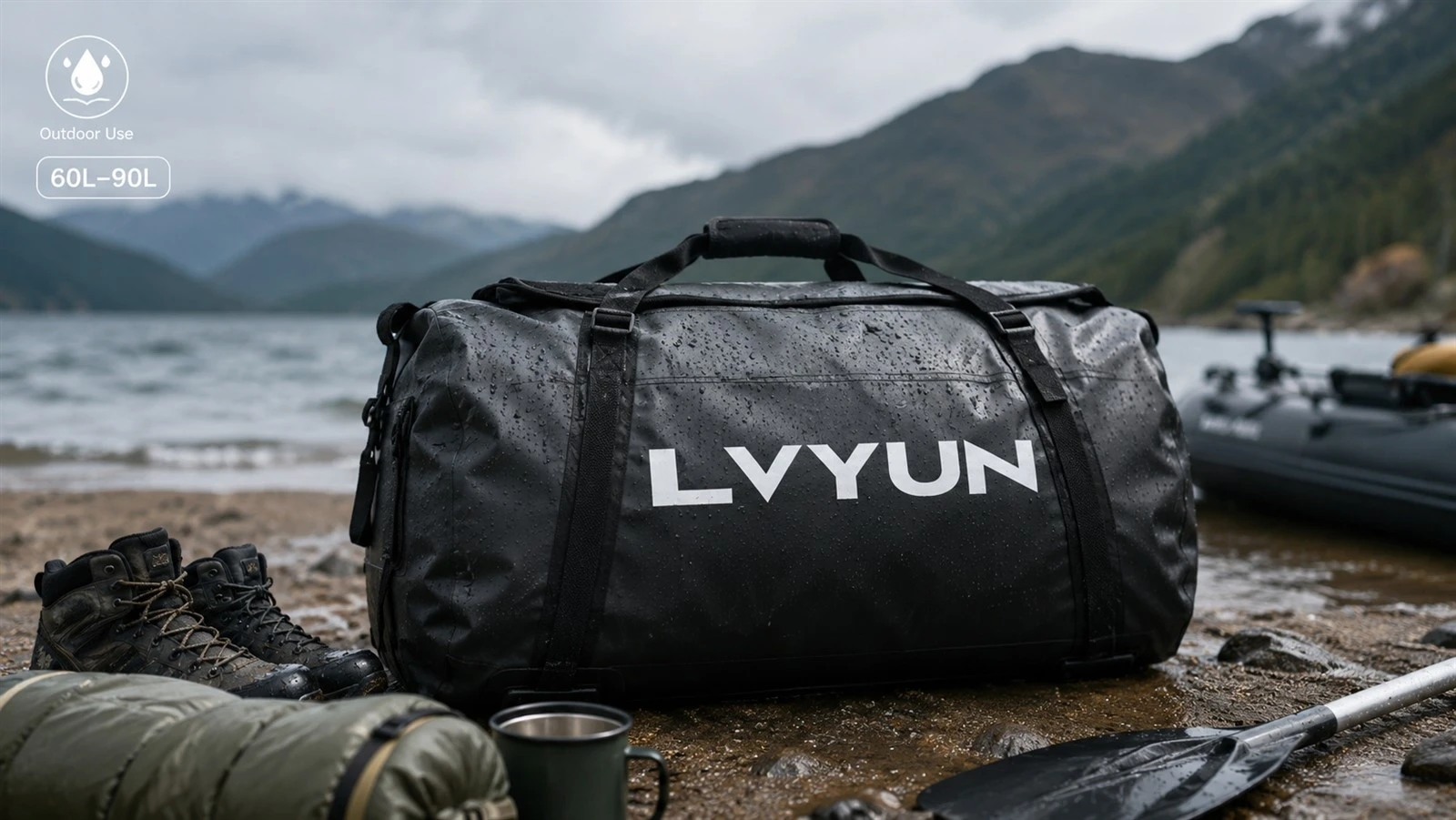
Sixty to ninety liters works best for these scenarios. Waterproof duffel bags shine when carrying wet gear, boots, or tools. Thick tarpaulin materials and welded seams protect contents from rain, spray, or mud. Roll-top closures keep water out but require planning for the folded space.
Large Equipment and Team Gear
Ninety liters and above handle heavy or awkward items. Focus on carrying systems - wide shoulder straps, multiple handles, and daisy chains for securing extra equipment.
What Size Duffel Bag Is Best for Carry-On Travel?
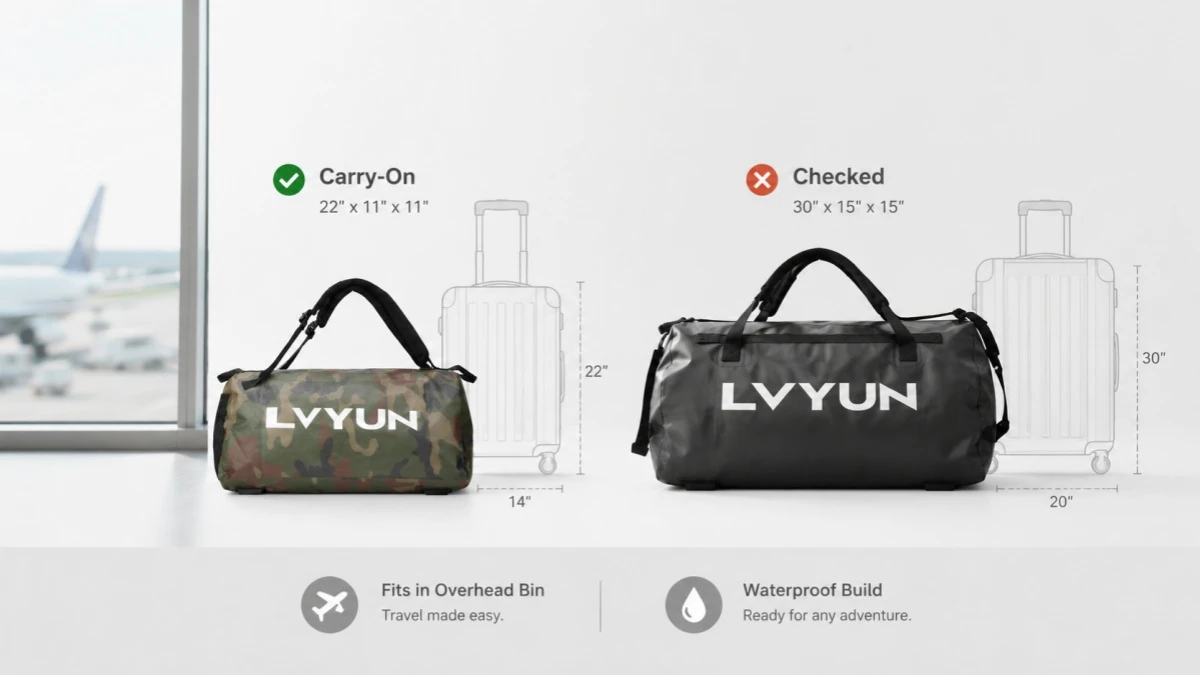
Capacity alone never guarantees carry-on approval. Airlines enforce external dimensions and total weight.
30L–40L bags offer the safest range for most carriers. 40L–45L can work if dimensions stay within limits and you avoid overstuffing. 50L and above usually require checking.
Soft-sided duffels compress better than hard cases, but bulging sides still risk gate-checking.
Is a 40L Duffel Bag Carry-On Size?
Many 40L duffels pass on United, Delta, or international carriers when packed normally. Check the exact length, width, and height against your airline's policy. Soft construction gives some flexibility that rigid suitcases lack.
Duffel Bag vs. Suitcase for Carry-On Travel
Duffel bags weigh less empty and adapt to irregular items. Suitcases roll easier and protect fragile objects better. Choose based on your gear type rather than habit.
Special Considerations for Waterproof Duffel Bag Sizes
Waterproof duffel bags face tougher conditions than standard travel bags. Capacity planning must account for material thickness, closure type, and structural demands.
Roll-top models require extra volume allowance because the closure folds down. A 50L roll-top often delivers closer to 42-45L of actual packing space.
Thicker TPU or PVC fabrics increase durability in wet environments but add weight. Larger bags need stronger welding patterns and reinforced stress points to prevent seam failure under load.
Carrying System Matters More Above 60L
Once bags exceed 60L and fill with wet or dense gear, shoulder straps and handles determine daily usability. Poor load distribution turns a good bag into a painful one after two or three hours of carrying.
Common Mistakes When Choosing Duffel Bag Size
- Focusing only on liters while ignoring packed dimensions.
- Assuming bigger always means better.
- Underestimating weight once the bag fills.
- Ignoring airline rules until departure day.
- Skipping wet/dry separation for sports or outdoor use.
- Forgetting roll-top space requirements in waterproof models.
- Buying one huge bag instead of two balanced ones for heavy loads.
- Selecting sizes without testing actual gear.
Size Recommendations for Brands and OEM Buyers
Product developers should build a capacity matrix instead of launching with a single size.
Suggested Capacity Range for a Duffel Bag Product Line
| Capacity | Product Positioning |
| 30L | Gym, daily use, short trips |
| 40L | Weekend travel, carry-on focus |
| 60L | Outdoor multi-day, boating, camping |
| 80L | Gear-heavy outdoor users |
| 90L+ | Expedition and professional equipment |
Start with 30L/40L/60L for most new waterproof duffel lines. Expand to larger sizes only after confirming market demand.
What to Confirm Before Customizing Duffel Bag Sizes
Define target users and primary scenarios first. Then decide on full waterproofing level, material type (TPU, PVC tarpaulin, coated fabrics), closure style, carrying system, and internal organization. These choices directly affect MOQ, production cost, shipping volume, and final retail price.
FENGLINWAN produces custom waterproof duffel bags across these capacities with tailored materials, closures, and load-bearing designs for different outdoor markets.
FAQ
What size duffel bag do I need for a weekend trip?
Thirty to forty liters usually works well. Move to 40-50L if you carry extra shoes, jackets, or outdoor equipment.
Is a 40L duffel bag big enough?
Yes for weekend and light 3-4 day trips. Choose 50-60L when you need more clothing layers or gear.
What size duffel bag is best for carry-on travel?
Thirty to forty liters gives the highest success rate. Always verify current airline dimensions before purchase.
What size duffel bag is best for gym use?
Twenty to thirty liters covers most needs. Prioritize waterproofing and separation pockets for wet items.
What size waterproof duffel bag is best for camping?
Sixty to ninety liters handles most camping and water sports. Focus on material strength and carrying comfort as much as volume.
Is a bigger duffel bag always better?
No. Oversized bags become heavy and awkward. Match size to actual trip requirements and carrying method.
Final Thoughts: Choose Size Based on Real Use, Not Just Liters
The correct duffel bag size matches your trip length, gear volume, transport needs, and comfort expectations. Twenty to thirty liters for daily use, thirty to forty for weekends, forty to sixty for most travel, and sixty to ninety liters for serious outdoor activities.
For outdoor brands developing new product lines, proper size planning affects material costs, structural requirements, shipping efficiency, and market positioning.
Contact FENGLINWAN to discuss custom waterproof duffel bag development in the right capacities, materials, and configurations for your market.