


Lightweight Backpacks for Seniors: How to Choose a Comfortable, Safe, and Practical Backpack
Jun 12, 2026
Leave a message
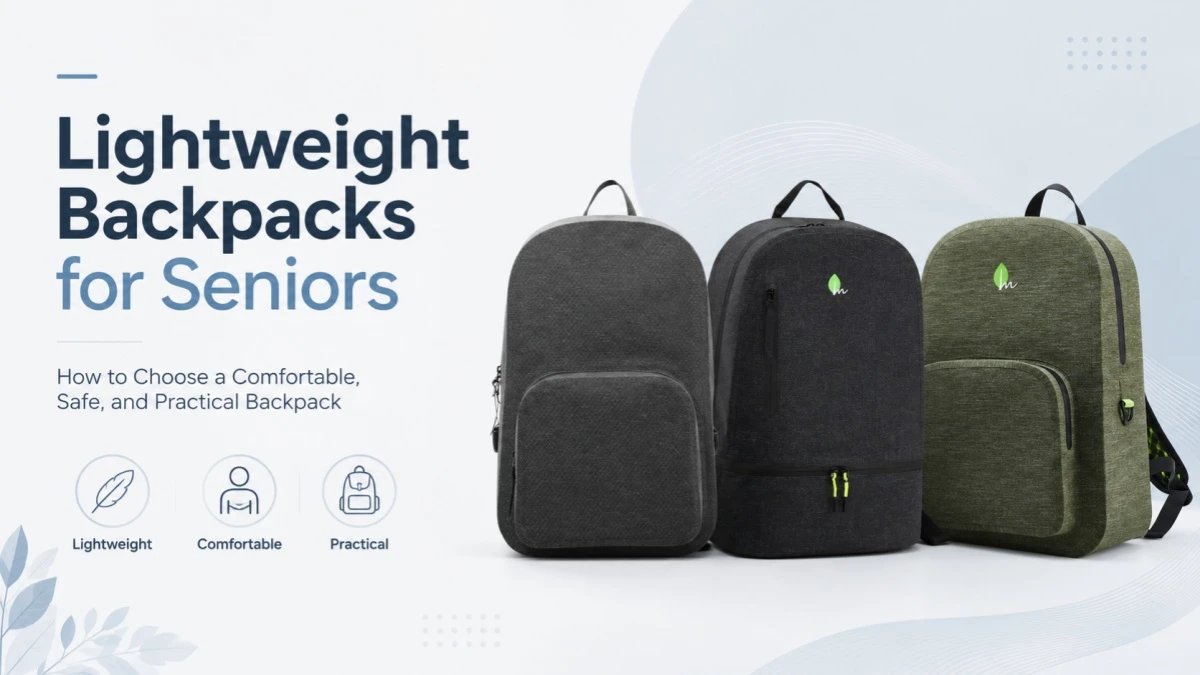
A lightweight backpack for seniors should do more than reduce weight. It should make daily carrying easier, keep small items organized, sit close to the body, and protect essentials from light rain or wet surfaces.
The wrong backpack may look light on a product page but feel unstable after loading a water bottle, medicine, glasses, keys, and documents. That is why senior-friendly backpack design needs a different standard from normal travel backpacks or outdoor hiking packs.
For most seniors, the best lightweight backpack is not the thinnest or the largest one. It is the one that reduces effort without removing the features that make the bag comfortable and easy to use.
What Makes a Lightweight Backpack Good for Seniors?
A lightweight backpack for seniors is a backpack designed to carry daily essentials with less physical strain. In practical product terms, this usually means a smaller capacity, controlled empty weight, comfortable shoulder straps, clear compartments, easy opening, and basic water resistance.
A good daily senior backpack should feel light before loading, but it should also stay stable after loading. This is where many low-cost lightweight bags fail. They use thin fabric and minimal padding to reduce weight, but the body collapses once the user puts in a bottle, umbrella, phone, and documents.
That creates two problems. First, the weight falls to the bottom of the bag and pulls backward. Second, the user has to dig through a soft, shapeless main compartment to find small items.
For seniors, light weight should not come from removing every useful structure. It should come from better fabric selection, simple construction, clean compartment planning, and avoiding unnecessary hardware.
A practical lightweight backpack for elderly people should usually focus on these points:
- Light empty weight, often around 600–900g for daily-use models
- Capacity matched to the real use case, not oversized
- Wide padded shoulder straps
- A back panel with basic support and ventilation
- Easy-pull zippers or simple closures
- Clear pockets for phone, keys, medicine, glasses, and water bottle
- Water-resistant fabric for light rain and daily moisture
- Reflective or high-visibility details for walking and travel
The goal is not to create a "mini hiking pack." The goal is to create a backpack that makes daily movement easier.
Why Seniors Need a Different Backpack Design
Many normal backpacks are designed around students, commuters, travelers, or outdoor users. Those users may tolerate heavier loads, deeper compartments, narrow shoulder straps, or complicated zipper layouts. Seniors often need a different product logic.
The first issue is weight distribution. A shoulder bag or tote bag places most of the load on one side of the body. For short use with very light items, that may be acceptable. But when the user carries water, medicine, documents, and personal items for a longer walk, a lightweight backpack usually distributes weight more evenly.
The second issue is hand operation. Small zipper pulls, hidden pockets, tight buckles, and narrow openings may look clean in a design drawing, but they are not always friendly for users with weaker grip strength or reduced finger flexibility.
The third issue is visibility and access. Seniors often carry items they need to reach quickly: reading glasses, medication, bus cards, ID cards, keys, tissues, or medical papers. A backpack with one large deep compartment forces the user to search too much.
A senior-friendly backpack should not make the user think hard about where things are.
This is why the best lightweight backpack for seniors usually has fewer but clearer compartments. It should be easy to understand at first use, not only after reading a product manual or watching a video.
Key Features to Look for in a Lightweight Backpack for Seniors
Lightweight Body with Enough Structure
Lightweight does not mean weak. A lightweight senior backpack should reduce empty weight while keeping enough shape to hold daily items in place.
For daily bags, an empty weight under 1kg is a reasonable design target. Smaller walking backpacks can be much lighter, often around 400–700g depending on fabric, lining, zipper size, and padding. But chasing the lowest number can create new problems.
Very thin fabric may sag. A soft bottom may collapse. A weak back panel may allow hard objects to press against the user's back. These issues are not obvious when the backpack is empty, but they appear quickly after loading.
A better design keeps the structure simple but not flimsy. For example, a 10–15L senior daypack can use lightweight polyester or nylon, a thin foam back panel, reinforced shoulder strap attachment points, and a slightly firmer bottom panel. This adds a little weight, but it makes the bag easier to carry and easier to organize.
For seniors, loaded stability matters more than the empty-weight number alone.
Comfortable Shoulder Straps and Back Support
Comfort starts with shoulder straps. Narrow straps can create pressure points. Very soft straps may feel comfortable at first touch but lose support after loading. Very hard straps may rub the shoulder and neck area.
For most lightweight backpacks for seniors, shoulder straps should be wide enough to spread pressure and padded enough to avoid sharp contact. The adjustment range also matters. A backpack that sits too low will pull backward and feel heavier than it actually is.
The back panel does not need a heavy hiking frame for daily use. But it should offer basic support. A thin foam back panel or breathable mesh structure can help the pack sit closer to the back, reduce object pressure, and improve comfort during walking.
For travel or light outdoor use, a chest strap can help stabilize the bag. For a very small daily walking backpack, it may not be necessary. The choice should follow the use case, not a fixed formula.
Easy-Pull Zippers and Simple Opening
A senior-friendly backpack should be easy to open without extra effort. This sounds basic, but it is often overlooked.
Small metal zipper pulls may look neat, but they are harder to grip. Hidden zippers may improve the exterior look, but they can make access slower. Tight waterproof zippers may improve protection, but they may also feel stiff if the bag is meant for daily elderly use.
A practical solution is to use smooth zippers with larger pullers or cord extensions. The opening should be wide enough to see inside the bag without pulling everything out.
Magnetic closures, buckles, and roll-top openings can work in some designs, but they are not always better than zippers. For a senior daily backpack, simple and predictable usually wins.
Clear Compartments, Not Complicated Compartments
More pockets do not always mean better organization.
A good backpack with compartments for seniors should help users find essentials quickly. It should not hide items behind too many layers. The best structure is often simple: one main compartment, one front quick-access pocket, one inner small-item pocket, and two side pockets if the size allows.
Useful compartments may include:
- Phone pocket
- Key clip or key pocket
- Glasses pocket
- Medicine pouch area
- ID card or travel document pocket
- Side water bottle pocket
- Small umbrella pocket
- Rear anti-theft pocket for travel models
The pocket depth should match the item. A deep front pocket may swallow keys and cards. A shallow unstable bottle pocket may let the bottle fall out during walking. These small details decide whether the backpack feels easy or annoying in real use.
Water Resistance and Visibility Details
A water-resistant backpack for seniors is usually more practical than a fully waterproof backpack for daily use.
Water-resistant means the fabric can resist light rain, splashes, or short exposure to moisture. Waterproof means the whole bag structure is designed to block water more completely, including fabric, seams, zippers, and closure method.
For daily walking, shopping, medical visits, or community activities, water-resistant fabric is often enough. It helps protect phones, medicine, paper documents, and glasses from light rain. It also makes the bag easier to clean.
For travel, rainy regions, or light outdoor use, stronger waterproof construction may be useful. That may include coated fabric, water-resistant zippers, reinforced bottom panels, seam treatment, or a rain cover.
Visibility is another detail worth adding. Reflective strips, bright zipper pulls, or a higher-visibility color panel can help when seniors walk near roads, parking areas, or community paths in the evening.
Recommended Backpack Size and Capacity for Seniors
Capacity should follow the user's real load. Large capacity is not automatically better. For seniors, a large backpack may encourage overpacking, which increases shoulder and back pressure.
| Capacity | Best For | Typical Items | Design Advice |
| 5–10L | Walking, short errands | Phone, keys, glasses, small water bottle, tissues, medicine | Keep it simple and light |
| 10–15L | Daily use, shopping, medical visits | Water bottle, documents, umbrella, medicine, wallet, light personal items | Best range for most daily senior backpacks |
| 15–20L | Short travel, light outdoor use | Thin jacket, snacks, travel documents, larger bottle | Needs better straps and back support |
| Over 20L | Longer travel or special use | More clothing or travel gear | Use with caution; easy to overload |
5–10L: For Walking and Short Errands
A 5–10L backpack works well for seniors who only need to carry small daily items. It should be light, compact, and easy to open. This size is suitable for walking, community activities, or short outdoor movement.
The design should avoid too many compartments. A front pocket, a main pocket, and one or two small internal pockets are usually enough.
10–15L: For Daily Use
This is the most practical range for many lightweight backpacks for seniors. It can hold a water bottle, medicine, phone, keys, glasses, wallet, small umbrella, and documents without becoming too large.
For brands developing senior-friendly backpacks, 10–15L is often the best starting point for daily-use models. It gives enough space while still controlling weight and shape.
15–20L: For Travel and Light Outdoor Use
This range suits seniors who travel, take day trips, or carry a thin jacket. The backpack should have better shoulder straps, a more stable back panel, and clear pocket placement.
At this size, poor structure becomes more noticeable. If the bag sags or pulls backward, the user will feel it quickly.
Over 20L: Use with Caution
Backpacks above 20L are not wrong, but they need a clear reason. For daily senior use, they are often too large. If the user fills the extra space, the backpack may become uncomfortable.
A larger senior travel backpack should be designed with load control in mind: compression straps, stable shoulder straps, a luggage pass-through, and easy-access pockets.
Choose by Use Case: Walking, Travel, Medical Visits, and Light Outdoor Activities
Different seniors use backpacks in different ways. A retired traveler, a daily walker, and someone going to medical appointments do not need the same backpack.
| Use Case | Priority Features | Recommended Capacity |
| Daily walking | Light body, reflective details, water bottle pocket | 5–10L |
| Medical visits | Document pocket, medicine pocket, easy opening | 10–15L |
| Travel | Water-resistant fabric, anti-theft pocket, luggage strap | 15–20L |
| Light outdoor activities | Breathable back panel, stable bottle pocket, reinforced bottom | 15–20L |
For Daily Walking
A walking backpack for seniors should stay small. The user may carry a phone, small bottle, tissues, keys, and glasses. The bag should sit close to the body and not swing during movement.
Reflective details are useful here, especially for evening walking. A stable side pocket also matters, because many seniors prefer not to remove the whole bag just to drink water.
For Medical Visits and Daily Errands
For medical visits, the backpack should make paper documents and medicine easy to access. A flat document sleeve, front quick-access pocket, and small internal pouch can make the bag much more practical.
Avoid deep, dark pockets where small items disappear. For this scenario, organization should be visible and easy to understand.
For Travel
A lightweight travel backpack for seniors needs better protection and faster access. Travel documents, passport, wallet, phone, glasses, and medicine should not be buried in the main compartment.
Useful features include a rear anti-theft pocket, luggage pass-through, water-resistant fabric, and a clear top or front pocket. Color can also help. A bag that is easy to identify in an airport or bus station reduces confusion.
For Light Outdoor Activities
A lightweight outdoor backpack for seniors should not copy a professional ultralight hiking pack. Most senior users do not need a 40L or 60L pack for light outdoor use.
They need a breathable back panel, stable bottle pockets, durable fabric, a reinforced bottom, and water-resistant protection. A chest strap may help keep the backpack steady during uneven walking.
Best Materials for Lightweight and Water-Resistant Senior Backpacks
Material choice decides the backpack's weight, touch, durability, water resistance, and cost. For B2B product development, this is where many projects succeed or fail.
Polyester, Nylon, and Ripstop Fabric
Polyester is widely used for daily backpacks because it is cost-friendly, stable, and available in many fabric weights. For senior daily backpacks, polyester can be a good choice when paired with a suitable coating and clean structure.
Nylon usually offers better strength and abrasion resistance at a similar weight. It is a strong option for travel backpacks or light outdoor backpacks.
Ripstop fabric uses a reinforced grid structure to improve tear resistance. It is useful when the product needs a balance of light weight and durability. For senior travel or outdoor models, ripstop nylon or polyester can be a smart upgrade.
The fabric should not be selected by name alone. Denier, coating, hand feel, lining, and reinforcement all change the final result.
PU, PVC, and TPU Coatings
Coatings improve water resistance, but they also affect weight, stiffness, smell, cost, and long-term durability.
PU coating is common for water-resistant backpacks. It gives good daily weather protection and keeps the fabric relatively flexible.
PVC coating can be used for stronger waterproof structures, but low-grade PVC may feel stiff, heavy, or less comfortable for soft daily backpacks.
TPU is often used when brands need better flexibility, cleaner hand feel, or higher waterproof performance. It usually costs more, but it can fit premium waterproof backpack projects.
For senior backpacks, the coating should match the use case. A daily walking bag does not always need heavy waterproof coating. A travel or outdoor waterproof backpack may need stronger coated fabric and better zipper protection.
Water-Resistant vs. Fully Waterproof
This difference should be clear.
A water-resistant backpack can handle light rain and splashes. A waterproof backpack is built to resist stronger water exposure through fabric, seams, zippers, and closure design.
For most seniors, water-resistant is enough for daily use. It protects medicine, phones, glasses, and documents in normal weather. Fully waterproof construction is better for boating, heavy rain, wet outdoor activities, or specific waterproof bag categories.
A fully waterproof bag may also be heavier, stiffer, or more expensive. That trade-off should be decided before sampling, not after mass production.
Common Design Mistakes to Avoid
Some backpack designs look attractive in photos but are not suitable for seniors.
The most common mistake is oversizing. A large backpack gives more space, but it also invites the user to carry more weight. For daily senior use, this is usually a disadvantage.
Another mistake is making the bag too soft. A soft unstructured backpack may reduce empty weight, but it can sag badly after loading. The result is poor balance and messy storage.
Other problems are easy to identify during sample testing:
- Shoulder straps are too narrow or too hard
- Zipper pulls are too small
- Front pockets are too deep
- Bottle pockets are too shallow
- The bottom panel has no abrasion resistance
- The main compartment has no shape after loading
- Decorative metal parts add unnecessary weight
- The bag has no basic water resistance
- Hidden pockets make daily items harder to find
- The design looks outdoor-focused but ignores daily ease of use
A senior-friendly backpack should simplify use, not add more steps.
How Brands Can Develop Lightweight Backpacks for the Senior Market
For brands, the senior backpack market should not be approached with a vague request like "make it lightweight." That instruction is too broad.
Start with the Real Use Scenario
The first step is defining the user scenario. Is the backpack for daily walking, medical visits, silver travel, community activities, light outdoor use, or promotional gifts?
Each scenario changes the design. A 7L walking backpack may need reflective details and a bottle pocket. A 15L travel backpack may need a luggage strap, anti-theft pocket, and water-resistant zipper. A medical-visit backpack may need a document sleeve and easy-access medicine pocket.
The product brief should start from use, not from fabric alone.
Balance Weight, Structure, Waterproofing, and Cost
Lightweight backpack manufacturing always involves trade-offs.
A lighter fabric may reduce weight but weaken structure. A stronger coating may improve water resistance but increase stiffness. More compartments may improve organization but add sewing time, fabric layers, and cost. A thicker back panel may improve comfort but increase weight.
For senior-friendly backpacks, the most common balances are:
| Design Balance | What to Decide |
| Weight vs. structure | How much shape is needed after loading? |
| Waterproofing vs. softness | Does the bag need full waterproofing or daily water resistance? |
| Capacity vs. overloading risk | Will extra space encourage too much load? |
| Organization vs. simplicity | Are the pockets easy to understand? |
| Cost vs. material performance | Which fabric and coating fit the target market? |
The best result usually comes from controlled simplicity. Keep what helps the user. Remove what only adds weight or visual complexity.
Test Details Before Mass Production
A sample should be tested with real daily items, not only inspected empty.
Load the backpack with a water bottle, glasses case, phone, keys, medicine pouch, folded umbrella, and documents. Then check the shoulder strap pressure, zipper smoothness, bottle pocket stability, back panel feel, and whether small items are easy to find.
For waterproof or water-resistant models, fabric testing alone is not enough. Check the zipper area, bottom panel, seam lines, and opening direction. Many leakage or wetting problems come from structure, not only fabric.
This is where an experienced backpack manufacturer can prevent costly mistakes before bulk production.
FAQ
What is the best backpack size for seniors?
For most daily use, 10–15L is a practical size. It can hold water, medicine, phone, glasses, keys, documents, and a small umbrella without encouraging too much load. For walking, 5–10L may be enough. For travel or light outdoor activities, 15–20L can work better.
Are backpacks better than shoulder bags for seniors?
When seniors need to carry more than a few small items, a backpack usually distributes weight more evenly than a shoulder bag. The backpack still needs to be light, stable, and properly adjusted. A poorly designed backpack can also feel uncomfortable if it is too large or overloaded.
Should seniors choose waterproof or water-resistant backpacks?
For daily use, a water-resistant backpack is often enough. It protects essentials from light rain and splashes while keeping the bag softer and lighter. A waterproof backpack is better for heavy rain, boating, wet outdoor activities, or special travel needs.
What features make a backpack easier for seniors to use?
Large zipper pulls, smooth zippers, clear compartments, stable bottle pockets, wide padded shoulder straps, a light body, and water-resistant fabric all improve usability. Reflective details and easy-to-see color accents also help in walking and travel scenarios.
Is the lightest backpack always the best choice for elderly people?
No. The lightest backpack may have weak structure, thin straps, poor organization, or low durability. For elderly users, comfort, stability, and easy access are more valuable than extreme weight reduction.
Conclusion: Choose a Backpack That Reduces Effort, Not Just Weight
Lightweight backpacks for seniors should be judged by how they perform after loading, not only by how light they feel when empty. A good design balances weight, shoulder comfort, structure, clear compartments, water resistance, and safety details.
For brands developing senior-friendly lightweight backpacks or waterproof travel backpacks, FENGLINWAN can support material selection, structure optimization, sample development, and OEM production. If you are planning a custom backpack project for the senior market, our team can help turn the product idea into a practical, manufacturable design.