


The Best Materials For Making A Laptop Sleeve: A Complete Guide
May 25, 2026
Leave a message
A laptop sleeve looks simple from the outside. The material choice is not.
If the outer fabric is strong but the lining is rough, the laptop still gets scratched. If the padding is soft but too thin, the sleeve absorbs almost no impact. If the fabric is waterproof but the zipper and seams are ordinary, water still enters from the opening.
The best material for a laptop sleeve is never one single fabric. It is a material system: outer shell + padding + lining + closure. This guide breaks down each layer, compares the most common options, and shows how to match material choices to real use cases - whether you are buying a sleeve, designing one, or sourcing custom production.
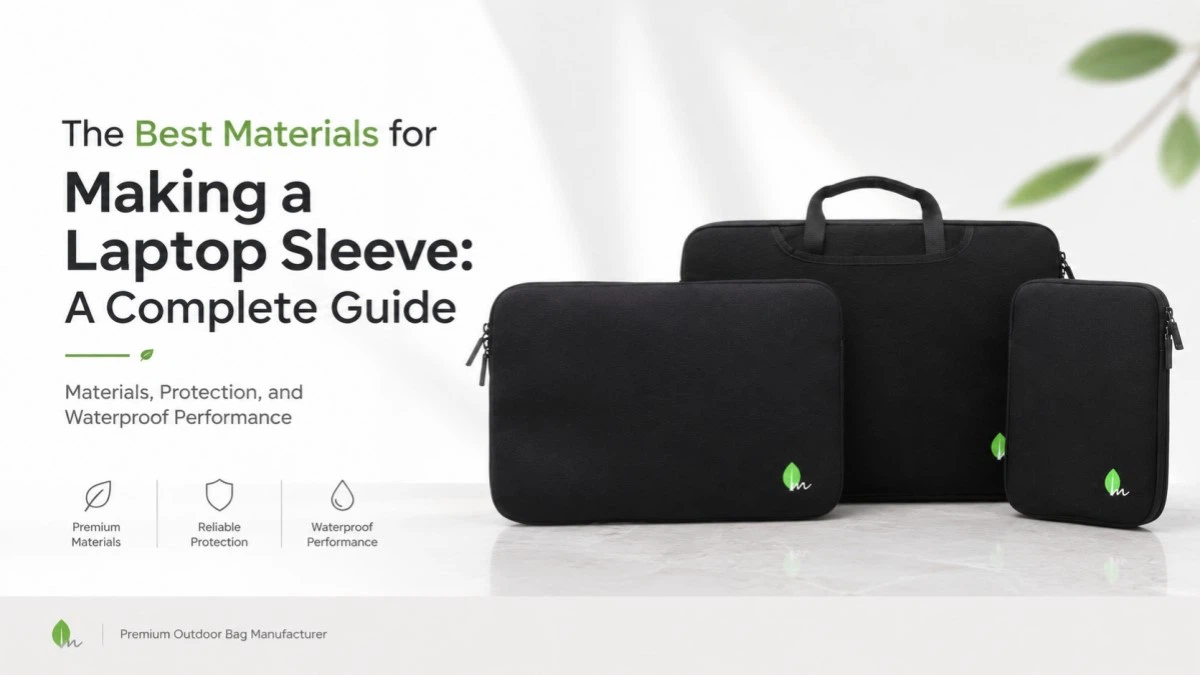
How a Laptop Sleeve Is Built
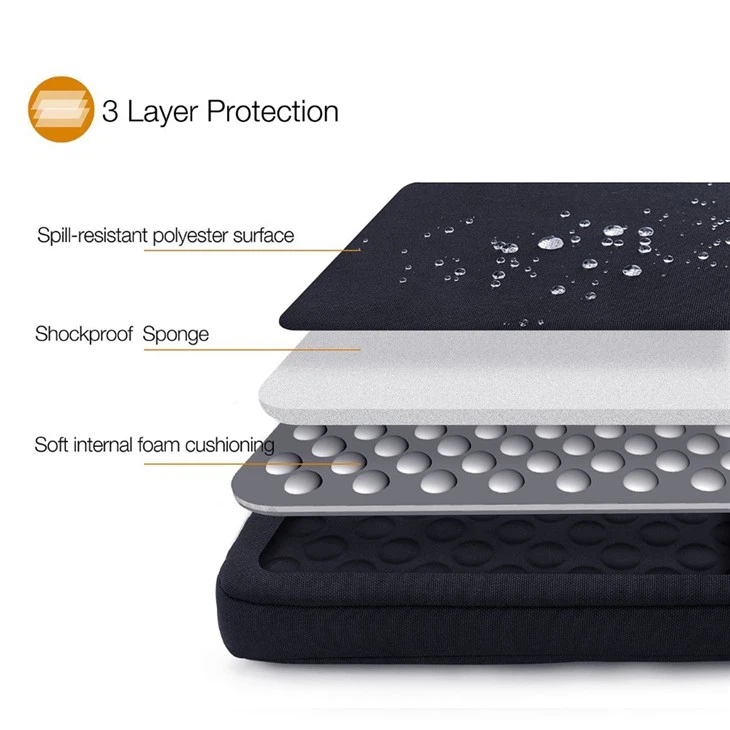
A laptop sleeve is a soft protective case designed to cover a laptop against scratches, dust, light impact, and moisture during storage or transport. In manufacturing, it is built in four functional layers.
1. Outer Shell - Durability, Appearance, Water Resistance
The first layer users see and touch. It controls appearance, surface durability, stain resistance, and basic water protection. Common choices: polyester, nylon, neoprene, felt, canvas, PU leather, and TPU/PVC/PU coated fabrics.
For custom projects, the outer fabric also dictates which logo methods are possible. Smooth coated fabrics may resist water but need testing before printing. Woven nylon accepts embroidery well but requires controlled stitch density to avoid puckering. Material choice is never only about the fabric - it shapes the entire production plan.
2. Padding Layer - Shock Absorption and Shape
The padding sits between the outer shell and the lining. It is where most of the protection actually happens. Common materials: EVA foam, EPE foam, PE foam, sponge padding, memory foam, quilt batting.
Most sleeves use 2–5 mm foam padding. Thinner keeps the sleeve slim with limited protection; thicker improves cushioning but adds bulk. EVA foam gives the best structure. EPE and PE are lighter and cheaper. Sponge is fine for basic sleeves but compresses faster over time.
Padding matters more on 15.6" and 16" sleeves. Larger laptops have more surface area and weight, so weak padding or a loose fit allows movement and reduces protection.
3. Inner Lining - Scratch Protection and Touch
The lining is the layer in direct contact with the laptop. It needs to be soft, stable, and clean. Common materials: microfiber, fleece, flannel, soft polyester lining, felt.
Microfiber is the standard for mid-range and premium sleeves - smooth, low-friction, premium feel. Fleece adds a warm hand feel and slight cushioning. Soft polyester is practical for cost-controlled production.
One caution for export products: low-quality dark linings can have color migration under heat, humidity, or long contact, which is a real risk for light-colored laptops. Lining testing is not optional at the premium end.
4. Closure - Security, Dust Protection, User Experience
|
Closure Type |
Strengths |
Limitations |
Best For |
|
Zipper |
Secure, dust protection, retail-friendly |
Ordinary zippers are a weak point for water |
Daily, travel, business sleeves |
|
Velcro |
Low cost, easy to open |
Noisy, less premium, wears out |
Basic or casual sleeves |
|
Magnetic snap |
Clean look, business style |
Weaker sealing and retention |
Slim business sleeves |
|
Flap closure |
Simple, minimalist |
Protection depends on flap depth and fit |
Minimalist sleeves |
For waterproof sleeves, zipper choice becomes critical - a water-resistant zipper or a covered zipper flap reduces water entry, but a sleeve should not be treated like a fully submersible dry bag unless the entire construction is designed for that.
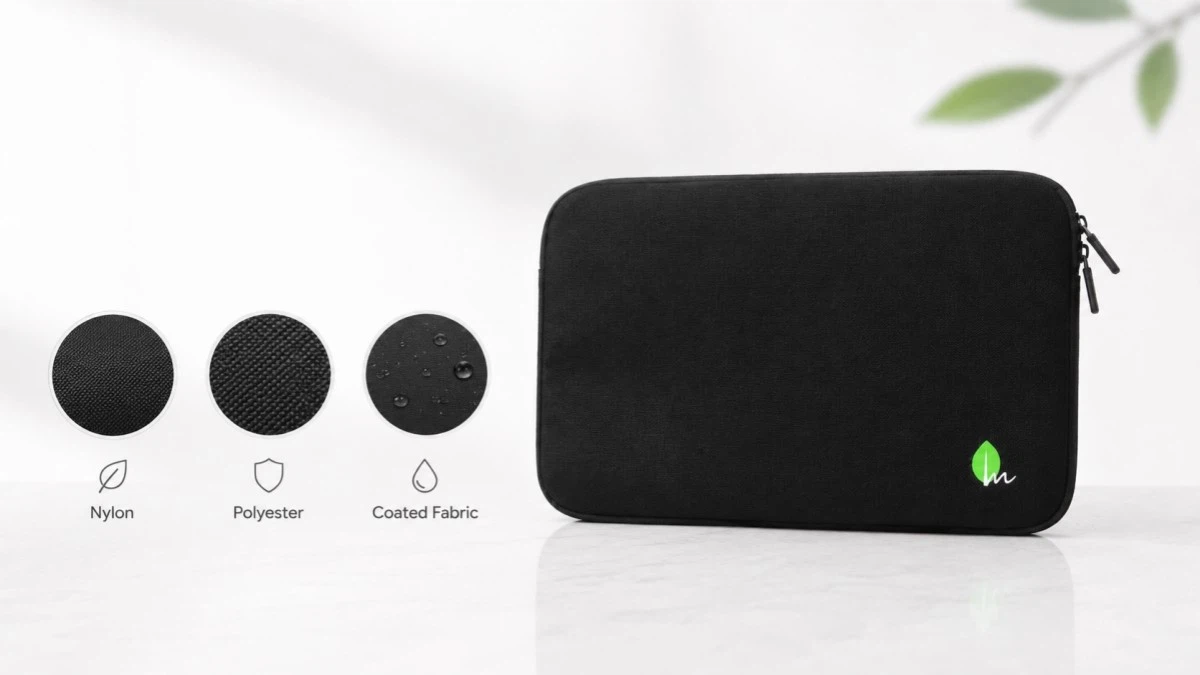
Outer Shell Materials Compared
The outer material is what most buyers compare first, but it should always be evaluated alongside padding, lining, and structure.
Polyester
The most common laptop sleeve material - cost-stable, easy to source, suitable for large-scale production. Available in 300D, 600D, or 900D depending on the target thickness, and can be treated with PU coating, PVC coating, or a DWR finish for water resistance.
Polyester is not inherently waterproof. Untreated polyester resists light moisture but fails under prolonged rain.
Best for: daily commuting, school, budget custom sleeves, promotional products.
Nylon
Stronger wear and tear resistance than polyester, with a cleaner, more technical look. Common options: 420D, 840D, 1680D ballistic, and ripstop nylon. The exact performance depends on yarn, weave, density, coating, and finishing.
Like polyester, nylon needs coating or lamination for serious water resistance.
Best for: travel sleeves, business commuting, outdoor-style products, premium daily-use sleeves.
Neoprene
A synthetic rubber-like material - soft, elastic, naturally cushioned. It wraps the laptop closely and absorbs light bumps, with decent water resistance for daily spills and light rain.
The trade-off is appearance: neoprene reads sporty or casual and is not ideal for premium business sleeves. It can also show compression marks after extended use.
Best for: lightweight sleeves, basic padded sleeves, sporty designs.
Felt and Fleece
Soft, minimalist, easy to cut and shape - which is why many handmade sleeves use felt. Fleece is more common as a lining than an outer.
Felt absorbs moisture, collects dust, and wears down under heavy use. It is not a serious choice for rain, outdoor exposure, or frequent travel.
Best for: minimalist sleeves, light scratch protection, indoor-only storage.
Leather and PU Leather
Genuine leather looks premium and ages distinctively, but it is expensive, heavier, harder to maintain, and vulnerable to water, scratches, and UV.
PU leather is the practical bulk-production alternative - similar business appearance at lower cost, better surface water resistance, and easier branding through embossing or hot stamping. The surface should be tested for abrasion, peeling, and logo compatibility before mass production.
Best for: business sleeves, corporate gifts, premium office accessories.
TPU / PVC / PU Coated Fabrics
This is the main direction for water-resistant and waterproof sleeves. A coating or lamination adds a protective barrier that blocks water penetration, resists stains, and makes cleaning easier.
|
Material |
Performance |
Best Use |
|
PU coated polyester |
Good cost-performance, light water resistance |
Daily and commuter sleeves |
|
PU coated nylon |
Better durability and water resistance |
Travel and outdoor-style sleeves |
|
PVC coated fabric |
Strong surface water resistance, easy to clean |
Waterproof-style sleeves |
|
TPU laminated fabric |
Flexible, cleaner hand feel, strong water resistance |
Premium waterproof sleeves |
|
Tarpaulin |
Heavy-duty waterproof surface |
Rugged outdoor cases |
Final waterproof performance still depends on zipper, seams, and opening design - covered in the next section.
Lining and Padding: What Actually Protects the Laptop
Outer fabric gets the attention, but lining and padding do most of the protective work. An attractive shell with weak padding is still a weak sleeve.
Lining Materials
|
Lining |
Strengths |
Best Use |
|
Microfiber |
Smooth, soft, premium touch |
Mid-range and premium sleeves |
|
Fleece |
Soft, warm, light cushioning |
Daily protective sleeves |
|
Soft polyester |
Cost-stable, mass-production friendly |
Basic and mass-market sleeves |
|
Flannel |
Soft and gentle |
Handmade or soft-style sleeves |
|
Felt |
Structured, scratch protection |
Minimalist sleeves |
Padding Materials
|
Padding |
Protection |
Structure |
Typical Use |
|
EVA foam |
Medium–high |
Firm, stable |
Premium, travel, semi-rigid sleeves |
|
EPE / PE foam |
Medium |
Light, practical |
Daily and commuter sleeves |
|
Sponge padding |
Basic–medium |
Soft but compressible |
Budget sleeves |
|
Memory foam |
Medium–high |
Soft, slow rebound |
Premium comfort sleeves |
|
Quilt batting |
Light–medium |
Puffy, soft |
Handmade or soft-style sleeves |
For basic sleeves, 2–3 mm foam is enough for scratch and light-bump protection. For travel sleeves or 15.6"+ laptops, 4–6 mm structured foam is more appropriate. The goal is the right protection level, not maximum thickness.
Corner and Edge Protection
Laptop corners take the first hit in any drop. Stronger sleeves use thicker corner foam, reinforced binding, EVA edge structure, raised lining around the zipper area, and slightly larger internal tolerance to avoid pressure marks. This matters more on heavier 16" laptops than on slim 13" models.
Waterproof vs. Water-Resistant: What Actually Matters
"Waterproof" and "water-resistant" are often used interchangeably. In bag manufacturing, they should not be.
- Water-resistant - the material can handle light moisture, short rain exposure, or small spills.
- Waterproof - the material and construction are designed to actively block water, with sealed seams, protected zippers, and controlled openings.
Water-resistant materials include PU coated polyester, PU coated nylon, treated canvas, dense woven polyester, and neoprene. Fine for office and school commuting; cost-friendly.
Waterproof materials include TPU laminated fabric, PVC coated fabric, tarpaulin, and PU coated nylon. Suitable for outdoor travel, cycling, camping, and rainy commuting.
Why Waterproof Fabric Alone Is Not Enough
This is the most common mistake in laptop sleeve development. A buyer specifies waterproof fabric and assumes the finished product is waterproof. In real production, water enters from:
- Ordinary zipper teeth
- Stitching holes
- Top opening
- Unprotected seams
- Loose flap design
If the product is marketed as a waterproof laptop sleeve, the construction must back the claim:
- Water-resistant zipper or covered zipper flap
- Reinforced and sealed seams
- Welded or high-frequency bonded construction
- Roll-top or protective flap closure
- Reduced stitch exposure at high-risk areas
A laptop sleeve does not need to be a dry bag. But the structure has to match the marketing.
Material Combinations by Use Case
Daily Commuting and School
Polyester or nylon shell + PE/EPE foam + soft polyester or fleece lining + zipper closure.
The most practical structure for daily users. Light, affordable, easy to produce in multiple colors. Aim to keep total weight under 500–700 g including pockets - heavier sleeves get left at home. Add a small accessory pocket and a water-resistant coating, but do not overbuild.
Business Travel
High-density nylon or textured polyester + EVA foam + microfiber lining + accessory pocket.
Business sleeves need a cleaner look and stronger structure. High-density nylon resists wear and looks professional. Useful additions: front zipper pocket, reinforced handle, YKK-grade zipper, anti-scratch zipper guard. The material, zipper, lining, and logo method all need to match the price point.
Outdoor and Rainy Use
TPU laminated, PVC coated, or PU coated nylon + water-resistant zipper + reinforced seams.
For cycling, boating, camping, or field work. The outer should resist water, dirt, and abrasion, and wipe clean easily. Avoid felt and untreated canvas. Reinforce the bottom and corners.
Premium Corporate Gifts
PU leather, textured nylon, or premium polyester + EVA padding + microfiber lining + custom logo.
The material should support a clean logo effect and consistent appearance in bulk:
|
Material |
Suitable Logo Methods |
|
Polyester |
Screen printing, heat transfer, embroidery, woven label |
|
Nylon |
Embroidery, rubber patch, woven label, heat transfer |
|
PU leather |
Embossing, debossing, hot stamping, metal logo |
|
Felt |
Leather patch, woven label, simple embroidery |
|
TPU / PVC coated |
Screen printing, rubber patch, tested heat transfer |
For gifts, packaging matters as much as the sleeve itself.
Lightweight Protection
Neoprene, felt, or thin polyester + light padding + soft lining.
For users putting the laptop inside a backpack or tote. The job is preventing scratches and small bumps, not heavy impact. Be honest in product positioning - this is a light protective sleeve, not a rugged case.
What Brands Should Define Before Customizing
Material selection should not start with "Which fabric is best?" It should start with the product brief.
Define first: target user, retail price range, laptop sizes, protection level, waterproof requirement, logo method, packaging, order quantity, sales channel.
A budget sleeve in 600D polyester with sponge padding and a premium travel sleeve in high-density nylon with EVA foam can both be good products - if the material matches the positioning.
Laptop Size and Fit
Common sizes: 13", 14", 15.6", 16". Internal dimensions must account for laptop width, height, thickness, padding thickness, seam allowance, zipper position, corner tolerance, and any extra pocket structure. Too tight scratches the device on insertion. Too loose lets it move on impact.
Logo Method Compatibility
Not every logo method works on every material:
- Heat transfer works well on polyester but can fail on some coated surfaces with weak adhesion.
- Embroidery suits nylon and polyester but can pucker on thin fabric.
- Embossing on cheap PU leather can crack if pressure is not controlled.
For OEM projects, logo testing should happen during sampling - not after bulk fabric is ordered.
Functional Features Change the Material Spec
Every added feature adds stress points: front pocket, hidden zipper pocket, handle, detachable shoulder strap, TSA-friendly opening, waterproof zipper, reinforced bottom, anti-scratch zipper guard. Fabric, sewing method, binding, and reinforcement need to be planned as one system.
FAQ
Is neoprene better than polyester for laptop sleeves?
Not always. Neoprene is softer and better for light cushioning. Polyester gives more flexibility for color, logo customization, cost control, and large-scale production. For lightweight sleeves, neoprene wins. For branded OEM projects, polyester is usually more practical.
Are felt laptop sleeves waterproof?
No. Felt resists scratches and looks minimalist, but it absorbs moisture. For water resistance, choose coated polyester, coated nylon, TPU laminated fabric, or PVC coated fabric.
What is the most waterproof material for a laptop sleeve?
TPU laminated fabric, PVC coated fabric, tarpaulin, and PU coated nylon are the strongest options. Real water protection also depends on the zipper, seams, opening direction, and overall construction - fabric alone is not enough.
What padding is best for a laptop sleeve?
EVA foam for structure and protection. EPE or PE foam for lighter daily sleeves. Sponge padding for cost-friendly basics. For travel or premium sleeves, EVA or higher-density foam is the better choice.
Is leather a good material for laptop sleeves?
Leather looks premium, especially for business use, but genuine leather is expensive, heavy, and vulnerable to moisture. PU leather is easier for bulk production and branding, with better water resistance, though surface durability should be tested before mass production.
What thickness of padding is enough?
For 13"–14" sleeves used inside another bag, 2–3 mm is usually sufficient. For 15.6"–16" laptops or standalone carrying, 4–6 mm structured EVA foam is safer because larger laptops are heavier and less forgiving when dropped.
Does a waterproof zipper make a sleeve fully waterproof?
No. A water-resistant zipper reduces water entry at the opening, but seams, stitching holes, and the outer fabric also need to be waterproof or sealed. A fully waterproof sleeve requires coordinated design across all of these elements.
Final Thoughts
The best laptop sleeve material depends on what the product needs to do.
- For daily use, polyester or nylon with foam padding and a soft lining is the safest, most cost-effective baseline.
- For waterproof sleeves, TPU laminated, PVC coated, or PU coated nylon should be paired with water-resistant zippers and reinforced seams.
- For business and corporate gifts, PU leather, textured nylon, microfiber lining, and the right logo method drive perceived value.
A laptop sleeve is a complete material system - outer shell, padding, lining, closure, and structure - and the strongest products are built when all five are specified together.
About FENGLINWAN
FENGLINWAN is a Chinese manufacturer specializing in custom waterproof bags and protective sleeves for brands, importers, and product developers. We help evaluate fabric options, padding structures, waterproof construction, logo methods, and sample feasibility before mass production.
If you are planning a custom laptop sleeve project, contact us to discuss material specifications, sampling, and OEM production.