


How Air Valves Are Used in Airtight Waterproof Backpacks
Oct 27, 2026
Leave a message
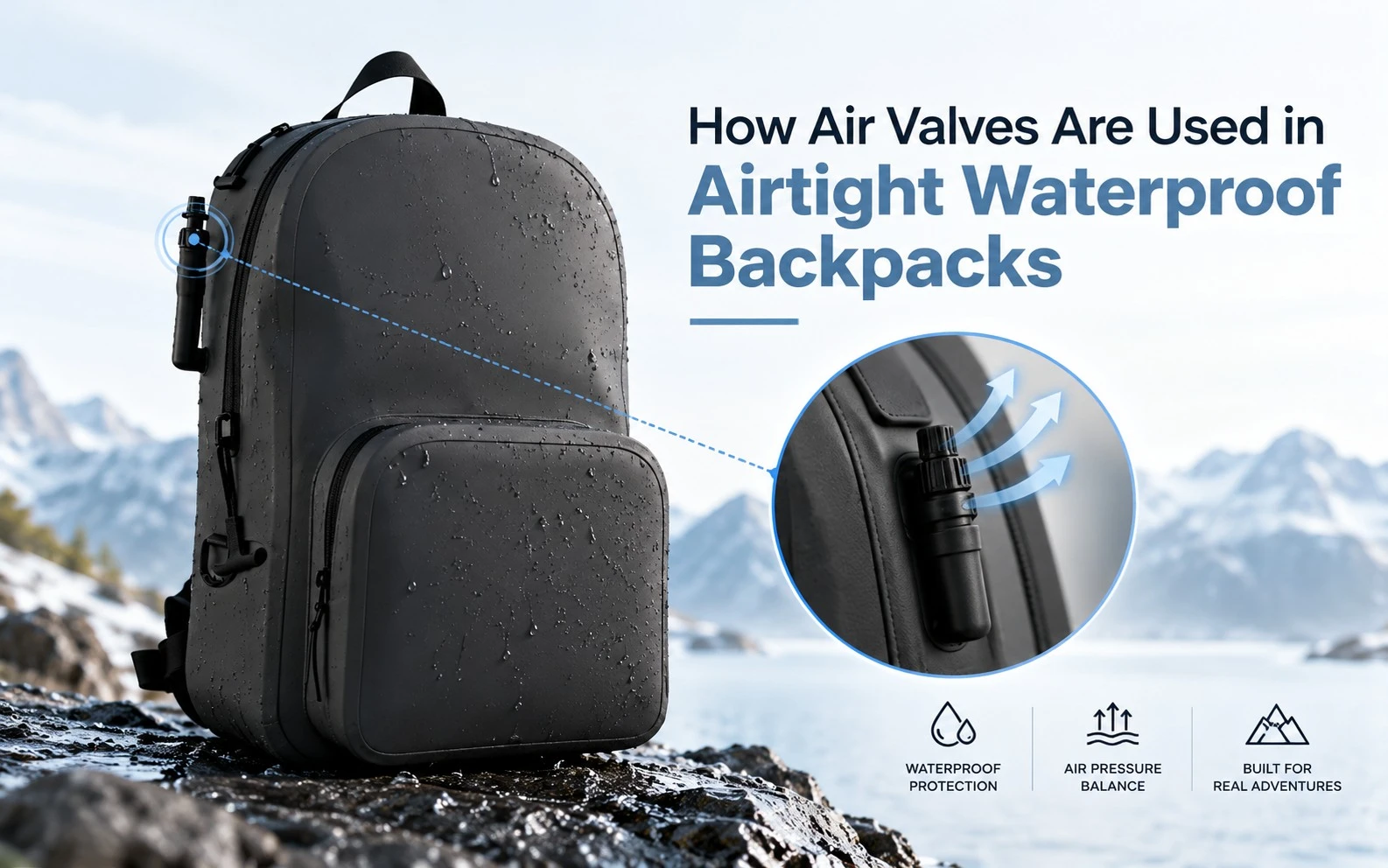
An airtight waterproof backpack is only as reliable as the sealing system built around its smallest components. Alongside TPU waterproof fabric, HF-welded seams, airtight or watertight closures, and carefully engineered interfaces, the air valve plays an important role in managing the air trapped inside a sealed pack.
Rather than creating waterproofing on its own, an air valve gives an airtight waterproof backpack a controlled way to manage inflation, deflation, and pressure. Depending on the design, it may help release trapped air for compact packing, support intentional inflation for buoyancy, or equalize pressure without opening the main compartment.
This article explains how air valves are used in airtight waterproof backpacks, the main valve types worth knowing, and what brands should consider when integrating a valve into a waterproof backpack design.
Why Airtight Waterproof Backpacks Use Air Valves
A properly sealed airtight backpack behaves much like a closed chamber. When its waterproof closure is secured and the welded body prevents uncontrolled air exchange, air trapped inside cannot move as freely as it would in a conventional sewn backpack.
That can be useful, but it also creates a design challenge.
Pressure changes can occur when a sealed pack is moved between different elevations, exposed to changing temperatures, transported by air, compressed during packing, or intentionally inflated. Without a controlled way to manage that air, the pack may balloon or place unnecessary stress on its seams and closure system.
An air valve provides a controlled air-management point. Depending on its design, it may allow a user to:
- inflate the backpack or a sealed chamber;
- release trapped air;
- compress the bag for packing;
- manage internal pressure; or
- maintain a controlled volume of air for buoyancy-oriented applications.
This distinction is important: an air valve does not make a waterproof backpack airtight. Airtight performance depends on the entire construction, including the waterproof material, welded seams, closure, valve interface, and other structural details. For a broader look at these elements, see how waterproof bags are made.
In FENGLINWAN's airtight waterproof backpack development, TPU materials can be combined with HF Welding, airtight or watertight zippers, and valve-equipped structures. One existing product concept uses a side air valve that allows inflation or deflation as part of an inflatable-assist rescue backpack design.
How a Waterproof Air Valve Lets Air Pass Without Letting Water In
The principle behind a waterproof air valve is material science applied to a very specific problem: gas may need to move through the system while liquid water must remain outside.
One common solution in pressure-equalizing valves uses a hydrophobic microporous membrane, often based on expanded PTFE, or ePTFE. Protective vent technology using ePTFE membranes is widely used in sealed enclosures where gas exchange and liquid-water resistance need to be balanced.
|
Property |
Air |
Liquid Water |
|
Particle behavior |
Gas molecules move and diffuse |
Water remains a liquid phase |
|
Through a suitable hydrophobic microporous membrane |
Can pass |
Resisted under specified pressure conditions |
|
Behavior under pressure |
Compressible |
Essentially incompressible |
A mechanical inflation or purge valve may operate differently. Instead of continuously venting through a membrane, it may rely on a valve seat, cap, check mechanism, O-ring, or other sealing structure that opens only when the user actuates it.
For this reason, not every waterproof backpack air valve works the same way. The valve architecture should be selected according to the intended function rather than treated as a generic accessory.
Three Common Air Valve Types for Waterproof Backpacks
Not all air valves serve the same purpose. In airtight waterproof backpacks, three general architectures cover many common design requirements.
One-Way Check Valves
A one-way valve allows air to move primarily in one direction while preventing reverse flow under normal operation.
In a waterproof backpack designed for intentional inflation, the user can introduce air into the sealed chamber and then close or secure the valve so the air remains inside. This may be useful in buoyancy-oriented waterproof bags, swimming packs, kayaking equipment, or certain rescue-oriented designs.
The important point is that the valve itself does not create flotation. Buoyancy depends on the amount of enclosed air, total load, bag volume, construction, and the ability of the complete sealed system to retain that air.
Two-Way Purge Valves
A two-way or manually controlled purge valve allows air movement when the user opens or actuates it.
This can be especially useful when an airtight waterproof backpack needs to switch between different states. The user may release trapped air to make the backpack flatter for storage or transport, or inflate it again when the product design calls for additional enclosed air.
For many airtight bags, this ability to deflate is just as useful as inflation. Trapped air can make a sealed bag bulky, while controlled air release allows the user to adjust the shape of the pack without opening the main compartment.
Pressure-Equalizing Breather Valves
A pressure-equalizing or breather valve is designed to manage pressure differences between the inside and outside of an enclosure.
Depending on the valve design, it may use a hydrophobic membrane or another pressure-control mechanism to allow gas exchange while resisting water ingress under specified conditions.
These valves can be useful where temperature, altitude, transportation, or environmental pressure changes would otherwise place repeated stress on a sealed enclosure.
Unlike a manual inflation valve, a breather valve may require little or no user interaction.
Where an Air Valve Should Be Positioned on a Waterproof Backpack
Valve placement should be decided during product development rather than added as an afterthought.
A poorly positioned valve may interfere with straps, collect water, experience repeated abrasion, or sit in an area where the backpack constantly bends or carries structural load.
A practical valve location is generally a relatively flat and low-stress panel away from shoulder straps, hip belts, compression straps, and heavily folded areas. The exact location depends on the backpack construction, valve type, carrying system, and intended use.
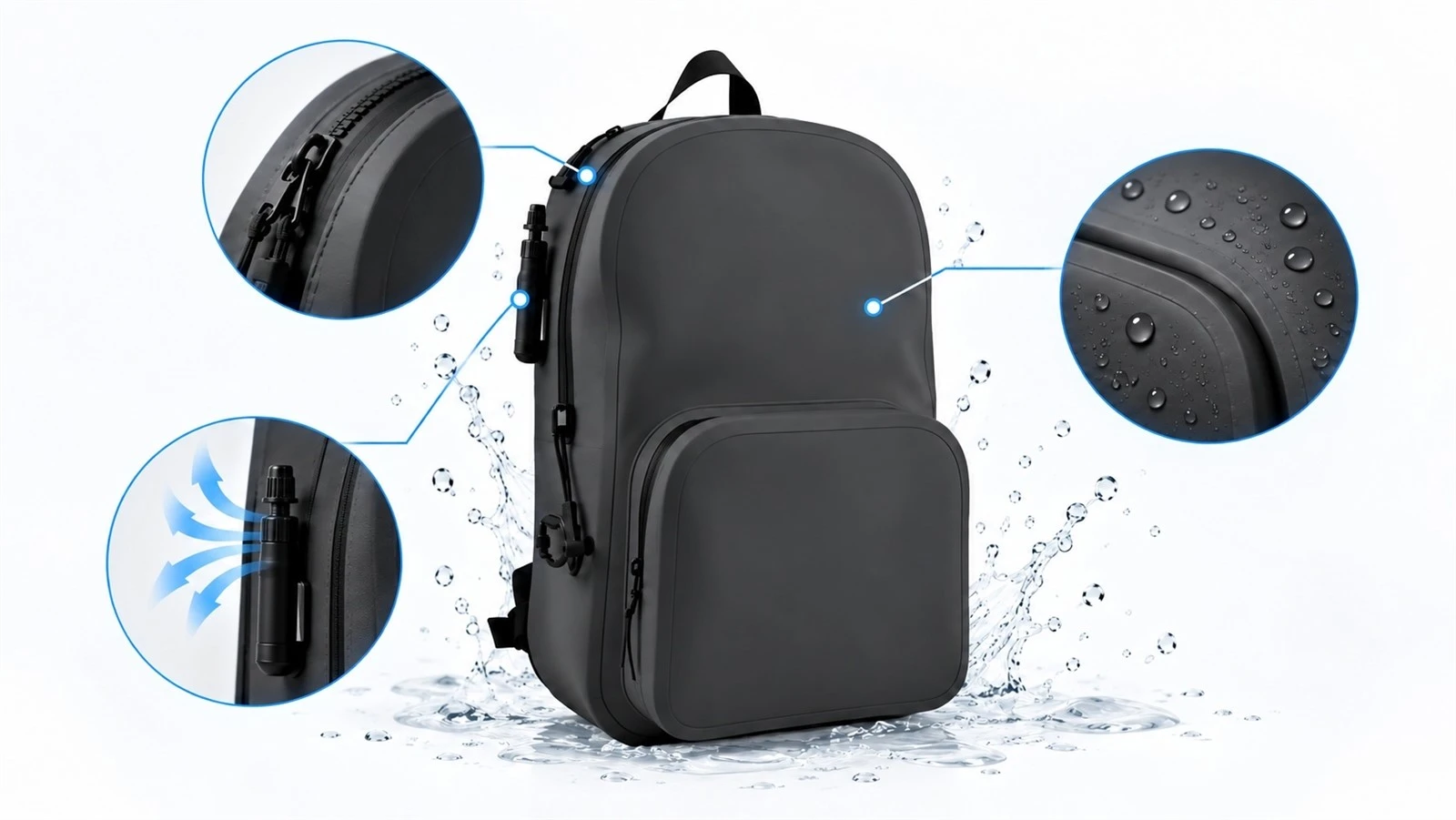
For welded waterproof backpacks, the valve-to-fabric interface is particularly important. Where compatible materials and structures permit, the surrounding waterproof construction can be integrated through HF Welding or another appropriate heat-sealing method rather than creating unnecessary stitched penetration points in the airtight chamber. Brands evaluating this construction method can also review how HF Welding for waterproof bags works.
The valve opening may also need protection against accidental operation, abrasion, dirt, salt, or sand. Inflation and purge valves often use recessed structures or caps, while membrane-based breather valves may require physical protection around the vent area.
|
Valve Type |
Typical Placement |
User Interaction |
Primary Function |
|
One-way check |
Flat front or side panel |
Manual |
Controlled inflation / air retention |
|
Two-way purge |
Side, front, or top panel |
Open/close to vent |
Inflation and deflation |
|
Breather |
Low-stress flat panel |
Usually automatic |
Pressure equalization |
For an OEM or ODM waterproof backpack project, the correct valve position should be evaluated together with the paper pattern, welding layout, zipper position, carrying system, and loading requirements before tooling and sample validation begin.
Materials and Construction Used Around Waterproof Backpack Air Valves
A valve is a small component, but it may need to withstand water, pressure, UV exposure, temperature changes, repeated packing, abrasion, dirt, and long-term use.
Membrane-style breather valves often use hydrophobic microporous materials such as ePTFE. Mechanical valve bodies may be molded from TPU, nylon, acetal, or other engineering polymers depending on the required stiffness, weldability, chemical resistance, and mechanical design.
TPU is particularly relevant to welded waterproof backpacks because TPU-coated or laminated materials can be incorporated into heat-sealed construction. FENGLINWAN uses TPU extensively in airtight and fully waterproof backpack development and also supports PVC for suitable heat-sealed waterproof products.
The sealing structure of a valve may use:
- O-rings;
- molded lip seals;
- mechanical valve seats;
- screw or press caps;
- check-valve mechanisms; or
- hydrophobic membranes.
Each solution has different design considerations. O-rings can provide serviceable sealing but may wear or require replacement. Lip seals are compact but depend on material and cycle life. Membrane vents can provide passive pressure equalization but need appropriate protection from contamination.
Material selection therefore cannot be separated from the intended use of the waterproof backpack.
How the Air Valve Works With the Waterproofing System
An air valve does not work alone. Its effectiveness depends on the complete airtight waterproof construction.
HF Welding, also called RF Welding in many industry contexts, is commonly used to join compatible coated fabrics without creating conventional stitched seam holes. In an airtight waterproof backpack, welded seams can form a continuous barrier around the bag body.
The closure is another critical part of the system. Depending on the product, this may be an airtight zipper, watertight zipper, submersible waterproof zipper, or a roll-top structure designed for a particular level of water protection. A detailed comparison of waterproof zipper types from water-resistant to airtight can help clarify why zipper selection matters.
These closure types should not be treated as interchangeable.
A roll-top waterproof backpack may be highly resistant to rain, splashing, and temporary water exposure, while an airtight zipper system is more appropriate when the product is specifically designed to maintain a sealed internal chamber.
The valve must therefore be engineered together with:
material + welded seams + closure + valve interface + overall structure + testing
A high-quality valve cannot compensate for an inadequate zipper or leaking weld. Likewise, strong HF-welded seams cannot guarantee airtightness if the valve-to-fabric interface is poorly designed.
For enclosure-style products, IP ratings can provide a useful reference framework. The IEC 60529 IP Code standard defines the ingress-protection classification system used for dust and water protection. Under this system, IP68 combines the highest dust-ingress category with an immersion rating whose exact depth and duration conditions are specified for the product. When only water ingress is being discussed, IPX8 is commonly used to describe protection under continuous-immersion conditions defined for the test.
For readers comparing these claims with real bag performance, it is also useful to understand what "submersible" means for a waterproof bag.
FENGLINWAN's product materials include IPX8-level airtight waterproof technology within its high-protection product system. However, the waterproof performance of any finished backpack should be evaluated according to the actual product construction and test conditions rather than assumed from one component alone.
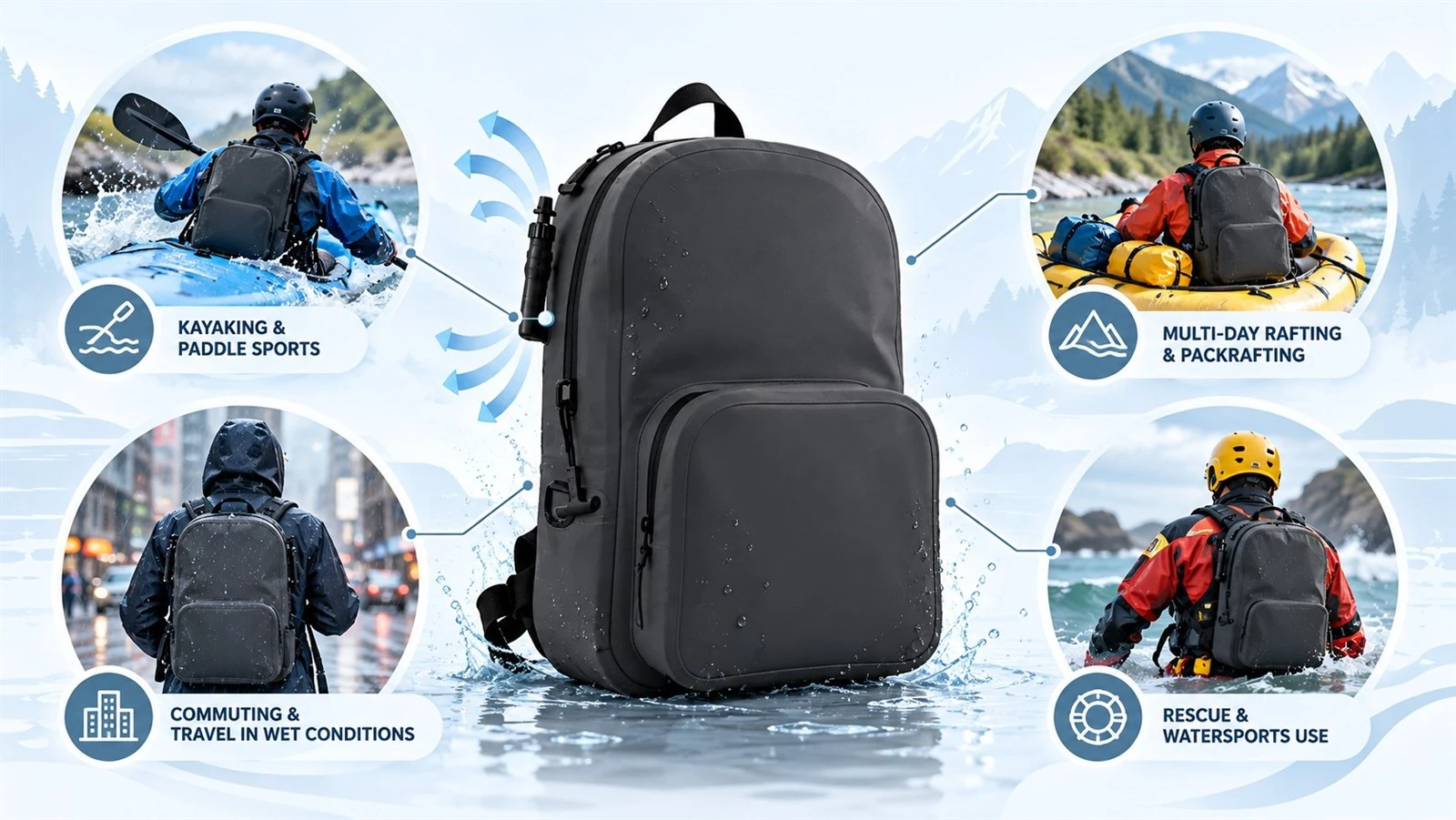
Where Air Valves Are Useful in Waterproof Backpack Designs
Valve engineering becomes most relevant when the backpack is used in demanding conditions or when the sealed internal air volume serves a specific function.
Whitewater and Sea Kayaking
A sealed dry bag or waterproof backpack designed to retain additional air can benefit from a controlled inflation valve.
For kayaking, rafting, paddleboarding, and related applications, enclosed air may contribute to buoyancy. Products such as an inflatable SUP backpack illustrate why controlled air management can be relevant in water-sports-oriented bag development.
Any flotation-related function, however, should be evaluated as part of the complete product design rather than assumed simply because the bag contains an air valve. A backpack with trapped air should also not be treated as a substitute for approved personal flotation equipment; the U.S. Coast Guard's life-jacket safety guidance provides the appropriate safety context for recreational boating.
Dive and Watersports Gear Transport
Waterproof equipment bags used for cameras, electronics, regulators, or other watersports gear may experience changing temperatures and transportation conditions before they ever reach the water.
Depending on the required protection level, a pressure-management valve can help control internal air pressure without requiring the user to open the main waterproof compartment.
Multi-Day Rafting and Packrafting
On long water-based trips, a waterproof backpack may need to serve several purposes at once.
The user may want additional enclosed air at one stage and a compact, flattened bag at another. A manually controlled valve can provide both inflation and deflation, while a dedicated breather design may address pressure equalization.
FENGLINWAN's existing product portfolio includes a waterproof swimming survival backpack as well as valve-equipped rescue-oriented concepts. These projects illustrate why valve selection should start with the application rather than with the component itself.
Commuting and Travel in Wet Climates
Not every airtight waterproof backpack is used in whitewater.
A commuter carrying electronics in heavy rain or a traveler moving through changing climates may also benefit from a well-managed sealed compartment. In these applications, the valve is usually less about flotation and more about controlling trapped air or pressure while preserving the intended waterproof structure.
This is one reason brands should first define whether they need a genuinely airtight backpack or simply a highly water-resistant or roll-top waterproof backpack. The appropriate closure and valve strategy may be very different.
How to Evaluate the Quality of a Waterproof Backpack Air Valve
The difference between a reliable valve and a weak point in the product often comes down to engineering details that are not immediately visible to the end user.
Membrane Protection
If the design uses an exposed microporous membrane, dirt, salt, sand, oils, and other contaminants can affect performance.
A suitable protective structure can shield the membrane while still allowing the required airflow. The protection method should match the actual outdoor environment in which the backpack will be used.
Valve-to-Fabric Seal Integrity
The interface between the valve and waterproof fabric is one of the most important areas to inspect.
For compatible TPU waterproof constructions, the design may use welded or thermally integrated structures rather than relying solely on stitching. The appropriate process depends on the valve material, fabric, geometry, and performance target.
This interface should be considered as part of the airtight system rather than as a separate accessory attachment.
Cap and Closure Design
Manual inflation and purge valves need closures that are secure, accessible, and practical in real use.
Depending on the application, the cap may need to remain attached to the product, resist accidental opening, and be operable with wet or gloved hands.
A technically waterproof valve that is difficult to operate in its intended environment is still a poor product decision.
Pressure and Leakage Testing
For an airtight waterproof backpack, the most meaningful test is not whether the valve looks well designed but whether the complete finished bag retains air and resists leakage.
At FENGLINWAN, airtight product development can include Air Leakage Testing and Water Leakage Testing. During air-leakage evaluation, the backpack is inflated and closed, and its condition is checked after 24 hours to determine whether it has maintained its form. Water-leakage testing can involve placing the closed bag in water and observing whether bubbles indicate an air leak.
The company's airtight testing process specifies 100% inspection for applicable airtight products. For more detail on the broader validation process, see how waterproof bags are leak tested.
This whole-system approach matters because the source of a leak may be the valve, the valve interface, a welded seam, the zipper, or another part of the construction.
FAQ
Do all airtight waterproof backpacks need an air valve?
No. An air valve is useful when the product needs controlled inflation, deflation, or pressure management. Some airtight waterproof backpack designs can perform their intended function without a valve. The decision should depend on the application, closure system, internal volume, and required performance.
Does an air valve make a backpack waterproof?
No. The air valve is only one part of the sealing system. Waterproof and airtight performance also depends on the material, HF-welded seams, zipper or closure, valve-to-fabric interface, and overall construction.
What is the difference between an inflation valve and a pressure-equalizing valve?
An inflation valve is generally used to intentionally introduce and retain air inside a sealed compartment. A pressure-equalizing valve is designed to manage pressure differences between the inside and outside of the bag, often with little or no user interaction. A manually controlled two-way valve may support both inflation and deflation.
Can an air valve help a waterproof backpack float?
It can help a sealed backpack retain additional enclosed air, which may contribute to buoyancy. Actual flotation depends on the bag volume, enclosed air, total load, construction, and leakage performance. A valve alone does not make a backpack a certified flotation or lifesaving device.
How should brands test a waterproof backpack with an air valve?
Testing should evaluate the complete product rather than the valve alone. Relevant checks can include air-leakage testing, immersion or water-leakage testing, valve-interface inspection, closure testing, and repeated-use evaluation according to the intended application and target waterproof level.
Final Thoughts
Air valves are used in airtight waterproof backpacks to manage the air inside a sealed structure. Depending on the design, they can support inflation, deflation, pressure release, or pressure equalization. Their effectiveness, however, depends on much more than the valve itself.
A reliable airtight waterproof backpack requires the valve to work together with the waterproof material, HF-welded seams, airtight or watertight closure, valve interface, and appropriate leakage testing. For brands developing specialized water-sports, outdoor, rescue, travel, or other high-protection packs, valve selection should therefore be considered early in the product-development process.
FENGLINWAN develops OEM/ODM waterproof and functional bags using TPU/PVC materials, HF Welding, airtight and watertight structures, sample development, and air- and water-leakage testing. If you are developing an airtight waterproof backpack with an air valve or evaluating the right sealing structure for a new project, contact us to discuss your design and functional requirements.