


How to Use Vacuum Compression Bags for Travel
Nov 24, 2026
Leave a message
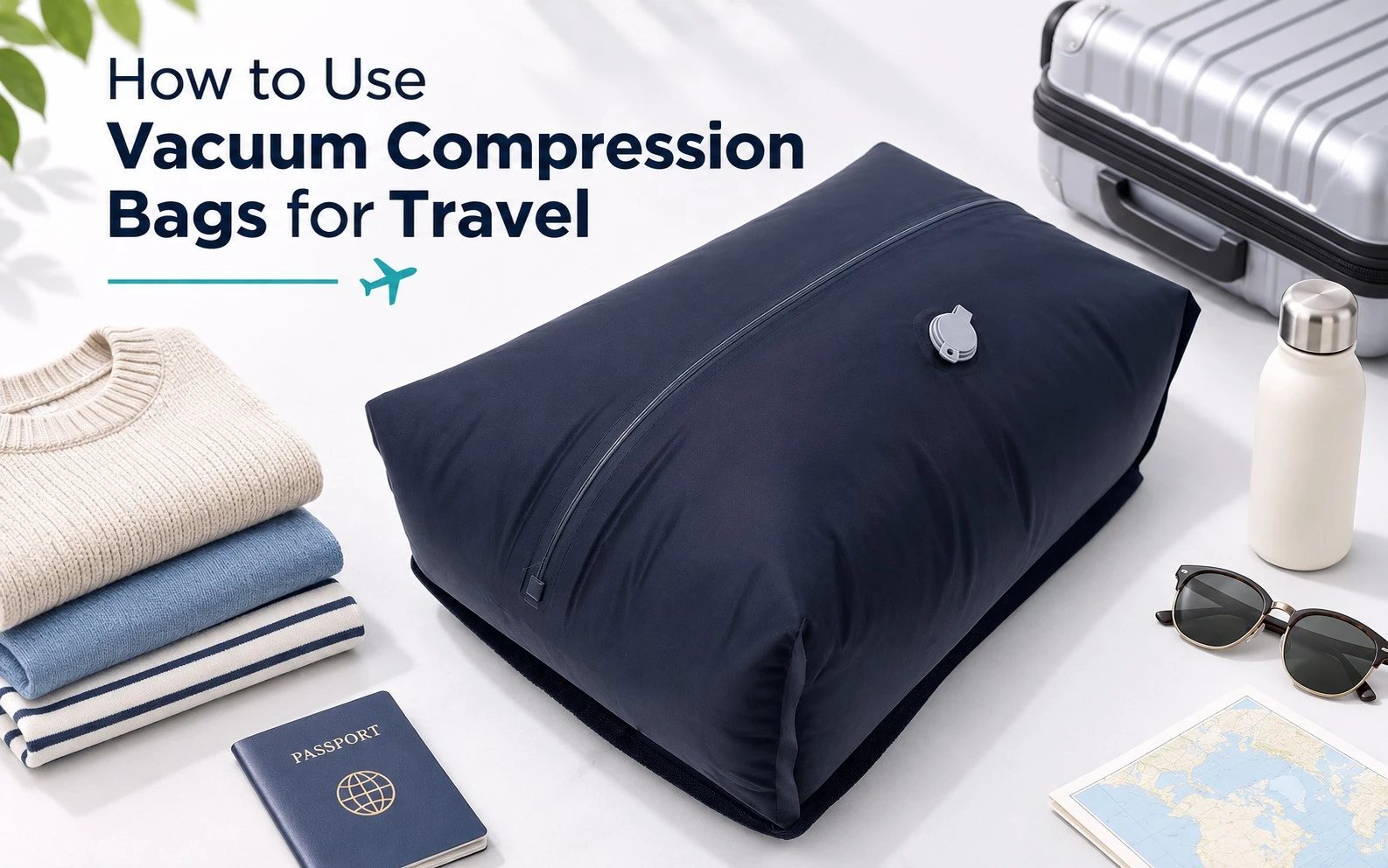
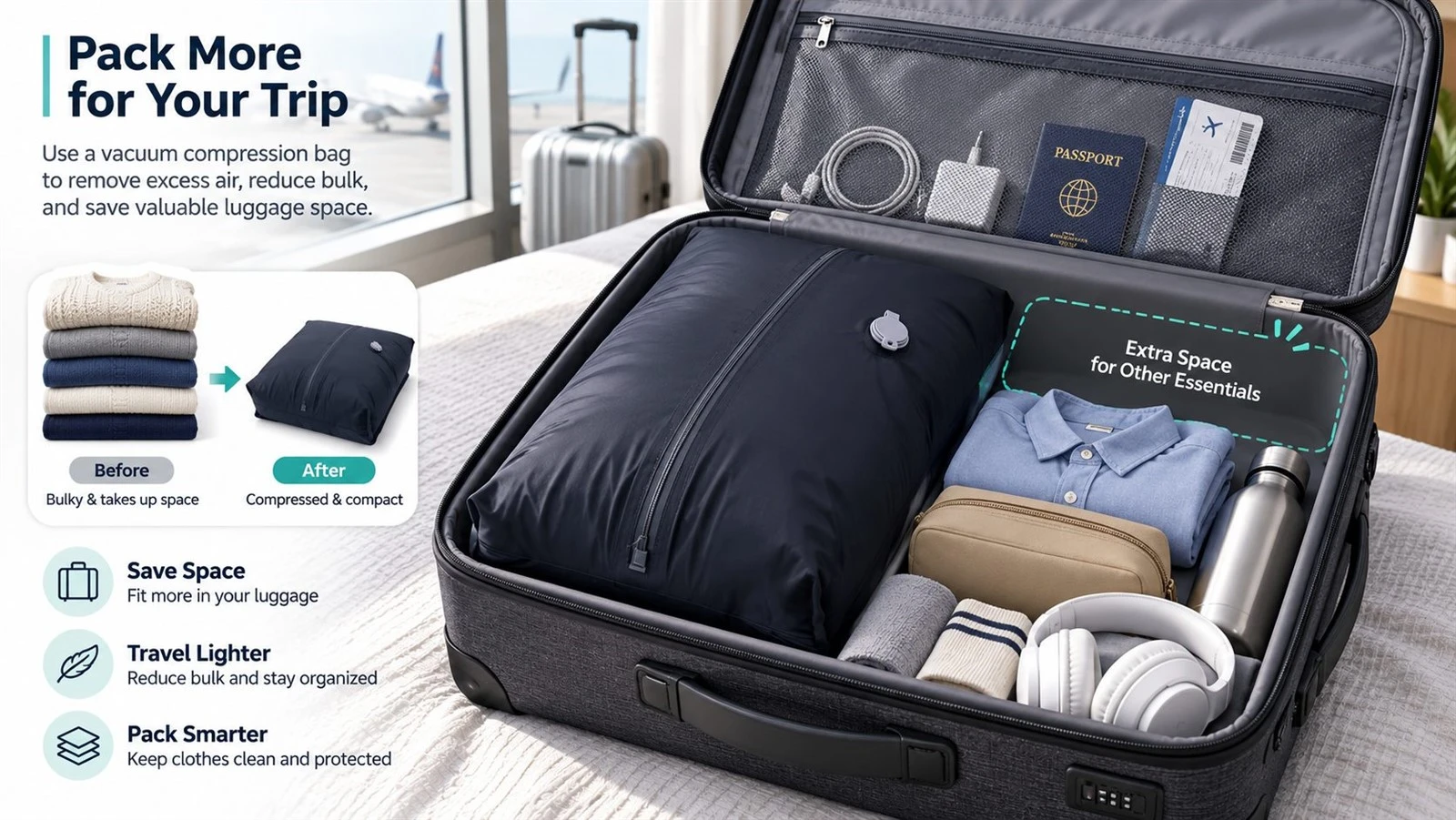
Vacuum compression bags for travel are airtight enclosures-typically built from multi-layered PA+PE (Polyamide + Polyethylene) or PET+PE composites-that extract trapped air from packed items, drastically reducing their volume. For travelers, they solve a straightforward physics problem: bulky textiles like down jackets and sleeping bags consist mostly of dead air space. Removing that air reclaims luggage capacity.
Compression ratios typically range from 50% to 80%, depending on the material packed and the vacuum pressure applied. This guide covers bag types, packing techniques, field applications, and the material specs that determine whether a bag survives a single trip or dozens.
Types of Vacuum Compression Bags for Travel
Not all travel vacuum bags perform equally under travel conditions. The extraction method dictates speed, portability, and reliability in remote environments. Three dominant designs exist on the market today, each engineered for a distinct use profile.
Roll-Up Bags (Manual Compression)
Roll-up compression bags for travel rely on physical pressure rather than mechanical pumps. Users place garments inside, seal the zip lock, and manually roll the bag from the closed end toward a one-way exhaust valve at the bottom. Body weight or hand pressure forces air out through the valve, which then blocks backflow.
They weigh almost nothing. No batteries required. For ultralight backpacking or short business trips where packing a pump adds unnecessary bulk, roll-up bags remain the most practical choice. The trade-off is that achieving maximum compression requires consistent physical effort, and the final volume reduction usually falls below what pumped systems can deliver.
Hand Pump Bags
These travel vacuum bags utilize the same double-seal zipper and valve architecture but pair with a manual piston pump. Based on general product specifications, extracting air from a medium-sized bag using a hand pump takes roughly five to eight minutes. It demands patience.
Hand pumps offer deeper compression than rolling. They are highly reliable since there are no electronic components to fail in cold or wet conditions. The trade-off is time and physical exertion, making them less ideal for quick repacking at airport terminals or hotel rooms.
Electric Pump Bags
Electric pump vacuum compression bags represent the current standard for frequent travelers. Powered by rechargeable lithium-ion batteries-commonly in the 1500mAh to 2400mAh range-cordless electric pumps deliver suction pressures from 4000Pa to over 6000Pa. High-end models generate airflow rates exceeding 13 CFM (Cubic Feet per Minute), compressing a loaded bag in roughly 10 to 15 seconds.
Speed changes everything. An electric pump allows users to decompress items for daily wear and recompress them before moving to the next destination. Battery life varies; some units handle around 90 to 120 compression cycles per charge via USB-C. The primary limitation is reliance on battery power, requiring users to monitor charge levels during extended off-grid expeditions.
Comparison at a Glance
The table below summarizes the three types across the parameters that matter most when choosing a system for a specific trip.
|
Feature |
Roll-Up Bags |
Hand Pump Bags |
Electric Pump Bags |
|
Air Extraction Method |
Manual rolling / pressure |
Mechanical piston pump |
Cordless motorized pump |
|
Typical Suction Power |
Low (body weight dependent) |
Medium |
High (4000Pa–6000Pa+) |
|
Compression Time (Medium Bag) |
1–3 minutes |
5–8 minutes |
10–15 seconds |
|
Portability |
Extremely high |
Moderate |
Moderate (pump adds slight bulk) |
|
Power Requirement |
None |
None |
USB rechargeable battery |
|
Ideal Scenario |
Ultralight hiking, short trips |
Basecamp storage, long-term packing |
Frequent travel, multi-stop itineraries |
Choosing the right system depends entirely on the trip's duration, access to power, and how often gear needs to be accessed and repacked.
How to Use Vacuum Compression Bags for Travel: Step-by-Step Guide
Proper technique determines whether a vacuum bag holds its seal for weeks or leaks within hours. Rushing this process compromises the entire system. The steps below explain how to pack clothes in vacuum bags across different bag types, with noted variations for each extraction method.
Preparation and Loading
Items must be completely dry before sealing. Trapped moisture inside an airtight environment accelerates mildew growth and degrades technical fabrics like merino wool or treated down. Fold garments flat or roll them tightly. Place heavier, flatter items at the bottom of the bag near the seal, keeping bulkier items like fleece or insulated layers toward the center.
Never exceed two-thirds of the bag's total unsealed capacity. Overstuffing stresses the zipper track and creates uneven pressure points that puncture the film from the inside out. Keep buttons, zippers, and hard buckles folded inward so they do not press against the plastic membrane.
Sealing the Bag
The double-zip seal is the most critical failure point. Run your fingers along the zipper track slowly, pressing firmly to engage both locking ridges. Do it twice. A single missed millimeter allows slow air leakage, rendering the compression useless after a few days in transit. Wipe the seal area with a dry cloth before closing to remove any fabric fibers or dust that might block the interlocking mechanism.
Extracting the Air
For electric pumps, align the nozzle flush against the turbo valve. Activate the pump until the bag shrinks tightly around the contents and the material feels rigid. Stop immediately once resistance peaks. Continuing to run the pump against a fully compressed bag strains the motor without yielding extra space.
For roll-up bags, apply steady, even pressure from top to bottom, ensuring the one-way valve remains unobstructed. For hand pump systems, maintain a consistent piston rhythm and keep the pump nozzle seated firmly on the valve base throughout extraction.
Once sealed, lay the bag flat for a few minutes. If edges begin to puff up, the seal has failed. Reopen, clear the zipper track, and reseal.
Using Vacuum Compression Bags for Outdoor and Business Travel
Vacuum compression bags serve vastly different purposes depending on the user's environment. Treating them as a single-use novelty ignores their structural value in professional gear management.
Outdoor Expeditions and Backpacking
In backcountry environments, pack volume dictates mobility. Compressing a sleeping bag or insulated jacket reduces its footprint significantly, allowing hikers to use smaller, lighter backpacks. More importantly, compression stabilizes the load. Loose gear shifts inside a pack during steep ascents, throwing off the wearer's center of gravity. A vacuum-compressed block of clothing sits rigidly against the frame, preventing internal movement.
Waterproof capabilities matter here. When crossing rivers or hiking in sustained rain, sealed PA+PE bags act as a secondary waterproof barrier for essential dry layers. Even if the outer pack fails, the core insulation remains protected. For additional gear organization and moisture protection during outdoor trips, purpose-built waterproof clothes bags offer a complementary storage option.
Business Commuting and Carry-On Travel
For professionals navigating airlines, the goal is avoiding checked baggage. Checked bags introduce delays, loss risks, and fees. By compressing suits, dress shirts, and shoes into vacuum bags, a week's worth of business attire fits into standard carry-on dimensions.
Wrinkling is a valid concern. To mitigate deep creases in formal wear, fold garments along their natural seams before compression and avoid extracting 100% of the air. Leaving a minimal amount of residual air provides a slight cushion that prevents sharp, permanent folds in delicate fabrics.
What Materials Make Vacuum Compression Bags Durable?
The longevity of a vacuum compression bag relies on its polymer composition and thickness. Standard bags often use PET+PE blends, which offer decent clarity but lack flexibility in cold temperatures. PA+PE (Nylon + Polyethylene) composites provide superior tear resistance and maintain pliability even in freezing environments, making them the preferred choice for rugged travel.
Thickness is measured in mils or microns-often referred to as "silk" (丝) in manufacturing contexts, where 1 silk equals 0.01mm. A durable travel bag typically features a thickness of 3 mils or higher (approximately 7–8 silk). Thinner films save weight but puncture easily when dragged against rough zipper teeth or packed alongside hard-shell equipment.
The key material and structural features that distinguish a travel-grade compression bag from a disposable one:
- PA+PE Film: High puncture resistance, flexible in cold weather, ideal for outdoor use
- PET+PE Film: Cost-effective, stiffer, suitable for light business travel
- Double-Zip Seal: Two interlocking tracks provide redundancy if one fails
- Turbo Valve: Designed for rapid air extraction while blocking reverse airflow
- Anti-Static Treatment: Prevents bags from clinging to each other or attracting dust when unpacked in hotel rooms
Reinforced seams around the valve area prevent tearing during aggressive pumping. According to product testing data from several manufacturers, well-constructed PA+PE bags can typically withstand 30 to 40 reuse cycles before showing structural fatigue.
From a functional bag manufacturing perspective, material thickness alone does not determine long-term reliability. Seal integrity, valve construction, and compatibility between materials and sealing methods also influence how well reusable vacuum compression bags perform over time. The principles behind air leakage testing and waterproof bag quality control further illustrate why evaluating the complete sealing structure matters.
Common Vacuum Compression Bag Mistakes to Avoid
Experience reveals specific habits that destroy bag functionality faster than normal wear and tear. Most of these errors are preventable with basic discipline.
Packing damp clothing is the most frequent error. Moisture cannot escape a sealed environment. Within days, mold spores activate, ruining both the garments and the bag's interior surface. Always ensure items are bone-dry before loading. Similar moisture-management principles apply when learning how to prevent mold in waterproof bags.
Using sharp objects as packing aids-pens, metal clips, or rigid hangers pushed against the film-creates micro-punctures. These holes are invisible to the naked eye but allow atmospheric pressure to slowly equalize the bag over roughly 48 hours.
Ignoring the valve cap also leads to failure. Many bags feature a small silicone plug inside the exhaust valve. If removed during pumping and not replaced, the valve cannot hold a vacuum. Always verify the valve components are seated correctly before packing the bag away.
Storing compressed bags under heavy, uneven loads for extended periods can deform the zipper track permanently. Once the plastic memory of the seal warps, the bag will never hold air again.
How to Clean and Maintain Vacuum Compression Bags
Reusable vacuum storage bags for travel require basic upkeep to survive multiple trips. After unpacking, wipe the interior with a slightly damp cloth to remove lint and dust. Avoid harsh detergents or solvents, which degrade the PE layer and compromise the heat-welded seams.
Ensure the bag is completely dry before folding it for storage. Creasing the bag repeatedly along the exact same lines weakens the polymer chains. Rolling the bags loosely or storing them flat extends their usable lifespan significantly.
Inspect the zipper tracks and valves before every trip. A ten-second check prevents the frustration of a failed seal at the departure gate. Under typical usage conditions, a well-maintained PA+PE bag lasts through dozens of compression cycles before requiring replacement.
FAQ
Can You Use Vacuum Compression Bags for Travel Without a Pump?
Yes. Roll-up vacuum compression bags are designed to remove air through manual rolling and pressure, making them suitable for travel without a vacuum cleaner or electric pump. Simply place dry clothes inside, close the zipper seal, and roll the bag toward its one-way air outlet. However, pump-operated bags may require a compatible pump to achieve effective compression.
Do Vacuum Compression Bags Reduce Luggage Weight?
No. Vacuum compression bags reduce the space occupied by clothing and other soft items, but they do not reduce the actual weight of those items. The bags and any additional pumps also contribute to total luggage weight. Travelers should still check airline weight restrictions when packing compressed clothing.
Are Vacuum Compression Bags Allowed in Carry-On Luggage?
Vacuum compression bags can generally be used to organize clothing in carry-on luggage, provided the luggage complies with applicable airline and airport security requirements. However, security officers may request that compressed bags be opened for inspection. It is best to check the relevant airline and airport security guidelines before departure.
Can Vacuum Compression Bags Damage Clothes?
Improper or prolonged compression may cause wrinkles or affect delicate fabrics and certain insulated garments. Formal clothing, sensitive fabrics, and items that depend on loft for insulation should be compressed cautiously. For travel packing, fold garments carefully, avoid excessive compression, and unpack sensitive items as soon as practical.
Are Vacuum Compression Bags Waterproof?
Not necessarily. Although vacuum compression bags are designed to restrict air movement, airtight construction and waterproof bag protection are not automatically equivalent. Some sealed bags may provide secondary protection against moisture, but they should not replace purpose-built waterproof dry bags unless their water-resistance performance has been specifically verified. Understanding the difference between waterproof, water-resistant, and moisture-proof materials can help travelers choose the appropriate protection for their gear.
Final Thoughts
Using vacuum compression bags for travel fundamentally alters how gear is managed-transforming bulky textiles into dense, protected, and organized blocks. Whether deploying manual roll-up bags for ultralight hiking or utilizing high-suction electric pumps for streamlined business carry-ons, the correct application of these tools maximizes luggage efficiency and safeguards valuable equipment. Choosing the appropriate compression method, sealing bags correctly, and maintaining their materials and valves are essential to reliable performance.
As an experienced OEM/ODM manufacturer of waterproof and functional bags, FENGLINWAN provides custom travel and outdoor bag development solutions supported by expertise in TPU materials, high-frequency welding, and airtight construction. Contact our team to discuss your custom travel bag requirements, functional design ideas, or next outdoor gear project.