

Step-by-Step Guide to Custom Waterproof Bags: Complete Customization Options Checklist
Feb 03, 2026
Leave a message
Launching or upgrading a waterproof bag product often begins with a clear direction, but the process quickly becomes complex once development moves forward. Choices around materials, waterproof construction, sealing methods, and production control directly influence durability, lead time, and cost. Without a structured approach, projects can face repeated sampling, performance gaps in real outdoor use, or inconsistencies between samples and mass production.
FengLinWan Leisure Products has long focused on the development and production of custom waterproof bags and custom dry bags for outdoor, water sports, travel, and lifestyle applications. With extensive experience handling OEM waterproof bags and ODM waterproof bag projects, FengLinWan supports the full workflow, helping ensure that finished products perform as intended in real-world conditions.
What Are Custom Waterproof Bags and Why Do They Matter
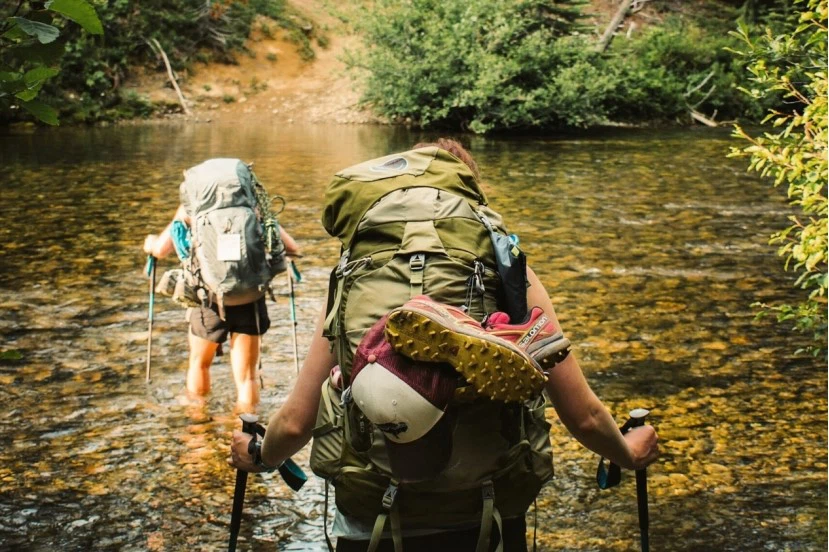
Custom waterproof bags are bags designed and manufactured to meet specific functional, structural, and branding requirements, rather than using off-the-shelf designs. They are widely used in outdoor sports, water activities, travel, and professional applications where moisture protection is essential.
From a business perspective, customization matters because different use cases demand different solutions. A custom dry bag for kayaking needs a different structure and waterproof level than a waterproof backpack designed for commuting or light hiking. When these distinctions are ignored, products may technically be "water-resistant" but fail customer expectations in real conditions.
Customizing also allows brands to control:
- Waterproof performance and testing standards
- Material selection and durability
- Bag structure, capacity, and comfort
- Brand identity through private labeling
Therefore, customization is not only about appearance. It directly affects product reliability, user satisfaction, and long-term brand reputation.
Step-by-Step Waterproof Bag Customization Process
Customizing waterproof bags is not a one-step process, but rather requires a structured, step-by-step approach to ensure that functional requirements, material selection, structural design, and manufacturing execution remain consistent throughout the entire development process. This method not only improves waterproof reliability but also facilitates clearer and more efficient communication with the manufacturer, thereby reducing project risks from the concept stage to mass production.
Step 1: Define Use Case and Functional Requirements
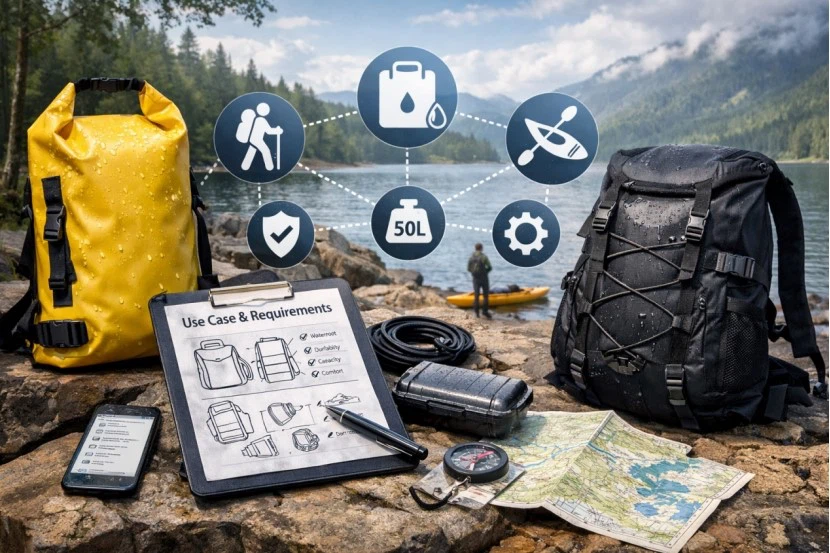
A clearly defined use case is the foundation of the entire customization process. It determines waterproof level, structure, and long-term durability expectations.
- Usage Environment: Clarify whether the bag is designed for rain exposure, splashes, or short-term immersion. This decision influences sealing methods and testing standards.
- Capacity and Load Requirements: Define volume, weight limits, and how frequently the bag will be used. A lightweight day-use bag differs significantly from a heavy-duty waterproof pack.
- Comfort and Practical Features: Identify carrying methods, padding needs, internal compartments, and attachment points. These features affect the structure design and production complexity.
Step 2: Choose Waterproof Materials and Fabrics
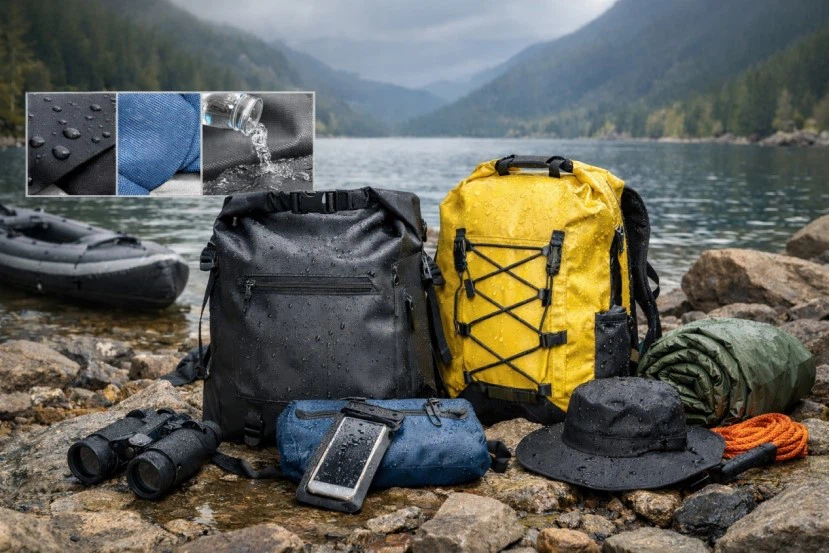
Material selection has a direct impact on waterproof reliability, durability, weight, and cost. While TPU, PVC, and coated nylon are the most common choices, other materials may be suitable for specific applications.
Common Waterproof Materials
|
Material Type |
Characteristics |
Typical Use |
|
TPU waterproof bag |
Flexible, durable, stable in temperature changes |
Outdoor, sports, and premium waterproof bags |
|
PVC waterproof bag |
Strong waterproof barrier, cost-efficient |
Entry-level and promotional products |
|
Nylon waterproof fabric |
Lightweight, abrasion-resistant when coated |
Backpacks and hybrid waterproof designs |
|
CSM (Hypalon®-type material) |
Extremely durable, chemical- and UV-resistant |
Marine and heavy-duty professional use |
|
Chloroprene rubber (Neoprene) |
Elastic, impact-resistant, limited waterproof sealing |
Protective gear and padded water sports items |
|
Cotton canvas (treated) |
Natural look, water-resistant when coated |
Lifestyle or heritage-style waterproof products |
These additional materials are typically used in niche or specialized products. CSM offers excellent durability in harsh marine environments but increases cost. Neoprene provides cushioning rather than full waterproof sealing, while treated cotton canvas prioritizes appearance over full immersion protection.
Material Selection Considerations
Material thickness, surface finish, flexibility, and compatibility with sealing technology must be evaluated together. Waterproof performance depends on both fabric choice and construction method.
Step 3: Design Bag Structure and Style
A well-designed structure ensures that water does not enter through openings or stress points, while also making the bag comfortable and easy to use in real conditions.
- Opening and Closure Systems: The opening is the most vulnerable area for water entry. The roll-top waterproof bag structure is widely used because it creates a mechanical seal when rolled and clipped correctly, making it reliable for rain, splashes, and short-term immersion. Other designs, such as waterproof zippers or flap closures, offer faster access but require precise installation and higher-quality components to maintain waterproof integrity.
- Reinforcement and Stress Management: Structural stress points, such as the base panel, side seams, and strap attachment areas, must be reinforced to prevent long-term failure. Additional material layers or welded patches are commonly used in these areas to distribute load evenly and reduce seam fatigue during repeated use.
- Ergonomics and Practical Use: Structure design should also consider how the bag is carried and accessed. Backpack-style waterproof bags may require padded straps and back panels, while handheld or shoulder bags prioritize compact form and balance. Good structural design balances waterproof protection with comfort, ensuring the bag remains functional during extended outdoor use.

Step 4: Decide Waterproof Level and Testing Standards
Defining the waterproof level is a critical step because it sets clear performance expectations for both design and production. "Waterproof" can mean very different things depending on how the bag is used, so this stage focuses on translating real usage conditions into measurable protection standards.
- Define the Required Waterproof Level: Determine whether the bag is intended for rain protection, splash resistance, or short-term immersion. Using waterproof bag IP rating levels as a reference helps align expectations and ensures the design matches real usage conditions.
- Select Appropriate Testing Methods: Choose test methods that reflect the intended waterproof level, such as simulated rainfall, splash testing, seam pressure checks, or brief immersion tests. These tests confirm that both materials and construction perform as expected.
- Confirm Standards Before Sampling: Agree on testing criteria before samples are made. This creates a clear benchmark for sample approval and ensures mass production follows the same waterproof performance requirements.

Step 5: Prepare Artwork, Logo, and Branding
Branding must be compatible with waterproof materials and sealing processes.
- Logo Application Options: Common methods include heat transfer printing, screen printing, and welded logo patches, each with different durability characteristics.
- Placement Strategy: Logo placement should avoid high-flex or abrasion zones to maintain appearance over time.
- Artwork Preparation: Clear vector files and color references help ensure consistent branding during sampling and production.

Step 6: Communicate With Manufacturer (OEM / ODM)
Clear documentation and communication are essential for both OEM waterproof bags and ODM waterproof bag projects.
- Information to Provide: Material preferences, structure references, estimated quantity, branding details, and timelines should be clearly defined.
- OEM and ODM Scope Alignment: OEM focuses on producing an existing design, while ODM includes design development support. Understanding this difference helps avoid scope confusion.
- Ongoing Communication: Written confirmations, drawings, and change records reduce errors and speed up development.

Step 7: Sampling and Pre-Production Validation
Sampling validates whether design and material choices work as intended.
- Key Evaluation Areas: Waterproof performance, structural strength, comfort, and visual consistency should all be reviewed.
- Seam and Sealing Quality: For welded seam waterproof bag construction, uniform welding and clean seam lines are critical indicators of quality.
- Revision and Approval: Structured feedback shortens revision cycles and prepares the design for stable production.
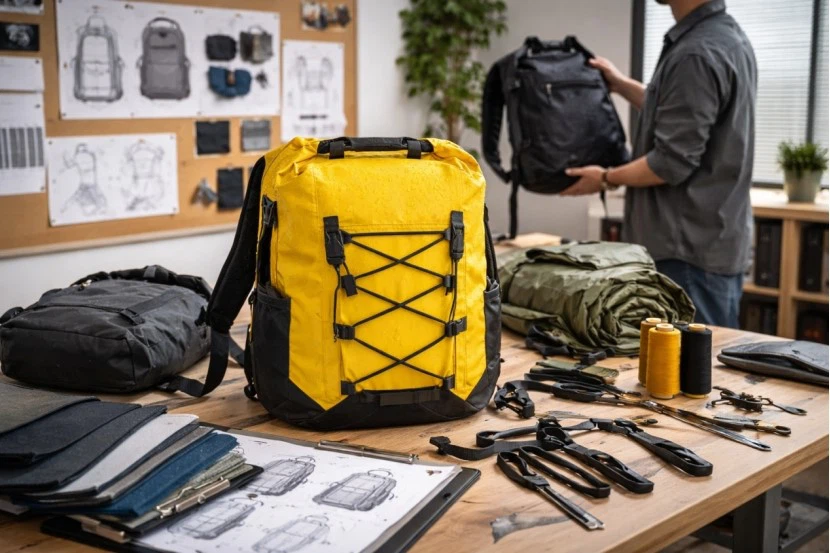
Step 8: Mass Production and Quality Control
After sample approval, consistency becomes the main focus.
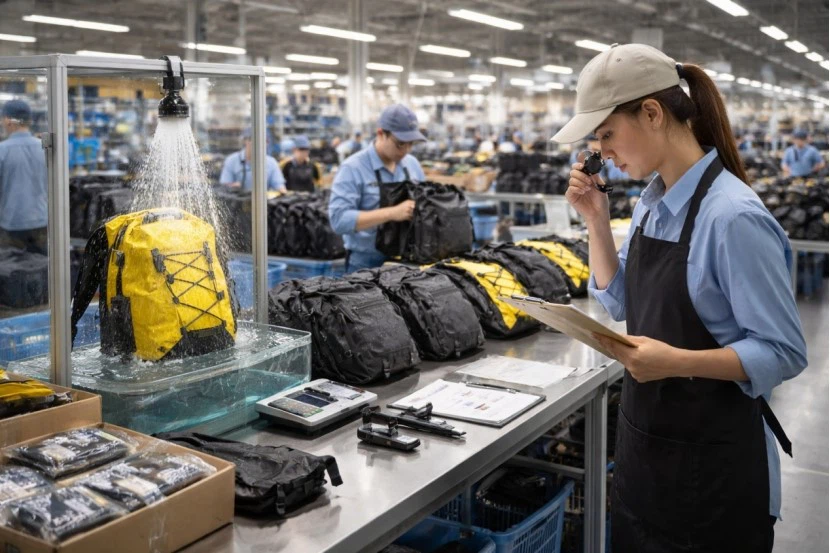
Production Quality Control: Incoming material inspection, in-process checks, and final waterproof testing help maintain consistent results.
Packaging and Final Review: Proper packaging protects surface finish and structure during transport and storage.
Manufacturing Experience: An experienced waterproof bags manufacturer integrates these controls into standard workflows to reduce variability.
Cost Factors and Budget Planning for Custom Waterproof Bags
Cost planning supports realistic pricing and production decisions.
Waterproof Bags Cost Key Components
|
Cost Factor |
Influence on Cost |
|
Material choice |
TPU and CSM generally cost more than PVC |
|
Structure complexity |
More panels and features increase labor |
|
Sealing technology |
Advanced welding adds processing cost |
|
Order quantity |
Higher volumes reduce unit cost |
Early alignment between budget and performance requirements helps avoid redesigns and delays later in the process.
Common Mistakes to Avoid in Waterproof Bag Customization
Mistakes during early planning often lead to repeated sampling, higher costs, or performance issues after production. Problems typically arise when materials are chosen without matching real usage conditions, specifications are incomplete, or waterproof testing is delayed until late stages. Addressing these risks early helps keep development timelines predictable and ensures the final product performs consistently in real environments.
- Misaligned Material and Use Case: Selecting materials based on appearance or price alone can result in inadequate waterproof performance.
- Incomplete Specifications: Missing details increase communication gaps and revision cycles.
- Skipping Waterproof Validation: Ignoring testing during sampling increases the risk of discovering issues only after mass production.
How to Choose the Right Custom Waterproof Bag Manufacturer
Choosing a manufacturing partner directly affects product quality, development efficiency, and long-term reliability. Beyond pricing, it is important to evaluate technical expertise, communication capability, and production stability to ensure the manufacturer can support the entire customization process.
Technical Capability and Materials Expertise
A capable partner should demonstrate experience with multiple waterproof materials and sealing technologies, including advanced welding methods. This expertise helps ensure materials and construction methods are correctly matched.
Development and Communication Support
Clear documentation, structured sampling processes, and responsive communication reduce delays and misalignment during development.
Production Consistency and Quality Systems
Reliable quality control procedures, from material inspection to final testing, are essential for maintaining consistency between samples and mass production.
Conclusion
Custom waterproof bag development is a structured process that connects design intent, material selection, sealing technology, and manufacturing execution. Following a step-by-step approach helps manage risk, control cost, and achieve dependable waterproof performance.
FengLinWan Leisure Products supports this full process, offering practical guidance and production expertise across a wide range of custom waterproof bags and private label waterproof bags. With experience working with TPU, PVC, nylon waterproof fabric, and specialized materials, as well as proven sealing technologies, FengLinWan helps ensure that products are built for real outdoor use. For projects requiring reliable customization and ongoing production support, send us your requirements, and we are confident that we can bring your desired product from concept to market.