


The Best Waterproof Lining Fabric for Making Bags
May 09, 2026
Leave a message
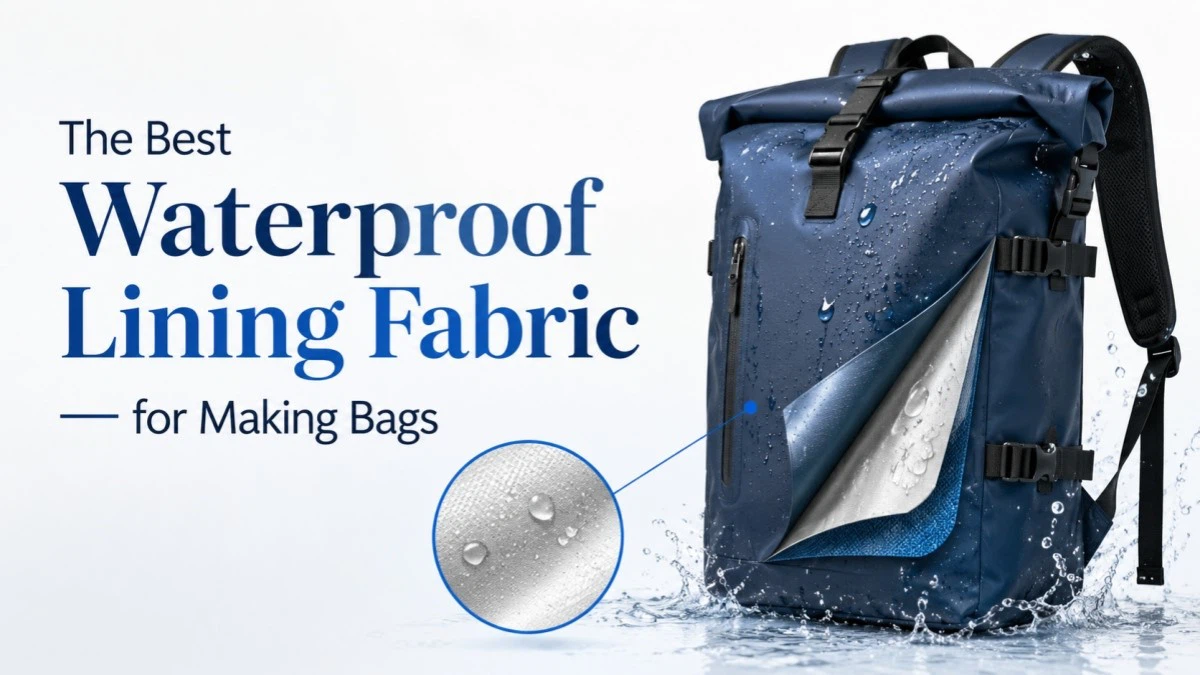
There is no single best waterproof lining fabric for every bag.
For general outdoor bags, PU-coated polyester is usually the most practical choice. For premium waterproof bags, TPU-laminated nylon or polyester often performs better. For dry bags and heavy-duty waterproof bags, PVC tarpaulin or TPU laminated fabric is usually more suitable. For cooler bags and lunch bags, PEVA, EVA, food-safe TPU, or food-safe PVC are more relevant than standard backpack lining.
The right answer depends on the bag type, waterproof target, liquid exposure, cleaning requirement, market compliance, and production budget.
That is the point many material lists miss.
A waterproof lining is not just an inner fabric. It is part of the bag's waterproof system. If the lining is good but the seam structure is wrong, the bag can still leak.
Quick Answer: What Is the Best Waterproof Lining Fabric for Bags?
For most bag manufacturing projects, the best waterproof lining fabric is selected by application first, not by material name alone.
A lightweight hiking backpack does not need the same lining as a dry bag. A lunch cooler does not need the same lining as a fishing tool bag. A cosmetic pouch may need leak resistance and easy cleaning more than high tensile strength.
Here is a practical starting point:
| Bag Type | Recommended Waterproof Lining Fabric | Why It Works |
|---|---|---|
| Outdoor backpacks | PU-coated polyester, PU-coated nylon, TPU-coated nylon | Lightweight, flexible, cost-effective, suitable for rain and moisture protection |
| Travel bags | PU-coated polyester, coated ripstop polyester | Good balance of weight, cost, color options, and moderate water resistance |
| Dry bags | PVC tarpaulin, TPU laminated fabric | Strong water barrier, suitable for welded seams and roll-top structures |
| Cooler bags | PEVA, EVA, food-safe TPU, food-safe PVC | Easy to clean, handles melted ice, suitable for food-related interiors |
| Cosmetic bags | PVC, TPU, PEVA, PU-coated polyester | Smooth surface, easy wiping, better spill resistance |
| Fishing bags and tool bags | PVC, tarpaulin, heavy-duty coated polyester | Abrasion resistance, easy cleaning, good structure |
| Premium waterproof bags | TPU-laminated nylon or polyester | Better flexibility, cleaner material image, stronger waterproof potential |
If the bag only needs to resist splashes or short rain exposure, PU-coated polyester is often enough. If the bag needs to handle melted ice, wet gear, standing water, cosmetics, or marine use, the lining and the seam construction both need to be upgraded.
Material alone does not finish the job.
What Is Waterproof Lining Fabric for Bags?
Waterproof lining fabric is the inner material used inside a bag to block or reduce water penetration, protect the contents, and make the interior easier to clean. In bag manufacturing, it is usually made from a base fabric or film combined with a waterproof coating, lamination, or sheet layer.
The key point is simple:
Base fabric gives strength. Coating or lamination gives water resistance.
Polyester and nylon are common base fabrics because they are light, durable, and easy to process. But polyester or nylon alone is not enough for reliable waterproof lining. The waterproof barrier usually comes from PU, TPU, PVC, PEVA, EVA, or another coated or laminated layer.
For example, two polyester linings can look similar but perform very differently. One may have a thin PU coating for basic water resistance. Another may be laminated with TPU film and support seam sealing. The base fiber name is the same, but the product performance is not.
In real bag production, waterproof lining is used for several reasons:
- To protect contents from rain, spills, condensation, and wet gear
- To make the inside of the bag easier to wipe clean
- To prevent moisture from reaching insulation foam or inner padding
- To support the waterproof or leak-resistant design of the finished bag
- To improve product value in outdoor, travel, cooler, and utility bag categories
A waterproof lining fabric should be judged as a functional layer, not as a decorative lining.
Waterproof Lining vs. Water-Resistant Lining vs. Leak-Proof Lining
These three terms are often mixed together, but they do not mean the same thing.
For bag buyers and product developers, this difference matters. If the requirement is unclear, the factory may choose the wrong material or the wrong seam method.
Water-Resistant Lining
A water-resistant lining can resist light splashes, moisture, or short rain exposure. PU-coated polyester and coated nylon are common examples.
This type of lining is suitable for school bags, sport bags, travel bags, and many outdoor backpacks. It helps protect the contents, but it is not designed to hold water inside the bag.
If a bottle leaks inside the bag, water may still pass through seams, corners, or zipper openings.
Waterproof Lining
A waterproof lining has a stronger water barrier on the material surface. TPU laminated fabric, PVC, PEVA, EVA, and tarpaulin are common examples.
This type of lining can block water better than basic coated fabrics. It works well for cooler bags, toiletry bags, wet bags, dry bags, and some technical outdoor bags.
But waterproof fabric is still only one part of the finished product.
Leak-Proof Lining
A leak-proof lining means the finished inner structure is designed to prevent liquid from escaping. This requires more than waterproof fabric.
It may need heat sealing, high-frequency welding, ultrasonic welding, seam tape, liquid seam sealant, or a separate inner liner structure.
A cooler bag with PEVA lining can still leak if the corners are only stitched. A dry bag made from PVC tarpaulin can still fail if the welded seam is weak. A cosmetic pouch with PVC lining can still seep liquid through needle holes.
A waterproof surface is not the same as a leak-proof bag.
Common Waterproof Lining Materials Used in Bag Manufacturing
The most common waterproof lining materials for bags include PU-coated polyester, PU-coated nylon, PVC, TPU laminated fabric, PEVA, EVA, and tarpaulin. Each material has its own role.
Choosing the most expensive material does not always make the best product. Choosing the cheapest one can also create returns, complaints, odor problems, or seam failures.
The better question is: what job must the lining do?
PU-Coated Polyester Lining
PU-coated polyester lining is polyester fabric coated with polyurethane on one side. It is one of the most common waterproof or water-resistant lining materials for general bags.
It is widely used in outdoor backpacks, travel bags, school bags, sport bags, and mid-range utility bags.
Its main advantage is balance. Polyester is stable, available in many deniers and colors, and easy to sew. PU coating adds water resistance without making the material too stiff or too expensive.
Common specifications may include 210D, 300D, 420D, or 600D polyester with PU coating, depending on the bag type and price level. For heavier bags, 600D polyester with PU backing is common. For lighter travel or foldable bags, 210D or 300D may be enough.
PU-coated polyester works well when the bag needs:
- Rain resistance
- Moisture protection
- Light interior wipe-clean performance
- Reasonable cost
- Stable mass production
Its limit is also clear. It is not the best choice for standing water, melted ice, or true leak-proof construction.
For general outdoor bags, PU-coated polyester is often the most cost-effective waterproof lining. For liquid-contact bags, it is usually not enough by itself.
PU-Coated Nylon Lining
PU-coated nylon lining uses nylon as the base fabric and polyurethane as the water-resistant coating. Compared with standard polyester, nylon usually offers better strength-to-weight performance and a softer hand feel.
This makes it suitable for lightweight backpacks, premium sport bags, compact travel bags, and outdoor gear bags where weight matters.
Ripstop nylon is a common option. The grid structure helps reduce tearing when the fabric is punctured or stressed. But the ripstop pattern itself is not the waterproof layer. The PU coating or laminated film still does that work.
PU-coated nylon is a good choice when the product needs:
- Lightweight construction
- Better tear resistance
- Softer hand feel
- More premium positioning than basic polyester
- Moderate rain and moisture protection
The trade-off is cost. Nylon is usually more expensive than polyester, and the coating quality still decides water resistance.
For lightweight outdoor bags, PU-coated nylon can be a better material than PU-coated polyester. For leak-proof bags, the seam construction still needs extra treatment.
PVC Lining Fabric
PVC lining fabric uses polyvinyl chloride as the waterproof barrier. It can be used as coated fabric, sheet material, or tarpaulin-style material depending on the construction.
PVC is not a "fashionable" material in every market, but it remains very practical in heavy-duty waterproof bags.
It is commonly used in dry bags, fishing bags, tool bags, marine bags, waterproof duffel bags, and some cooler bags. The reason is simple: PVC blocks water well, wipes clean easily, and can be used with heat sealing or high-frequency welding.
PVC works well when the project needs:
- Strong waterproof performance
- Easy cleaning
- Good abrasion resistance
- Welded seam compatibility
- Controlled material cost
- Heavy-duty structure
Its disadvantages are also real. PVC can be heavier and stiffer than TPU. Some PVC materials may have odor issues. For export markets, buyers may need to check phthalates, REACH, RoHS, BPA, and food-contact requirements depending on the product type.
PVC is a practical choice when waterproof performance, easy cleaning, and cost control matter more than lightweight hand feel or premium material positioning.
TPU Laminated Fabric
TPU laminated fabric is made by bonding a thermoplastic polyurethane film to a base fabric such as nylon or polyester. The base fabric provides strength. The TPU film provides the waterproof barrier.
TPU is often selected for premium waterproof bags because it gives a strong combination of waterproof performance, flexibility, low-temperature resistance, and a cleaner material image than PVC.
It is commonly used in technical backpacks, waterproof travel bags, camera bags, premium cooler bags, outdoor equipment bags, and high-end dry bags.
Compared with standard PU coating, TPU laminated fabric can offer better barrier consistency and better long-term flex performance when the material is made well. Compared with PVC, TPU usually feels softer and is easier to position as a higher-end material.
But TPU is not magic.
It costs more. It needs better production control. Lamination quality, film thickness, welding temperature, seam tape compatibility, and storage conditions can all affect final performance.
TPU is a strong option when the bag requires:
- Premium waterproof positioning
- Better flexibility
- Lower odor expectation
- Good low-temperature performance
- Seam sealing or welding compatibility
- Stronger long-term performance than basic coated fabric
For cost-sensitive bags that only need rain resistance, TPU may be unnecessary. For premium waterproof bags, it often justifies the higher cost.
PEVA and EVA Lining
PEVA and EVA linings are commonly used in cooler bags, lunch bags, insulated totes, picnic bags, baby bags, and food-related storage bags. They are usually supplied as film or sheet-like lining materials rather than woven fabric.
Their main value is not extreme outdoor strength. Their value is cleanability, flexibility, low weight, and suitability for many food-related interiors.
PEVA and EVA are often used when the product needs:
- Easy wipe-clean surface
- Light waterproof or leak-resistant interior
- Resistance to melted ice or condensation
- Softer hand feel
- Food-related application options
- Lower material cost than premium TPU
For cooler bags, the lining does not work alone. It works with insulation foam, outer fabric, zipper structure, stitching, and corner finishing. If ice melts inside the bag, water will find weak corners quickly.
PEVA and EVA are not ideal for sharp tools, heavy abrasion, or rough outdoor use. A fishing bag or tool bag usually needs a tougher lining.
For cooler bags and lunch bags, PEVA and EVA are often more relevant than heavy outdoor laminates. For high-end cooler bags, TPU or food-safe PVC may also be considered.
Tarpaulin and Heavy-Duty Laminated Fabric
Tarpaulin is a heavy-duty waterproof laminated or coated material, often based on polyester fabric with PVC or TPU coating. It is widely used in dry bags, waterproof duffel bags, marine bags, motorcycle bags, and outdoor gear bags.
Tarpaulin is selected when strength and waterproof structure matter more than soft hand feel.
It is suitable for:
- Roll-top dry bags
- Waterproof duffel bags
- Fishing bags
- Marine storage bags
- Rafting and camping bags
- Heavy-duty outdoor transport bags
The material can be welded, sealed, and cleaned easily. It can also take abrasion better than many light linings.
The downside is weight and stiffness. A tarpaulin lining or shell may make a bag feel heavy, industrial, or less refined. That is acceptable for a dry bag. It may not be acceptable for a fashion travel tote.
Tarpaulin is not chosen because it feels delicate. It is chosen because it works.
Other Waterproof and Water-Repellent Lining Options
Some other materials appear in waterproof bag discussions, but they are not always the main choice for B2B outdoor bag manufacturing.
PUL, or polyurethane laminate, is often used in wet bags, diaper bags, and small leak-resistant pockets. It can work well in these categories, but it is not usually the first option for heavy-duty dry bags or technical outdoor bags.
Waterproof canvas can add structure to tote bags, daily-use bags, and casual backpacks. It is better for water-repellent applications than for true leak-proof interiors.
Waxed or silicone-treated fabrics can work for heritage-style bags or light outdoor products. They may look good and feel natural, but the water resistance can wear down and usually does not match TPU, PVC, or tarpaulin for demanding waterproof use.
Technical laminates such as X-Pac are sometimes used in premium outdoor bags, often as shell or structural materials rather than ordinary linings. They offer strength, structure, and water resistance, but cost, sewing, seam sealing, and product positioning must be evaluated carefully.
These materials can be useful, but they should not distract from the main decision: match the lining to the real bag application.
Waterproof Lining Fabric Comparison Table
The table below gives a practical comparison for bag manufacturing. Exact performance depends on coating thickness, film quality, base fabric, seam structure, and test method.
| Lining Material | Best For | Waterproof Level | Main Advantages | Main Limitations | Cost Level |
|---|---|---|---|---|---|
| PU-coated polyester | Backpacks, travel bags, school bags, sport bags | Medium | Cost-effective, easy to sew, many colors, stable supply | Not ideal for standing water or leak-proof bags | Low to medium |
| PU-coated nylon | Lightweight outdoor bags, premium backpacks | Medium to high | Light, strong, better hand feel, good tear resistance | Higher cost than polyester, still depends on coating | Medium |
| PVC lining | Dry bags, fishing bags, tool bags, some cooler bags | High | Waterproof, easy to clean, weldable, durable | Heavier, stiffer, possible odor and compliance concerns | Low to medium |
| TPU laminated fabric | Premium waterproof bags, technical outdoor bags | High | Flexible, strong water barrier, cleaner material image, weldable | Higher cost, stricter production control | High |
| PEVA / EVA | Cooler bags, lunch bags, food-related interiors | Medium to high for light liquid contact | Lightweight, easy to wipe, common for insulated bags | Lower abrasion resistance, not for heavy-duty use | Low to medium |
| Tarpaulin | Dry bags, marine bags, waterproof duffels | High | Heavy-duty, weldable, abrasion resistant, easy to clean | Heavy, stiff, less refined hand feel | Medium |
| Waterproof canvas | Casual totes, structured daily bags | Low to medium | Adds structure, natural appearance, good for daily use | Not suitable for leak-proof interiors | Medium |
| PUL | Wet bags, diaper bags, small leak-resistant pockets | Medium to high depending on grade | Flexible, soft, suitable for small waterproof compartments | Not the main choice for heavy-duty outdoor bags | Medium |
A material with the highest waterproof claim is not always the best material for the bag. A lightweight commuter backpack, a dry bag, and a cooler bag should not be built around the same lining decision.
How to Choose Waterproof Lining Fabric by Bag Type
A buyer may ask, "Which waterproof lining is best?" A manufacturer usually asks a different question: "What is the bag supposed to survive?"
The use case decides the lining.
For Outdoor Backpacks and Hiking Bags
Outdoor backpacks usually need rain resistance, moisture protection, light weight, and abrasion resistance. They are not usually designed to hold standing water inside.
For these bags, PU-coated polyester and PU-coated nylon are common choices. For premium or technical models, TPU-coated or TPU-laminated nylon can be used.
A 600D polyester outer fabric with PU coating and a lighter coated polyester lining is common for mid-range outdoor backpacks. For lighter hiking bags, 210D or 420D nylon with coating may be used.
The main risk is overbuilding the lining. If the lining is too thick or stiff, the backpack becomes heavier, harder to sew, and less comfortable.
For backpacks, the right lining usually balances rain protection, weight, durability, and cost. Extreme waterproof lining is not always needed.
For Dry Bags and Waterproof Duffel Bags
Dry bags are different. They are expected to resist much more water exposure. Some may face kayaking, boating, camping, rainstorms, or wet ground.
For this category, PVC tarpaulin and TPU laminated fabric are more suitable than ordinary PU-coated lining.
The construction matters as much as the material. Roll-top closures, welded seams, heat sealing, or high-frequency welding are common. Ordinary stitched seams are a weak point unless sealed correctly.
A dry bag should not be judged only by fabric specification. The weld line, closure method, bottom panel design, and corner structure can decide whether the finished bag passes a water test.
For dry bags, do not choose lining like a normal backpack lining. Choose a waterproof system.
For Cooler Bags and Lunch Bags
Cooler bags need a different type of waterproof thinking.
The lining must handle melted ice, condensation, food containers, drink spills, oil stains, and frequent cleaning. The material should also stay flexible enough when cold.
Common choices include PEVA, EVA, food-safe TPU, and food-safe PVC. PEVA is common in lunch bags and soft coolers because it is lightweight and easy to wipe. EVA can offer a slightly thicker and more structured feel. TPU is used in higher-end products where better flexibility and cleaner positioning are needed.
For cooler bags, the lining works with the insulation layer. If the inner seam leaks, melted ice can enter the foam layer, causing odor, mold, and product failure.
The lining must be selected together with the insulation foam, seam method, zipper structure, and cleaning requirement.
For Cosmetic Bags and Toiletry Bags
Cosmetic bags and toiletry bags usually do not need the same waterproof strength as a dry bag. They need spill resistance, easy cleaning, and a smooth surface.
PVC, TPU, PEVA, and PU-coated polyester can all be used depending on price and positioning.
For a low-cost toiletry pouch, coated polyester may be enough. For a transparent or wipe-clean cosmetic bag, PVC is common. For a premium travel toiletry bag, TPU or higher-quality laminated lining may be better.
The weak points are usually the zipper area, bottom corners, and stitched seams. If the product is advertised as leak-resistant, the factory should not rely on standard sewing alone.
For cosmetic bags, cleaning and seam design often matter more than extreme fabric waterproof ratings.
For Fishing Bags, Tool Bags, and Heavy-Duty Outdoor Bags
Fishing bags and tool bags face mud, sharp objects, hooks, tools, bait boxes, oil, and rough ground. A soft lightweight lining may fail quickly.
PVC, tarpaulin, and heavy-duty coated polyester are better options. They provide better abrasion resistance and easier cleaning.
A fishing tackle bag, for example, may need a stiff waterproof base, reinforced bottom, and wipe-clean interior. The lining should tolerate repeated rubbing from plastic boxes and metal tools.
For this category, durability and cleanability come before lightweight hand feel.
Key Factors to Check Before Choosing a Waterproof Bag Lining
Material names are useful, but they are not enough. A serious waterproof bag project should check performance, construction, compliance, and production behavior.
Waterproof Level and Liquid Contact
First define what "waterproof" means for the project.
Does the bag need to resist rain? Hold wet swimwear? Carry melted ice? Store fishing gear? Protect electronics? Contain cosmetics? Each situation creates a different lining requirement.
A daily backpack may only need water-resistant lining. A cooler bag may need leak-resistant corners. A dry bag may need welded panels and waterproof closure design.
The type of liquid also matters. Rainwater, seawater, melted ice, shampoo, oil, and food liquid do not behave the same way. Some liquids leave stains or odors. Some require food-contact or chemical-safety checks.
Before selecting the lining, define the exposure clearly. Without that, the material choice is guesswork.
Waterproof Ratings and Performance Tests
Waterproof lining materials can be evaluated through different tests. Common indicators include hydrostatic head, spray rating, abrasion resistance, tear strength, flex resistance, cold-crack resistance, and lamination peel strength.
Hydrostatic head measures how much water pressure a fabric can resist before water penetrates. It is useful for comparing fabric-level water resistance, but it does not prove that a finished bag is leak-proof.
A fabric can pass a water-pressure test and still fail in a finished bag if the seams, corners, zippers, or closures are poorly designed.
For B2B production, prototype testing is often more useful than fabric data alone. A test panel can show material performance. A finished sample shows the real bag performance.
Practical tests may include:
- Interior water-holding test for cooler bags or toiletry bags
- Seam leakage test around corners and bottom panels
- Rain simulation for backpacks and travel bags
- Abrasion test for tool bags and fishing bags
- Cold flex test for cooler and outdoor winter-use products
- Testing should match the actual use case, not just the material catalog.
Coating or Lamination Type
Waterproof lining fabrics are usually made by coating or lamination.
Coating applies a polymer layer such as PU or PVC onto fabric. It is often cost-effective and suitable for many general bags.
Lamination bonds a film such as TPU, PEVA, or EVA to a base fabric or structure. It can provide a more consistent barrier when the film quality and bonding process are well controlled.
The choice affects hand feel, flexibility, peel strength, odor, welding compatibility, and cost.
A thin PU coating may be enough for a rain-resistant backpack. A TPU film may be better for a premium waterproof bag. A PEVA sheet may be more suitable for a lunch cooler. PVC-coated tarpaulin may be the right answer for a heavy-duty dry bag.
Do not ask only for "polyester lining" or "nylon lining." Ask what coating or lamination is applied to it.
Seam Construction
Seam construction often decides whether the bag only uses waterproof material or actually performs as a waterproof product.
Ordinary stitching creates needle holes. For many backpacks, this is acceptable because the bag is only expected to resist rain or moisture. For leak-resistant bags, those needle holes become a problem.
Depending on the material and bag type, manufacturers may use:
- Seam tape
- Heat sealing
- High-frequency welding
- Ultrasonic welding
- Liquid seam sealant
- Edge binding
- Separate inner liner or bladder structure
PVC and TPU materials can often be welded or heat sealed. PEVA and EVA can be heat sealed in some cooler bag structures. PU-coated woven fabrics are usually sewn, and seam sealing may be needed if higher water resistance is required.
A waterproof lining does not seal needle holes by itself.
Safety, Odor, and Compliance
Waterproof lining selection is not only a performance decision. It can also be a compliance decision.
For cooler bags, lunch bags, baby bags, medical storage bags, and cosmetic bags, buyers may need to consider food-contact safety, BPA requirements, phthalates, REACH, RoHS, PFAS-related concerns, odor, and target-market testing.
PVC can be practical, but the grade must be chosen carefully for export markets. PEVA is often used for food-related interiors, but the exact safety claim should be supported by test reports. TPU often has a cleaner material image than PVC, but it still needs proper material documentation.
Do not assume a material is compliant because of its name.
For export projects, the safer approach is to confirm the target market first, then choose material grades and test items accordingly.
Cost, MOQ, and Production Efficiency
The best material on paper may not be the best material for bulk production.
A lining that is too thick can make turning, folding, sewing, and binding difficult. A lining that is too soft may wrinkle or deform. A lining that is too slippery may slow sewing. A material that requires special welding may increase tooling or setup cost.
MOQ also matters. Some TPU laminated fabrics, custom colors, food-grade films, or specialty technical laminates may require higher minimum order quantities than standard PU-coated polyester.
For a promotional cooler bag, an expensive TPU lining may destroy the price target. For a premium waterproof travel bag, cheap lining can damage the brand.
The right lining should match both the product function and the business model.
Does Waterproof Lining Fabric Make the Whole Bag Waterproof?
No.
Waterproof lining fabric does not automatically make the whole bag waterproof.
A bag can use waterproof lining and still leak through stitched seams, zipper openings, bottom corners, handle attachment points, or poorly designed closures. This is one of the most common misunderstandings in bag development.
A backpack with PU-coated lining may protect contents from light rain, but water can still enter through the zipper. A cooler bag with PEVA lining may still leak if the corner seams are only sewn. A dry bag made from PVC tarpaulin may still fail if the weld temperature is wrong or the roll-top closure is too short.
The finished bag is a system. The lining is one layer in that system.
For true waterproof or leak-resistant performance, the design must consider:
- Outer fabric
- Inner lining
- Seam method
- Bottom and corner structure
- Zipper or closure type
- Welding or sealing process
- Testing method
- User behavior
This is why two bags using the same waterproof fabric can perform very differently in real use.
Manufacturer's Recommendation: Which Waterproof Lining Should You Choose?
For most OEM and ODM bag projects, the lining should be selected after the bag's real use condition is clear.
Here is the practical recommendation:
For general outdoor backpacks, choose PU-coated polyester if cost and stable production matter. Choose PU-coated nylon or TPU-coated nylon if the product needs lighter weight or better positioning.
For premium waterproof bags, TPU laminated fabric is usually a strong option. It gives better flexibility, a cleaner material image, and stronger waterproof potential than basic PU-coated fabrics.
For dry bags and waterproof duffels, PVC tarpaulin or TPU laminated fabric is more suitable. The material should be paired with welded seams, roll-top closure, or another waterproof structure.
For cooler bags and lunch bags, PEVA, EVA, food-safe TPU, or food-safe PVC are more relevant. The lining must work with insulation foam and seam construction.
For cosmetic bags and toiletry bags, PVC, TPU, PEVA, or coated polyester can all work. The decision depends on price, appearance, cleaning requirements, and whether the bag is marketed as leak-resistant.
For fishing bags and tool bags, PVC, tarpaulin, or heavy-duty coated fabric is usually better than lightweight lining. Abrasion resistance and cleaning matter more than softness.
When contacting a bag manufacturer, do not only ask for "waterproof lining." Tell the supplier:
- What type of bag you are making
- What the bag will carry
- Whether it needs rain resistance, waterproofing, or leak resistance
- Whether it will contact food, ice, cosmetics, tools, or seawater
- Which target market it will be sold in
- What compliance requirements apply
- What price level you need
- Whether seams should be sewn, taped, heat sealed, or welded
A good lining choice starts with a clear product requirement.
FAQ
What is the most waterproof lining fabric for bags?
TPU laminated fabric, PVC tarpaulin, and heavy-duty laminated waterproof fabrics are often among the strongest options. They can provide a strong water barrier and can be paired with sealed or welded seams.
But the most waterproof material is not always the best choice. For a lightweight backpack, PU-coated polyester may be more practical. For a cooler bag, PEVA or EVA may be more suitable. For a dry bag, welded PVC or TPU construction may be required.
The finished bag structure matters as much as the material.
Is polyester lining waterproof?
Plain polyester lining is not truly waterproof. It may dry quickly and resist moisture better than some natural fibers, but it does not block water reliably by itself.
When people say "waterproof polyester lining," they usually mean polyester with PU coating, TPU lamination, PVC coating, or another waterproof treatment.
Polyester is the base. The coating or film creates the water barrier.
Is nylon better than polyester for waterproof lining?
Nylon often has better strength-to-weight performance and a softer feel than polyester. It can be a good choice for lightweight outdoor bags and premium backpacks.
Polyester is usually more cost-effective, dimensionally stable, and widely available. For many general bags, PU-coated polyester is enough.
The better choice depends on the bag's weight target, price level, and durability requirement. The waterproof performance still depends mainly on the coating or lamination.
Is TPU always better than PVC for waterproof bag lining?
No.
TPU is often better for premium waterproof bags because it is flexible, has a cleaner material image, and can perform well in high-end outdoor products. It is also useful when low-temperature flexibility and softer hand feel matter.
PVC is still practical for heavy-duty waterproof bags. It is durable, easy to clean, weldable, and often more cost-effective than TPU.
TPU is not automatically better. PVC is not automatically worse. The right choice depends on product positioning, cost, compliance, and construction method.
What is the best lining material for cooler bags?
For cooler bags and lunch bags, common lining options include PEVA, EVA, food-safe TPU, and food-safe PVC.
PEVA and EVA are widely used because they are lightweight, easy to wipe, and suitable for many insulated bag interiors. TPU may be used for premium cooler bags. Food-safe PVC can also be used when the material grade and compliance are properly confirmed.
The lining should be selected together with the insulation foam and seam structure. A good cooler bag lining must handle melted ice, cleaning, odor control, and low-temperature flexibility.
Can waterproof lining fabric be sewn?
Yes, many waterproof lining fabrics can be sewn. PU-coated polyester, PU-coated nylon, PEVA, PVC, and TPU-based materials can all be processed in different ways.
But sewing creates needle holes. For water-resistant backpacks, this may be acceptable. For leak-resistant bags, cooler bags, or dry bags, the seams may need tape, sealing, welding, or a separate inner liner structure.
The question is not only whether the fabric can be sewn. The question is whether the finished seam can meet the waterproof target.
Does a waterproof lining make a bag leak-proof?
No. Waterproof lining does not automatically make a bag leak-proof.
Leak-proof performance requires waterproof material plus correct seam construction, corner treatment, closure design, and testing. If the bag is stitched without sealing, liquid can pass through needle holes even when the lining surface is waterproof.
For cooler bags, cosmetic bags, wet bags, and dry bags, the seam method should be decided before production starts.
Is X-Pac good for waterproof bag lining?
X-Pac and similar technical laminates are useful in premium outdoor bags, but they are more often used as shell or structural materials than ordinary lining fabrics.
They can provide water resistance, structure, and technical appearance. But they are more expensive and require careful evaluation of sewing, seam sealing, and product design.
For standard bag lining, PU-coated polyester, TPU laminated fabric, PVC, PEVA, EVA, and tarpaulin are more common choices.
How do you test waterproof lining fabric for bags?
Fabric-level testing may include hydrostatic head, spray rating, abrasion resistance, tear strength, flex resistance, cold-crack testing, and lamination peel strength.
Finished bag testing should match the product use. A cooler bag may need an interior water-holding test. A dry bag may need seam and closure testing. A backpack may need rain simulation. A tool bag may need abrasion testing.
A material test shows lining potential. A finished bag test shows real performance.
Conclusion: Choose the Lining Based on the Bag's Real Use
The best waterproof lining fabric for making bags is the one that matches the product's real use.
PU-coated polyester is often the practical choice for general outdoor bags. TPU laminated fabric is better for premium waterproof products. PVC and tarpaulin work well for heavy-duty waterproof bags. PEVA and EVA are common choices for cooler bags and lunch bags.
But the final waterproof performance does not come from lining alone. It comes from the lining material, coating quality, seam construction, closures, corners, and the overall bag design.
For custom waterproof outdoor bags, cooler bags, dry bags, travel bags, and functional storage bags, FENGLINWAN can help match the right lining fabric with the outer material, insulation layer, seam method, and final waterproof requirement. Share your bag type and target use, and we can recommend a suitable construction for production.