


Are Travel Compression Bags Worth It?
Nov 25, 2026
Leave a message
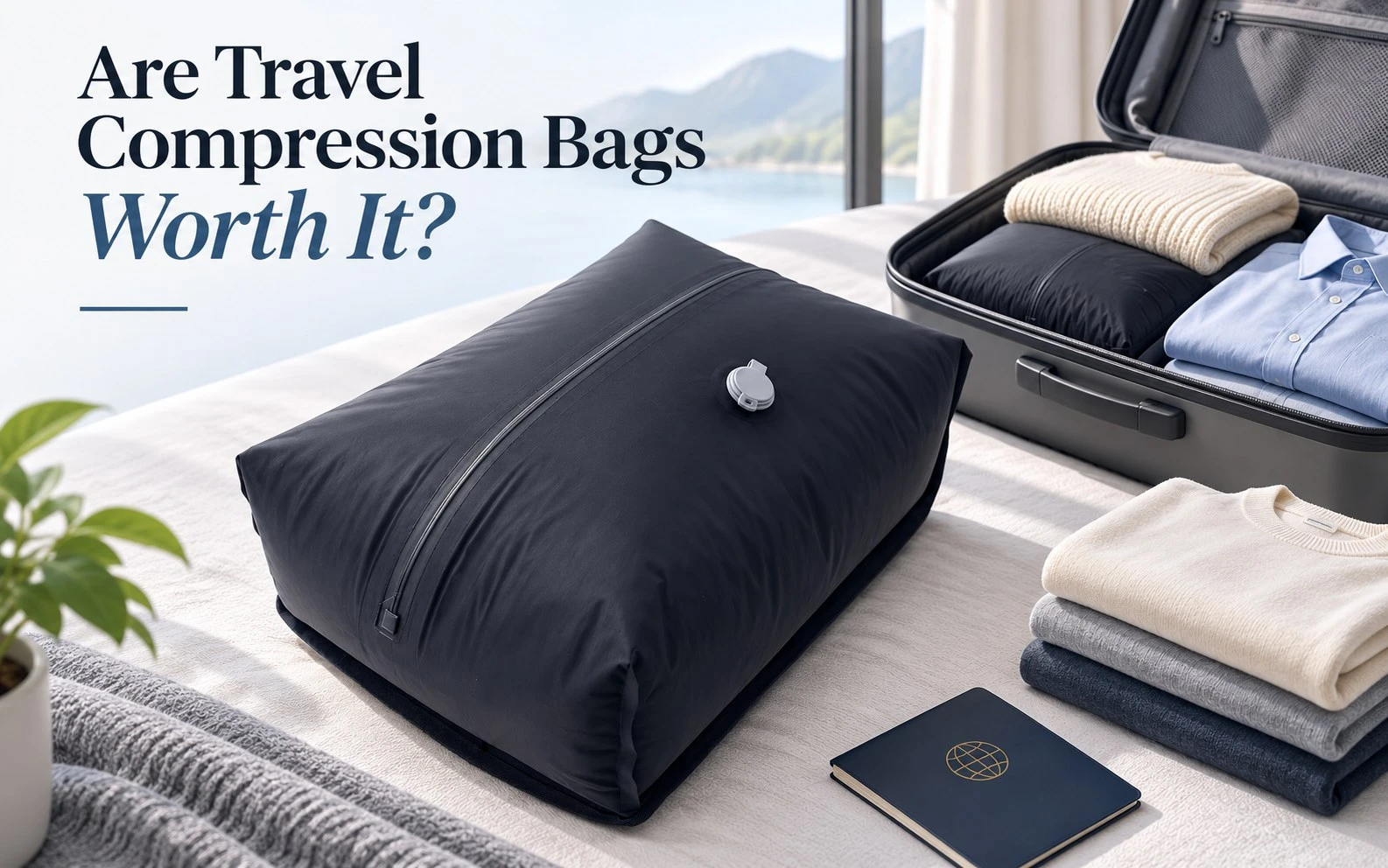
Travel compression bags reduce the volume of soft goods inside a suitcase by expelling trapped air, letting travelers fit more into the same luggage. For anyone who has wrestled with an overstuffed bag at a check-in counter, the appeal is immediate. The real question is whether the space savings hold up across different trip types, materials, and packing habits - and where the trade-offs start to bite.
How Do Travel Compression Bags Work?
Travel compression bags are soft-sided pouches - typically made from PA+PE (nylon-polyethylene) or PET+PE (polyester-polyethylene) film, or from woven nylon fabrics - that reduce the packed volume of clothing, towels, and other compressible items by forcing air out of the system. Unlike a standard packing cube, which only organizes contents, a compression bag actively shrinks them.
The mechanism varies by type, but the principle is the same: remove the air trapped between fabric fibers and inside the bag itself, and the contents collapse to a fraction of their original bulk. A fluffy down jacket, for instance, is mostly air. Squeeze that air out and the same jacket occupies perhaps a quarter of the space it did loose.
This is the core of space-saving packing: not magic, just physics applied to fabric.
Types of Travel Compression Bags
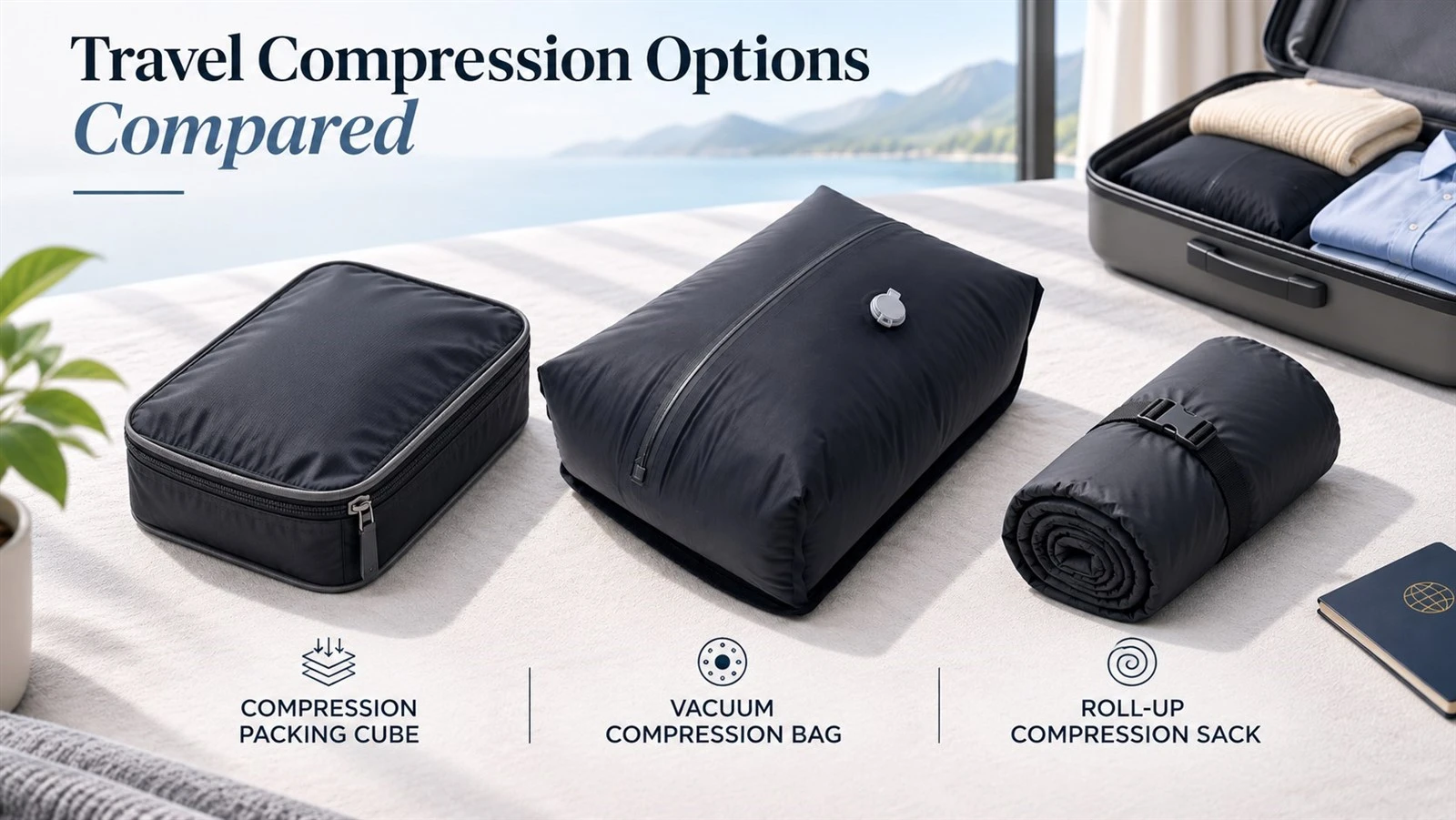
Not all compression products work the same way. Three categories dominate the market, each with distinct mechanics, materials, and ideal use cases.
Compression Packing Cubes
Compression packing cubes are fabric organizers - usually 600D ripstop nylon or 210D polyester - fitted with a dual-zipper system. You pack the cube normally, then zip a second, tighter zipper that compresses the entire cube down. The fabric panel between the two zippers folds inward, squeezing air out through the weave and seams.
These typically reduce volume by 30–50%. They do not require a pump or valve, and they double as everyday organizers - you can unzip the compression layer and use the cube as a normal divider. High-quality zippers are preferred for reliable compression, while cheaper zippers are the single most common point of failure.
Vacuum Compression Bags
Vacuum compression bags use airtight plastic film (PA+PE or PET+PE laminate) with a one-way valve. You seal the bag, then extract air with a hand pump, electric pump, or household vacuum cleaner. Volume reduction can reach up to 80% for highly compressible items like down jackets, fleece, and bedding.
The trade-off is equipment dependency: you need a pump, and electric pumps add weight and require charging. These bags are also single-purpose - they do not function as organizers the way cubes do. Over-compressing delicate fabrics can cause creasing that does not fully recover, and some users report that thin-film vacuum bags puncture if packed near sharp items like buckles or toiletry kits.
Travel Compression Sacks
Travel compression sacks - sometimes called roll-up compression bags - are the middle ground. They use a one-way valve but do not require a pump: you seal the bag, then roll it from the bottom, forcing air out through the valve. Volume reduction typically lands around 40–60%.
These are popular with backpackers, campers, and short-haul business travelers because they need no power source and weigh very little. The rolling action does require some technique and physical effort, and results vary depending on how full the bag is and how consistently you roll.
Unlike dedicated waterproof compression dry bags, ordinary roll-up travel compression sacks are primarily designed to reduce packing volume rather than provide high-level water protection.
Table 1. Comparison of Travel Compression Bag Types
|
Feature |
Compression Packing Cubes |
Vacuum Compression Bags |
Travel Compression Sacks |
|
Mechanism |
Dual-zipper fabric panel |
Pump + one-way valve |
Roll-up + one-way valve |
|
Volume Reduction |
30–50% |
Up to 80% |
40–60% |
|
Power Required |
None |
Pump (manual or electric) |
None |
|
Typical Material |
600D / 320D nylon, 210D polyester |
PA+PE or PET+PE film |
PA+PE film or TPU-coated nylon |
|
Best For |
Organized packing, frequent travel |
Long-term storage, bulky winter gear |
Backpacking, camping, short trips |
|
Reusable as Organizer |
Yes |
No |
Limited |
|
Key Weakness |
Zipper failure under overpacking |
Film puncture, pump dependency |
Rolling effort, inconsistent results |
Choosing the right type is less about which is "best" and more about matching the mechanism to the trip. When comparing compression packing cubes vs. vacuum bags, convenience, packing frequency, and the type of clothing matter as much as maximum volume reduction.
What Materials Affect Travel Compression Bag Durability?
The material determines how long a compression bag lasts and how well it performs under stress.
Film-Based Bags
Vacuum bags and roll-up sacks rely on multi-layer plastic film. PA+PE (nylon-polyethylene) laminates are the most common: the PA layer provides strength and puncture resistance, while the PE layer provides flexibility and heat-sealability. PET+PE (polyester-polyethylene) is a step up in clarity and stiffness but costs more. Film thickness typically ranges from 50 to 120 microns; thinner film tears more easily, thicker film is harder to roll and seal.
Fabric-Based Cubes
Compression packing cubes use woven textiles. Common specifications:
- 600D ripstop nylon - heavy-duty, used in premium cubes; resists tearing and abrasion
- 320D nylon - mid-weight, balances durability and weight
- 210D polyester - lightweight, budget-friendly, less abrasion-resistant
- 40D ripstop nylon / ultralight composite fabrics - ultralight options for weight-sensitive travelers; expensive and less durable under heavy load
For outdoor and humid-environment use, TPU (thermoplastic polyurethane) coatings are increasingly common. TPU-coated fabrics resist hydrolysis - the gradual breakdown of the polymer in wet conditions - better than PVC alternatives, and they do not stiffen or crack over time the way older coatings did. This makes them suitable for camping, kayaking, and tropical travel where gear gets damp.
For waterproof compression bags, however, material selection is only part of the design. Seam construction, zipper or closure systems, and any air-release components also affect the finished bag's ability to keep water out. Understanding the properties of different waterproof bag materials can help brands select suitable fabrics for specific outdoor applications.
Hardware
Zippers are the most failure-prone component. Reliable, high-quality zippers are widely preferred in premium compression cubes; lower-quality zippers tend to fail under the lateral pressure that compression creates. A phenomenon known in the industry as "footballing" - where an overstuffed cube bulges into a cylindrical shape and pops its zipper - is the leading customer complaint. The fix is simple: do not overfill.
Third-party-certified recycled fabrics are gaining traction, particularly among European and premium brands, as sustainability expectations rise. From available industry materials, consumers show growing willingness to pay a modest premium for recycled-content fabrics, though actual adoption rates vary by market.
Build quality, more than any single feature, separates a compression bag that lasts fifty trips from one that fails on the second.
When Are Travel Compression Bags Worth Using?
The value of a luggage compression bag depends heavily on the scenario. Some trips benefit dramatically; others see marginal gains.
Long Trips and Winter Travel
For trips lasting a week or more, especially those involving bulky clothing - down jackets, fleece, knitwear, extra footwear - compression bags can effectively double usable suitcase space. Vacuum compression bags excel here: winter gear compresses to a small fraction of its loose volume, and the airtight seal also protects against moisture and odors during transit and storage.
For travelers who prioritize keeping clothing dry rather than maximizing compression, a dedicated waterproof clothes bag can also be a practical packing accessory.
Backpacking and Outdoor Adventure
Travel compression sacks are the go-to for backpackers and campers who need to minimize pack volume without access to power. A rolled compression sack can shrink a sleeping bag or insulating jacket enough to free significant space in a 40–60 liter backpack. The no-power requirement and low weight make them practical for multi-day treks, hostel-hopping, and remote travel.
For outdoor trips where protecting equipment from water is more important than maximum compression, a 25L waterproof dry bag may be a useful alternative. Travelers can also consult a dry bag capacity guide when choosing the right storage size for their gear.
Short Business Trips
For one- to three-day business travel, compression packing cubes are often the better choice. They keep shirts and trousers organized, compress moderately, and do not require a pump or rolling surface. The space savings are less dramatic than with vacuum bags, but the organizational benefit - separating clean from worn, formal from casual - often matters more than raw volume reduction.
What Compression Bags Do Not Solve
They do not reduce weight. A suitcase that is under the volume limit but over the weight limit gains nothing from compression. They can also cause wrinkling, particularly for structured garments like dress shirts and suits - vacuum compression is especially harsh on these fabrics. And they add a learning curve: getting a consistent seal, rolling correctly, and not overfilling all take a few attempts to master.
Table 2. Scenario Fit by Compression Bag Type
|
Scenario |
Best Choice |
Why |
|
Week-long winter trip |
Vacuum compression bags |
Maximum volume reduction for bulky gear; moisture protection |
|
Backpacking / camping |
Travel compression sacks |
No power needed; lightweight; fits pack constraints |
|
1–3 day business trip |
Compression packing cubes |
Moderate compression + organization; no equipment |
|
Long-term home storage |
Vacuum compression bags |
Airtight seal protects against dust, moisture, pests |
|
Ultralight / weight-sensitive travel |
Ultralight cubes (40D / composite fabric) |
Minimal added weight; moderate compression |
Matching the bag type to the trip type is where most travelers either unlock real value or waste money on the wrong tool.
Pros and Cons of Travel Compression Bags
Advantages:
- Significant space savings - 30–80% volume reduction depending on type and contents
- Moisture and odor protection, especially with vacuum-sealed bags
- Improved organization and separation of clean / worn items
- Enables carry-on-only travel for trips that would otherwise require checked luggage
Disadvantages:
- No weight reduction - airlines enforce weight limits regardless of bag volume
- Wrinkling risk for structured or delicate fabrics
- Zipper and seal failures, particularly with overpacking or low-quality hardware
- Learning curve for proper sealing and rolling technique
- Equipment dependency for vacuum bags (pump required)
For most travelers, the advantages outweigh the drawbacks - provided the bag type matches the use case and the user packs within the bag's design limits.
FAQ
Do Travel Compression Bags Really Save Space?
Yes. Travel compression bags can reduce the volume of soft, compressible items by removing trapped air or tightening the packed contents. Compression packing cubes typically offer moderate space savings, while vacuum compression bags can provide greater reduction for bulky items such as jackets and bedding. Actual results depend on the bag design, clothing materials, and packing method.
Do Travel Compression Bags Reduce Luggage Weight?
No. Travel compression bags reduce the space occupied by clothing but do not reduce its actual weight. They may help travelers fit more items into carry-on luggage, but airline weight restrictions still apply. Packing additional items into the available space can even make luggage heavier.
Are Compression Packing Cubes Better Than Vacuum Bags?
It depends on your travel needs. Compression packing cubes are generally more convenient for frequent travel because they require no pump and help organize clothing. Vacuum bags offer greater compression for bulky items but require additional equipment and may be less practical when repeatedly unpacking and repacking.
Do Travel Compression Bags Wrinkle Clothes?
Yes, they can. Tight compression may cause wrinkles, particularly in dress shirts, suits, and delicate fabrics. Vacuum compression bags generally create more pressure than compression packing cubes. Travelers who want to minimize wrinkles should avoid overpacking and consider using compression bags primarily for casual clothing, towels, and bulky outerwear.
Are Travel Compression Bags Waterproof?
Not all travel compression bags are waterproof. Standard fabric compression packing cubes mainly provide organization and space savings, while airtight vacuum bags can offer moisture protection when properly sealed. For outdoor activities, waterproof compression dry bags may provide additional protection, but their performance depends on the materials, seams, closures, and overall construction.
Understanding the difference between waterproof and water-resistant products is important when choosing travel storage for wet environments. Different waterproof zipper types also provide different levels of protection. Products intended for heavy rain or water exposure should be evaluated according to their specific waterproof design and testing requirements.
Conclusion
For the majority of travelers who pack soft, compressible items - clothing, towels, bedding, insulated outerwear - compression bags deliver measurable, repeatable space savings. Vacuum compression bags offer the most dramatic reduction for bulky goods. Travel compression sacks serve backpackers and off-grid travelers well. Compression packing cubes provide the best balance of organization and moderate compression for everyday and business travel.
The investment is modest, the learning curve is short, and the payoff is immediate the first time you close a suitcase that would not zip before. The caveat is matching the product to the trip: a vacuum bag is overkill for a weekend business trip, and a compression cube will not tame a winter parka the way a vacuum bag can.
For brands exploring custom travel compression solutions or waterproof storage products, FENGLINWAN is an experienced OEM/ODM manufacturer specializing in outdoor waterproof and functional bags, with capabilities in material selection, structural development, sampling, and quality control. Contact FENGLINWAN to discuss your product specifications, material options, or custom bag development project.