

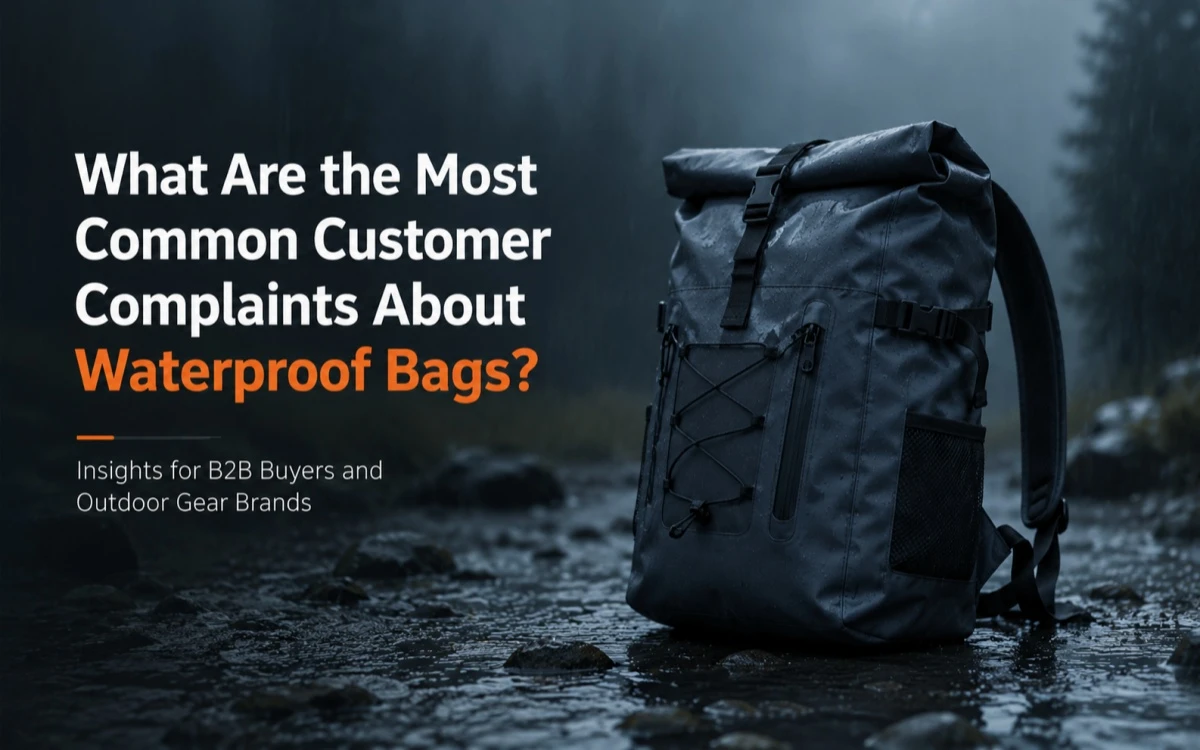
What Are the Most Common Customer Complaints About Waterproof Bags?
Jun 16, 2026
Leave a message
The most common customer complaints about waterproof bags include leakage, weak seams, hard-to-use closures, stiff or heavy materials, trapped moisture, bad odor, poor organization, inaccurate capacity, uncomfortable carrying, and inconsistent logo or branding quality.
Not every complaint means the product is a total failure. Some stem from actual manufacturing defects - poor welding, failed zippers, or cracking materials. Others come from mismatched expectations: buyers treating a standard waterproof bag as fully submersible. A third group results from necessary design trade-offs - better sealing often means less breathability, and fewer seams mean fewer pockets.
Understanding these differences helps brands and buyers address real issues instead of chasing symptoms.
Complaint 1: Leakage and Failed Waterproof Protection
Leakage tops every complaint list for waterproof bags. It destroys trust faster than any other issue because it directly damages phones, cameras, clothes, or documents.
Waterproof Does Not Always Mean Submersible
Waterproof, water-resistant, and submersible describe different performance levels. Many buyers see the word "waterproof" and assume the bag can stay underwater for hours without issue. In reality, most outdoor waterproof bags handle rain, splashes, short-term drops into water, or floating. They are not built for prolonged submersion unless specifically rated and tested for that use.
Seams, Corners, Bottom Panels, and Closures Are Common Leak Points
Face fabric rarely causes leaks by itself. Problems usually appear at heat-pressed seams, corner junctions, the bottom load-bearing area, zippers, roll-top closures, or buckle attachment points. Even high-quality TPU or PVC tarpaulin fails if welding is uneven or stress points lack proper reinforcement.
Static Tests May Not Match Real Outdoor Pressure
Lab static tests often miss real-world conditions. Kayaking, rafting, beach use, repeated packing, sand, salt water, and compression during travel create dynamic pressure that static water tests cannot replicate. Serious buyers should test samples under actual usage scenarios, not just fill them with water and watch.
Leakage complaints almost always trace back to either poor construction details or wrong product selection for the intended environment.
Complaint 2: Roll-Top Closures and Waterproof Zippers Are Hard to Use
Closure systems create the biggest gap between waterproof performance and daily convenience.
Roll-Top Bags Must Be Folded Correctly
Roll-top dry bags require folding the top 3–4 times tightly and clipping it properly. Overpacking, trapped air, or objects sticking out at the closure line break the seal. The same air that helps the bag float also makes it bulky and difficult to fit into kayaks or luggage.
Waterproof Zippers Improve Access but Add Resistance and Maintenance
Waterproof zippers appear on higher-end backpacks and camera bags for faster access. Users frequently complain they feel stiff, especially in cold weather. Sand, dirt, and salt quickly degrade performance if not cleaned regularly. More zippers do not equal better bags - they must match the actual use case, cost target, and maintenance expectations.
The best closure depends on priority: maximum waterproofing or easier daily access.
Complaint 3: Seams Split, Welds Fail, or Materials Wear Out Too Soon
Durability issues usually surface after several months of use.
Waterproof performance depends on more than material thickness. PVC tarpaulin, TPU, and PU-coated nylon each have strengths, but long-term success comes from welding temperature, pressure, time, seam width, corner design, and bottom structure.
Common failures include weak heat seals, seam splitting under load, delamination at the base, coating peeling, stiffening in cold temperatures, and cracking after repeated folding or UV exposure.
When buyers push only for the lowest unit price, factories often reduce coating thickness, welding time, or accessory quality. Those savings turn into returns and negative reviews later.
Strong construction requires deliberate choices at the design and sampling stage.
Complaint 4: Damp Contents, Condensation, and Bad Odor Inside the Bag
Many "leak" complaints actually involve internal dampness rather than external water entry.
Damp Gear Is Not Always Caused by Leakage
Sealed waterproof bags trap moisture. Wet clothes, damp towels, or humid air placed inside create condensation when temperatures change. Users then blame the bag for leaking.
Odor Builds Up When Moisture Cannot Escape
Trapped moisture leads to musty smells, sweat odors, or food residue. Some materials, especially lower-grade PVC, produce their own chemical or plastic smell that offends sensitive markets in the US and Europe.
Internal dampness and odor require user education as much as technical solutions.
Complaint 5: The Bag Feels Heavy, Stiff, or Poorly Organized
Stronger Waterproof Materials Often Add Weight and Stiffness
Thicker PVC and heavily coated fabrics deliver better waterproofing and abrasion resistance but increase weight and reduce flexibility. This becomes noticeable during long hikes or daily commutes, especially in colder conditions.
Fewer Pockets Can Be a Waterproof Design Trade-Off
True waterproof construction limits external pockets, mesh, and extra seams to reduce potential leak points. Users then struggle with organization and cannot quickly find items without opening the main compartment repeatedly.
Carrying Comfort Still Matters for Waterproof Backpacks
Shoulder straps, back panels, chest straps, and load distribution make a big difference. A bag that ignores ergonomics receives complaints about shoulder pain and poor stability regardless of its waterproof rating.
Waterproofing always involves compromises. The right balance depends on primary use.
Complaint 6: Size, Capacity, and Product Description Do Not Match Expectations
Capacity complaints appear frequently with roll-top dry bags and waterproof backpacks.
Roll-top designs lose usable space when folded. Internal dividers, back panels, and waterproof zippers also reduce actual storage compared to listed volume. Product images sometimes exaggerate proportions, and descriptions rarely clarify usable space after closing.
Clear internal dimension measurements and practical packing tests during sampling reduce this type of dissatisfaction.
Complaint 7: Logo, Color, and Custom Branding Quality Is Inconsistent
For brands and resellers, branding consistency matters as much as function.
Common issues include logos peeling, print misalignment, color variations between batches, and mismatched packaging. Different processes suit different needs: screen printing for simple designs, heat transfer for complex colors, and high-frequency embossing for PVC materials.
Matching the right branding method to material, order volume, and usage prevents later disputes.
How Buyers Can Reduce Waterproof Bag Complaints Before Bulk Production
Preventing complaints starts early.
Define the Real Use Scenario First
Decide whether the bag targets kayaking, hiking in rain, beach days, commuting, or promotional gifts. Each scenario demands different materials, thickness, closures, and testing standards.
Test Samples Under Realistic Conditions
Go beyond basic water-fill tests. Check seam strength, roll-top performance under load, zipper cycles with sand, drop tests, shoulder strap pull strength, and material behavior after UV or cold exposure.
Prepare Clear Use Instructions and Waterproof Limits
State clearly on product pages and inserts what the bag can and cannot do. Explain proper roll-top technique, zipper cleaning, and when users should dry gear before packing. Clear boundaries reduce misuse and disputes after sale.
Waterproof Bag Complaint Checklist for Buyers
| Common Complaint | Possible Cause | How to Prevent It |
|---|---|---|
| Bag leaks during use | Weak seams, poor closure | Match rating to real scenario, test samples |
| Water enters through zipper | Low-grade zipper, dirt buildup | Use proper zippers + care instructions |
| Roll-top does not seal well | Insufficient folds, overpacking | Show correct method and test packing |
| Seams split or welds fail | Poor welding, weak structure | Check weld width, corners, bottom design |
| Items feel damp inside | Condensation from wet gear | Advise drying items before packing |
| Bag smells bad | Trapped moisture or low-grade material | Select proper materials, add drying notes |
| Bag feels heavy or stiff | Thick coated fabrics | Balance waterproofing with comfort needs |
| Hard to organize items | Limited pockets for waterproofing | Plan internal solutions per use case |
| Capacity feels misleading | Roll-top reduces space | Provide real usable volume guidance |
| Logo or color inconsistent | Poor process control | Approve samples and control batches |
FAQ
What is the most common complaint about waterproof bags?
Leakage, particularly at seams, zippers, roll-tops, and bottom panels.
Does waterproof mean the bag can be submerged?
Not always. Waterproof ratings must be understood in context of construction and intended use. Few standard bags suit long submersion.
Why do items still get damp inside a waterproof bag?
Condensation from trapped moisture and temperature changes often causes this, not external leaks.
Are waterproof zippers better than roll-top closures?
It depends. Zippers offer easier access while roll-tops provide simpler, more reliable sealing in harsh conditions.
How can brands reduce waterproof bag complaints after sale?
Clear instructions, realistic performance claims, proper material selection, and thorough testing cut complaints dramatically.
Conclusion
Most waterproof bag complaints trace back to decisions made before mass production - material choices, seam construction, closure design, and unclear expectations.
As an outdoor waterproof bag manufacturer in China, FENGLINWAN works with brands to evaluate these details early and reduce avoidable problems. If you are developing custom waterproof bags, contact us to discuss your project requirements.