


Cooler Bag Care Instructions: How to Clean, Dry & Store
Oct 19, 2026
Leave a message
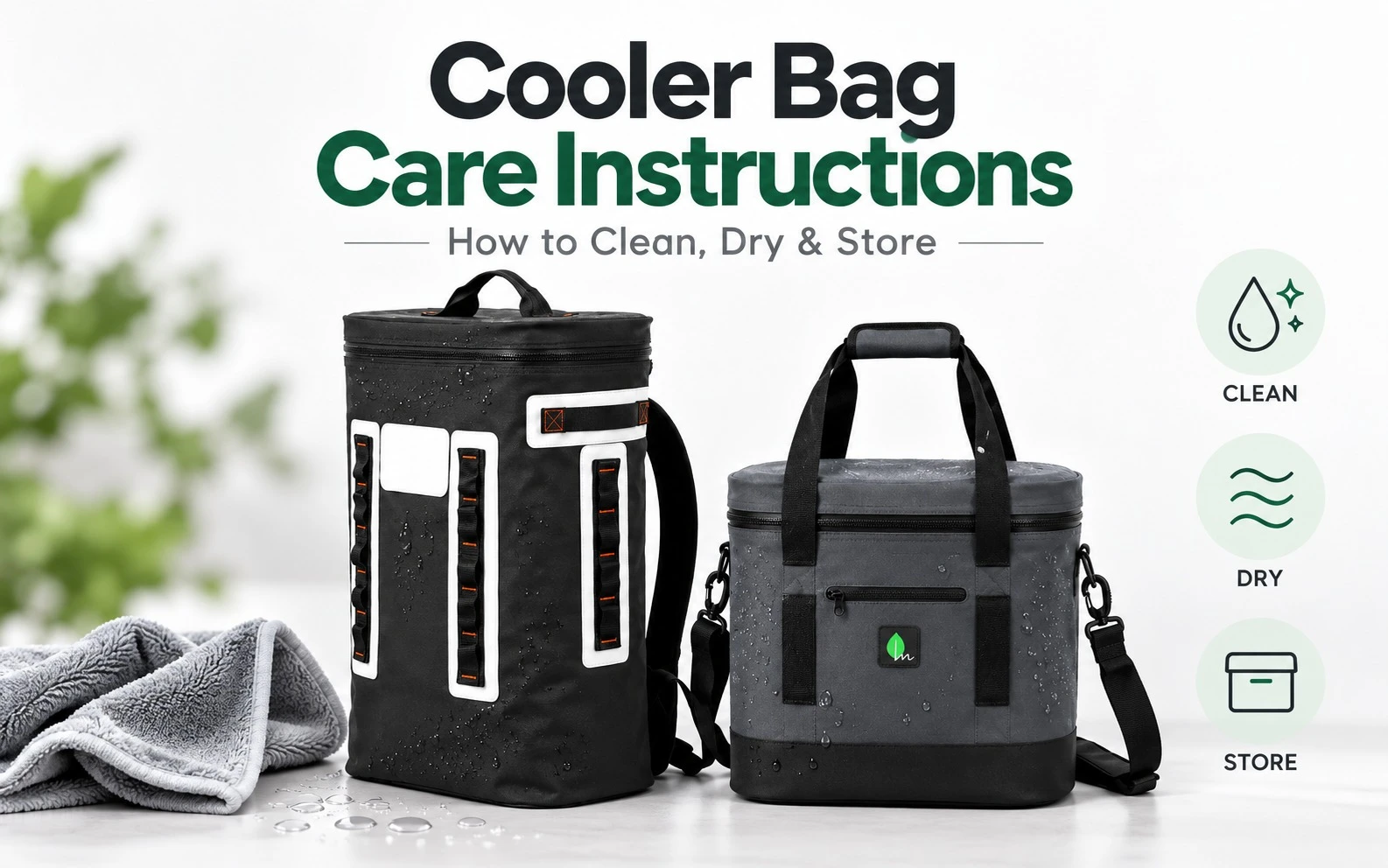
Proper cooler bag care is straightforward: clean the bag promptly after use, dry it completely, and store it open in a cool, dry place. Whether you are caring for a soft cooler, an insulated cooler bag, or a cooler backpack, these three habits help keep the liner fresh, reduce odors and mold, and protect the bag for future trips.
Why You Should Clean a Cooler Bag After Every Use
Every time a cooler bag holds food, beverages, or ice, it is exposed to organic residue-spilled juice, melted ice carrying food particles, and condensation that can pool in seams and corners. If you regularly use loose ice, it is also worth understanding when and how to put ice directly in a cooler bag, since meltwater increases the amount of moisture that must be removed after use.
Left unchecked, food residue and moisture can create conditions that favor mold growth. The U.S. Environmental Protection Agency notes that mold and mildew growth is closely linked to moisture, which is why cleaning and thorough drying should be treated as a single care process.
The single most important rule of cooler bag care is simple: clean it after every use, before residue has a chance to set.
A quick wipe-down right after each trip takes two minutes. A deep clean required after weeks of neglect can take hours-and may never fully restore the bag. Consistency is the difference between a cooler bag that lasts a season and one that lasts a decade.
From a manufacturing standpoint, the right approach to insulated bag care also depends on how the bag is built. Soft coolers may combine an outer shell, insulation layer, inner liner, zippers, and welded or sewn structural areas. If you want to understand what is inside the bag before deciding how to maintain it, see our guide to how soft cooler bags are made.
FENGLINWAN cooler and insulated bag structures can include TPU + NBR or 600D + PEVA constructions. The outer shell, insulation, and liner perform different jobs, so it is more useful to think of a cooler bag as a layered system rather than as a single material.
How to Clean a Cooler Bag
For routine cooler bag cleaning, wash or wipe both the inside and outside with a solution of mild soap and warm water. This simple method works well for regular maintenance without unnecessarily exposing the liner or outer shell to harsh cleaning agents.
General household hygiene guidance from the CDC also emphasizes the importance of cleaning surfaces before additional disinfection is considered. For most routine cooler bag care, gentle cleaning and complete rinsing are more appropriate than aggressive chemical treatment.
Step-by-Step Cooler Bag Cleaning
- Empty completely. Remove all contents, ice packs, dividers, and any removable inserts. Shake out crumbs and debris.
- Prepare the solution. Mix a few drops of mild dish soap in warm water. Avoid very hot water on TPU or PEVA liners, as excessive heat may affect some flexible materials or bonded structures.
- Wipe the interior. Use a soft sponge or microfiber cloth to wipe down the entire inner surface, paying special attention to seams and corners where residue accumulates. For PEVA liner cleaning or TPU cooler bag care, gentle wiping is preferable to aggressive scrubbing.
- Clean the exterior. Wipe the outer shell with the same soapy solution. For tougher stains, test any cleaning method on a small, inconspicuous area first.
- Rinse thoroughly. Wipe all surfaces with a clean, damp cloth to remove soap residue.
- Address odors. If smells linger after normal cleaning, deal with the source rather than simply masking it. For more detailed methods, see our guide to removing bad smells from cooler bags.
The correct cleaning approach can vary with construction. A TPU shell with NBR insulation and a 600D shell with a PEVA liner are not identical products, even though both may be sold as cooler bags. Material selection affects not only thermal performance but also how the finished bag should be cleaned, dried, and maintained. For a closer look at those differences, see our guide to cooler bag insulation materials.
What to Avoid When Cleaning a Cooler Bag
|
Material / Agent |
Recommendation |
Reason |
|
Undiluted bleach |
Avoid unless specifically approved for the product |
May damage or discolor some liner and outer materials |
|
Abrasive scouring pads |
Avoid |
Can scratch coatings and liner surfaces |
|
Solvent-based cleaners |
Avoid |
May affect coatings, adhesives, or laminated layers |
|
Very hot or boiling water |
Avoid on flexible liners |
May affect heat-sensitive materials or bonded structures |
|
Dishwasher |
Avoid unless specifically permitted |
Heat and agitation can damage many soft cooler constructions |
When in doubt, check the care instructions supplied with the specific bag. Soft coolers can differ substantially in liner material, insulation thickness, coating type, and seam construction.
How to Dry a Cooler Bag Completely
Always air dry your cooler bag with every zipper open and the interior fully exposed.
Drying is the step most people rush-and it is one of the most important parts of long-term cooler bag maintenance. Moisture trapped in corners, seams, or beneath folds can create the conditions mold needs to grow.
Step-by-Step Drying
- Open fully. Unzip every zipper, open every flap, and make sure the interior is completely exposed to airflow.
- Wipe excess moisture. After rinsing, use a dry microfiber cloth or towel to remove standing water from the interior surface and seams.
- Air dry in a ventilated space. Place the bag open in a well-ventilated area. If possible, position it so water can drain rather than collect in the bottom.
- Allow sufficient time. Depending on humidity, airflow, liner design, and insulation thickness, a cooler bag can take several hours or longer to dry completely.
- Confirm dryness before storage. Feel along every seam, fold, corner, and zipper area. If any spot still feels damp, give the bag more time.
Do not use a hair dryer, heat gun, or clothes dryer unless the manufacturer specifically allows it. Direct heat may warp liners, affect coatings, shrink some textiles, or weaken heat-sensitive seams and bonding.
This is especially important with layered insulated bags. The shell, liner, insulation, and seam construction can respond differently to heat and moisture, which is why complete air drying should be treated as part of the cleaning process rather than as an optional final step.

How to Store a Cooler Bag Between Trips
Store your cooler bag open and unzipped in a cool, dry location whenever practical.
A perfectly cleaned and dried bag can still develop problems if it is stored the wrong way. Proper cooler bag storage helps reduce trapped moisture, unwanted odors, deformation, and unnecessary stress on the insulation layer.
Best Practices for Cooler Bag Storage
- Store it open. Keep the lid or flap open enough to allow air circulation, especially after recent cleaning.
- Choose a cool, dry location. A closet shelf, pantry, or dry storage area is preferable to a damp basement, hot attic, or location exposed to direct sunlight.
- Do not compress or stack heavily. Store the bag close to its natural shape. Continuous compression can crease insulation and distort panels.
- Keep it away from sharp objects. When storing it with camping equipment, tools, or outdoor gear, make sure nothing can puncture or abrade the shell.
- Control storage moisture. Moisture management is one of the most effective ways to reduce mold risk. The EPA specifically identifies moisture control as the key to mold prevention.
If mold prevention is a recurring concern across your outdoor gear, you can also review these practical tips for preventing mold on waterproof bags.
The importance of preserving the insulation layer is easy to see from actual cooler construction. For example, FENGLINWAN develops backpack-style insulated products such as the Double Shoulder Insulated Bag, where the carrying structure, shell, insulation, and liner all need to maintain their intended shape.
A compact backpack format such as a 24 Can Backpack Cooler should likewise be stored without unnecessary crushing or heavy stacking so the body panels and insulation are not continuously deformed.
Cooler Bag Care Checklist
|
Task |
Frequency |
Key Detail |
|
Wipe interior after use |
Every trip |
Mild soap and warm water, soft cloth |
|
Deep clean stains |
As needed |
Use a gentle method appropriate for the liner |
|
Odor treatment |
As needed |
Remove the source of odor before storage |
|
Air dry fully open |
After every cleaning |
Confirm seams and corners are dry |
|
Store open and unzipped |
Whenever practical |
Cool, dry place; avoid heavy stacking |
|
Inspect seams and zippers |
Seasonally |
Check for wear and clean debris from zipper teeth |
FAQ
How often should I clean a cooler bag?
Clean or wipe down the interior after every trip, especially if the bag has held loose ice, food, drinks, or anything that leaked. Regular cooler bag maintenance prevents residue and odors from becoming harder to remove later.
How do I remove odors from a cooler bag?
Start with normal cleaning using mild soap and warm water, then allow the bag to dry completely. Persistent odor usually means residue or moisture remains somewhere in the liner, seams, corners, or zipper area.
How long does a cooler bag take to air dry?
Drying time depends on airflow, humidity, construction, insulation thickness, and how much water remains after cleaning. It may take several hours or longer. Do not store the bag until the liner, seams, and corners are fully dry.
Should a cooler bag be stored zipped or open?
Open storage is generally preferable after cleaning because it allows residual moisture to escape. If the bag must be closed for storage, make sure it is completely dry first.
Can I use bleach or put a soft cooler in the dishwasher?
Do not assume either method is safe. Undiluted bleach can affect some liner or coating materials, while dishwasher heat and agitation can damage soft cooler construction. Follow the care instructions for the specific product whenever available.
Conclusion
Good cooler bag care instructions come down to three habits: clean the bag after use, let it dry completely, and store it in a way that prevents trapped moisture and unnecessary compression. Those simple steps help control stains and odors while protecting the liner, seams, insulation, and overall shape of the bag.
FENGLINWAN is an OEM/ODM manufacturer of outdoor waterproof and functional bags, including custom cooler bags, insulated totes, lunch bags, and other functional bag solutions. If you are developing a private-label soft cooler or insulated bag and want to discuss materials, structure, performance requirements, or customization, contact us to discuss your project.