


Can a Cooler Duffle Bag Keep Ice Frozen for Long Trips?
Jul 22, 2026
Leave a message
Yes, a well-built cooler duffle bag can keep ice frozen during long trips, but the result depends on how the bag is made and how it is used. Insulation, zipper sealing, ice type, packing density, outside temperature, and opening frequency all affect ice retention. For day trips and some overnight travel, a quality insulated cooler duffle bag can work very well. For multi-day trips with no chance to refill ice, a hard cooler is often the safer choice.
What Is a Cooler Duffle Bag?
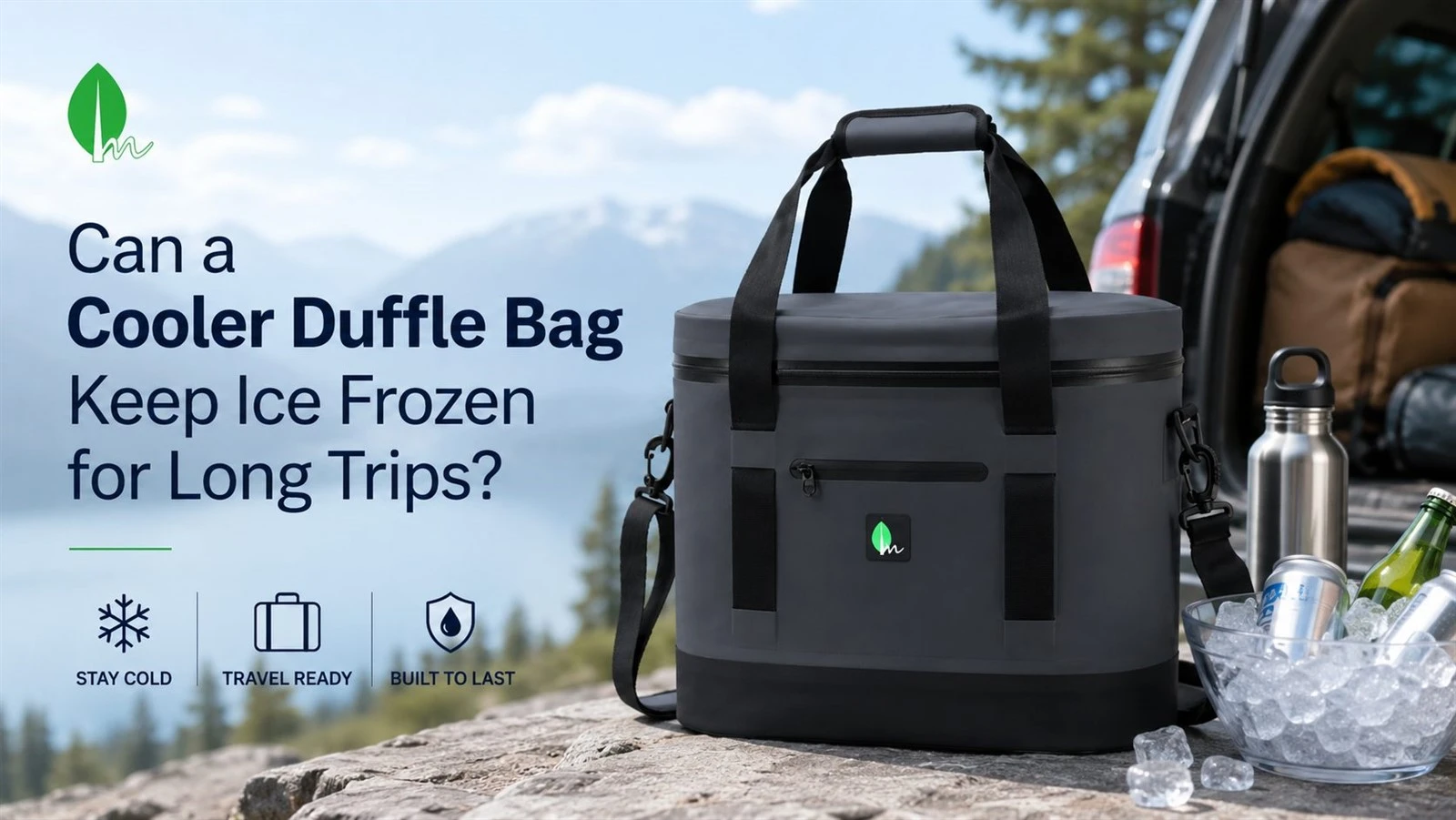
A cooler duffle bag is a soft-sided insulated bag designed to carry food, drinks, and ice while staying portable like a travel duffle. Unlike a hard cooler, it uses flexible materials, foam insulation, waterproof or leak-resistant liners, handles, shoulder straps, and often zipper closures.
The main advantage is mobility.
A cooler duffle bag is easier to carry to a beach, campsite, boat, picnic area, or vehicle than a rigid cooler. It can also be more comfortable when walking short distances. Many models can be stored more easily after use.
The tradeoff is that a soft cooler normally has thinner insulation than a hard cooler. Its zipper or opening area is also more exposed to warm air exchange. That does not mean it performs poorly. It means the design details matter more.
A good cooler duffle bag is not just a fabric bag with a silver lining. It is a controlled cold-storage system made from outer fabric, insulation foam, inner liner, sealing structure, and reinforced carry points.
For long trips, the best results come from matching the bag to the trip. A small lunch-style cooler will not perform like a large waterproof cooler duffle bag built for outdoor use. Capacity, insulation thickness, and closure quality should fit the expected travel time.
What Determines How Long Ice Lasts in a Cooler Duffle Bag?
Ice retention means how long visible ice remains inside the cooler before it fully melts. In real outdoor use, ice melts because heat enters the bag. Heat can move through the walls, the bottom, the zipper, the lid area, and the open space every time the bag is unzipped.
Insulation slows this process. It does not stop it.
Insulation Thickness and Material
The insulation layer is usually the most important part of an insulated cooler duffle bag. Many soft coolers use foam as the middle layer because foam slows heat transfer between the outside environment and the cold interior.
Better insulation depends on several factors:
- Foam thickness
- Foam density
- Foam coverage across the side walls, lid, and bottom
- Compression resistance
- Construction around seams and corners
A thick side wall helps, but it is not enough by itself. If the lid is thin, the zipper leaks warm air, or the bottom sits directly on hot pavement, the ice will still melt faster.
Closed-cell foam is often used in higher-performance soft coolers because it resists moisture absorption and helps maintain structure. However, the whole bag design matters more than one material name. A poorly sealed bag with premium foam can still lose cold quickly.
Zipper, Closure, and Air Exchange
The closure is a common weak point in soft cooler bags. Every gap around the zipper allows warm air to enter and cold air to escape. This is why many premium cooler duffle bags use waterproof zippers, roll-top closures, or tightly sealed openings.
A waterproof zipper can improve cold retention because it reduces air exchange. But users should understand the difference between "waterproof outer fabric," "leakproof liner," and "fully leak-resistant closure." These are not the same thing.
A cooler bag may resist rain from the outside but still leak meltwater if loose ice is placed inside. Another bag may have a leakproof liner but a zipper that is not designed to hold water when the bag tips over.
For wet ice use, the liner and closure must be designed for meltwater.
Liner, Seams, and Leak Control
The inner liner protects the insulation layer and helps manage condensation or melted ice. In many cooler duffle bags, the liner is made from PEVA, TPU, PVC-coated material, or other waterproof films. Some are stitched. Others are heat-welded or high-frequency welded.
Welded seams usually provide better leak control than stitched seams because stitching can create needle holes. For a cooler duffle bag intended to carry loose ice, this detail matters.
Leak control does not automatically mean longer ice retention, but it supports better cold management. A damaged liner, open seam, or wet insulation layer can reduce performance over time.
Capacity and Packing Density
Capacity affects how much ice and cold mass the bag can carry. A larger cooler duffle bag can support longer trips if it is packed correctly with enough ice, cold packs, and contents.
But bigger is not always better.
A half-empty large cooler bag contains more air. That air must be cooled, and warm air moves in every time the bag opens. On the other hand, a bag that is too small may not leave enough room for ice packs or may prevent the zipper from closing fully.
The right size is the one that allows food, drinks, and cold sources to fit tightly without forcing the closure. For more detailed capacity planning, see this cooler bag size guide.
Ice Retention Is Not the Same as Food-Safe Temperature
Ice retention and food-safe storage are related, but they are not identical.
Ice retention means some ice is still visible. Cold retention means the inside of the bag still feels cold. Food-safe temperature means perishable food is kept at a temperature low enough to reduce food safety risk.
For refrigerated foods such as meat, seafood, dairy, and prepared meals, the common safety target is about 40°F / 4°C or below. A cooler duffle bag may still feel cold after some ice melts, but the only reliable way to check food safety during a long trip is to use a thermometer.
This is important for road trips, camping, fishing, and grocery transport.
If the bag is mostly used for canned drinks, a slight temperature rise may only affect drinking comfort. If it carries raw meat or seafood, temperature control becomes more serious. Ice remaining in one corner does not guarantee every food item stayed cold enough.
A practical rule is simple: use enough cold sources, keep perishable food close to them, and check temperature when safety matters.
What Type of Ice Works Best for Long Trips?
The type of ice affects both cooling speed and melt time. Small ice cools quickly. Large ice lasts longer. Ice packs reduce mess. Frozen bottles save space and can become drinking water later.
Different ice sources serve different purposes.
| Ice Type | Best Use | Main Advantage | Main Limitation |
|---|---|---|---|
| Ice cubes | Quick chilling drinks | Easy to find and fills gaps | Melts faster and creates water |
| Block ice | Long trips and camping | Melts slower | Less contact with small items |
| Flat ice packs | Layered packing | Clean and reusable | Cooling power depends on size and formula |
| Frozen water bottles | Road trips and outdoor travel | Works as ice and drinking water | Needs freezing time and space |
| Dry ice | Special cold-chain use | Extremely cold | Not suitable for airtight soft coolers |
Ice Cubes
Ice cubes are convenient and work well around cans, bottles, and irregular spaces. They chill drinks quickly because they have more surface area touching the contents.
The downside is faster melting.
If the cooler duffle bag is not designed for loose ice, put ice cubes in sealed bags or containers. This helps prevent water from soaking food packaging and keeps the inner liner cleaner.
Block Ice and Large Ice Sheets
Block ice usually melts more slowly than small cubes because less surface area is exposed to warm air. For long trips, block ice, large flat ice sheets, or large frozen gel packs are better for maintaining low temperature over time.
A strong packing method is to place a large cold source at the bottom, put chilled contents in the middle, and add another flat ice pack near the top. This creates cold zones around the items instead of keeping all the ice in one corner.
Reusable Ice Packs and Frozen Bottles
Reusable ice packs are useful for cooler duffle bags because they reduce meltwater. Flat packs are especially easy to layer above and below food.
Frozen water bottles are also effective. They add cold mass, help fill empty space, and provide cold drinking water later. Leave expansion space in the bottle before freezing. Do not freeze carbonated drinks unless the container is designed for it.
Dry Ice
Dry ice is much colder than water ice, but it is not a casual upgrade for soft coolers. It releases carbon dioxide gas as it sublimates and should not be placed in airtight cooler duffle bags. Pressure buildup and ventilation risks make it unsuitable for most soft-sided cooler bags.
Use dry ice only with coolers clearly designed for it.
How to Pack a Cooler Duffle Bag to Keep Ice Frozen Longer
Packing has a major effect on how long ice lasts. A high-quality cooler duffle bag can perform poorly if warm drinks are loaded into it at the last minute. A mid-range bag can perform better when it is pre-chilled and packed correctly.
Pre-Chill the Bag and Contents
Pre-chilling reduces the initial heat load.
If the inside of the cooler bag is at room temperature, fresh ice must first cool the liner, foam surface, trapped air, food, and drinks. That uses up cold energy before the trip even begins.
For better performance:
- Put ice packs or frozen bottles in the bag a few hours before loading
- Refrigerate smaller cooler bags if the care instructions allow it
- Pre-chill drinks overnight
- Freeze items that are safe to freeze
- Avoid placing warm food or room-temperature beverages inside
Pre-chilling does not make the insulation stronger. It helps the ice spend more time maintaining cold instead of cooling down warm materials.
Build Cold Layers
A cooler duffle bag works best when cold sources are distributed, not dumped in one spot. Before packing, it also helps to estimate how many bags of ice for a cooler may be needed for the trip length and contents.
A simple long-trip packing structure works like this:
- Place block ice, frozen bottles, or large ice packs at the bottom.
- Add frozen or well-chilled food above the base layer.
- Place meat, seafood, dairy, or other perishable items close to cold sources.
- Fill gaps with smaller ice packs or sealed ice cubes.
- Add a flat ice pack near the top.
- Put frequently used drinks where they can be reached quickly.
This reduces warm air pockets and helps protect important food items from temperature swings.
Reduce Empty Space Without Overfilling
Empty space makes the cooler harder to keep cold. More air means more thermal load, especially when the bag is opened.
Still, overfilling is also a problem. If the zipper cannot close fully, the bag loses cold through the opening. If the contents press too hard against the liner, the liner or seams may be damaged.
Pack tightly, but leave enough room for the closure to seal correctly.
Separate Drinks From Perishable Food
Drinks are usually accessed more often than food. Every time the cooler opens, warm air enters. For family trips or group events, it often helps to use two cooler bags: one for drinks and one for food.
This is a simple way to protect the colder food zone.
If only one cooler duffle bag is available, place drinks near the top and keep perishable food deeper in the bag with stronger cold sources.
How Outside Conditions Affect Ice Retention
The same cooler duffle bag will not perform the same in a shaded kitchen, a hot vehicle, a beach, and a campsite. Outside conditions set the workload for the insulation.
Direct sunlight heats the outer shell. A hot car trunk can become much warmer than the outside air. Pavement, sand, metal decks, and dark truck beds can transfer heat through the bottom of the bag.
Good handling can extend real-world cooling time:
- Keep the bag in shade whenever possible
- Store it in the passenger area with air conditioning, not a hot trunk
- Avoid placing it directly on asphalt, sand, or metal
- Use a towel, blanket, or insulated mat under the bag
- Keep the zipper fully closed
- Open the bag less often and for shorter periods
A light-colored or reflective cover may help reduce solar heat gain, but shade is more important than color. Extra towels or blankets can help as a second layer of protection, but they cannot compensate for thin insulation or a weak closure.
For hot-weather road trips, plan around the environment. The cooler is not only fighting time. It is fighting heat from every direction.
Cooler Duffle Bag vs. Hard Cooler for Long Trips
A cooler duffle bag and a hard cooler are built for different priorities.
A cooler duffle bag is designed for portability, flexible storage, and easier carrying. A hard cooler is designed for longer cold holding, stronger structure, and heavier loads.
| Factor | Cooler Duffle Bag | Hard Cooler |
|---|---|---|
| Portability | Easier to carry by hand or shoulder | Heavier and bulkier |
| Ice retention | Good for short to medium trips when packed well | Usually stronger for multi-day use |
| Storage | More flexible after use | Fixed shape and larger footprint |
| Comfort | Better for walking short distances | Better for vehicle-based storage |
| Wet ice use | Depends on liner and zipper design | Usually better for loose ice |
| Dry ice use | Usually not suitable | Some models are designed for it |
| Best scenario | Beach, picnic, road trip, boat day, grocery transport | Multi-day camping, extreme heat, heavy cold storage |
A cooler duffle bag makes more sense when users need mobility. It is a strong choice for a day trip, a short camping stay, fishing, boating, beach use, sports events, or carrying groceries in summer.
A hard cooler is more reliable when the trip lasts several days, the weather is extremely hot, or there is no chance to refill ice. If food safety is critical and the cooler will stay in a vehicle or campsite for days, a hard cooler usually provides more margin.
Many long trips work best with both. Use a hard cooler for the main food supply and a cooler duffle bag for drinks, snacks, or items needed during the day.
How to Choose a Cooler Duffle Bag for Long Trips
A long-trip cooler duffle bag should be selected by structure, not just by appearance or capacity. Marketing claims such as "keeps ice for 48 hours" only mean something when the testing conditions are clear.
Focus on the parts that affect real performance.
Insulation System
Check whether the side walls, base, and lid are insulated. The bottom is especially important because it often touches warm surfaces. Thin bottoms are a common weak point in soft coolers.
For long trips, look for:
- Thick foam insulation
- Consistent insulation coverage
- Firm base structure
- Lid or top insulation
- Low compression after loading
Closure and Leak Control
The zipper or opening should close tightly and stay closed under load. If the bag is intended for loose ice, the liner and seams should be suitable for meltwater.
Important details include:
- Waterproof or high-seal zipper
- Welded inner liner
- Reinforced seams
- Easy-clean lining
- Clear guidance on wet ice use
A waterproof outer shell is useful for rain and splashes, but it does not prove the bag can safely hold loose ice inside.
Capacity and Carrying Comfort
Choose capacity based on trip length, number of people, and how much ice can be carried. A larger bag becomes heavy when filled with drinks and ice. Handles, shoulder straps, and connection points must be reinforced.
Useful long-trip features include:
- Padded shoulder strap
- Reinforced handles
- Durable waterproof fabric
- Abraison-resistant base
- Separate pocket for dry items
- Wide opening for packing
- Easy-clean interior
Extra pockets and straps improve convenience. They do not replace insulation.
Common Mistakes That Make Ice Melt Faster
Most ice retention problems come from use conditions, not only product quality. Avoid these mistakes:
- Loading room-temperature drinks
- Skipping pre-chilling
- Using too little ice or too few ice packs
- Leaving too much empty space inside
- Overfilling so the zipper cannot close
- Opening the bag repeatedly
- Keeping the bag in direct sun
- Placing it on hot pavement, sand, or metal
- Mixing frequently accessed drinks with perishable food
- Using loose ice in a bag not designed for meltwater
- Trusting ice-retention claims without checking the test conditions
The easiest improvements are also the most effective: start cold, pack tightly, use enough cold sources, and keep the bag closed.
Final Answer: Is a Cooler Duffle Bag Good Enough for Long Trips?
A cooler duffle bag can keep ice frozen for long trips when the bag has proper insulation, a tight closure, a reliable liner, and enough cold sources. It is a practical choice for road trips, beach days, picnics, fishing, boating, grocery transport, and some overnight outdoor use.
It is not the best choice for every situation. For several days of ice retention without refilling ice, a hard cooler is usually more dependable.
The right decision depends on the trip. For mobility and convenience, choose a high-quality insulated cooler duffle bag and pack it correctly. For maximum ice retention in extreme conditions, use a hard cooler or combine both systems.
FENGLINWAN manufactures custom outdoor waterproof bags and insulated cooler bag solutions for travel, camping, sports, and promotional markets. As a professional cooler bag manufacturer, we can support projects that require specific capacity, insulation, waterproof fabric, welded liner, zipper structure, or branding requirements. Contact us to discuss your custom cooler duffle bag project.